

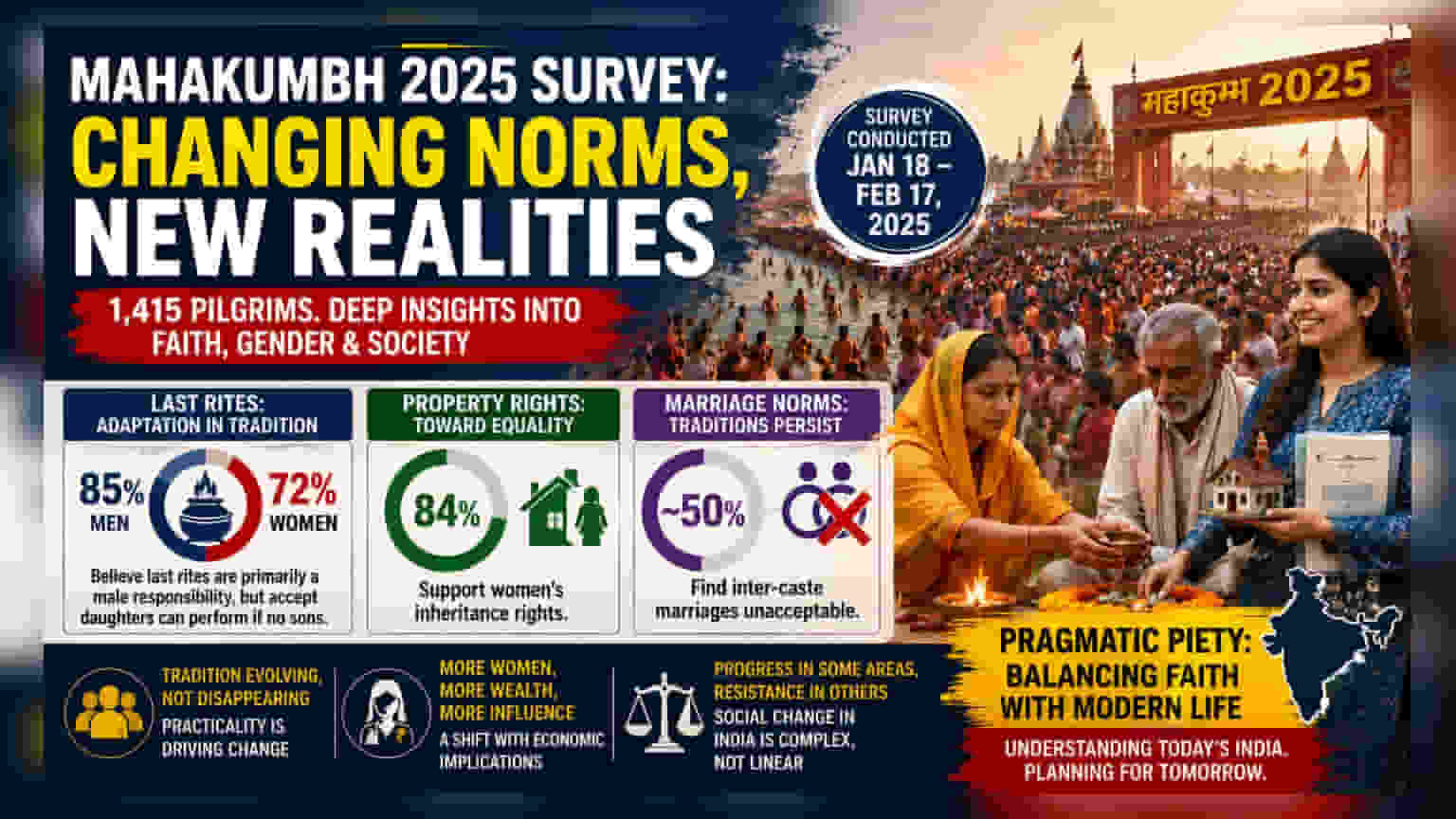
A recent survey of 1,415 pilgrims at the Mahakumbh 2025 shows shifting perspectives on gender roles, with strong support for women's inheritance rights. While traditional views persist regarding inter-caste marriage, the findings highlight a pragmatic evolution in societal attitudes that can influence long-term consumer and labor market trends.
What Happened
A comprehensive survey conducted during the Mahakumbh 2025 has offered fresh insights into the changing social and gender norms within Indian society. The study, titled 'Pragmatic Piety' and led by the Rashtram School of Public Leadership, surveyed 1,415 pilgrims between January 18 and February 17, 2025. The research aimed to decode the intersection of religious beliefs with contemporary views on familial obligations, property ownership, and marriage.
Evolving Views on Rituals and Inheritance
The survey findings suggest a notable shift in how traditional rituals are viewed in modern contexts. While a significant majority of respondents—85% of men and 72% of women—maintained the importance of male members performing last rites, there was substantial acceptance for daughters to fulfill these duties when no sons are present. This flexibility indicates an adaptation to demographic realities, such as the rise of smaller, single-child families.
More economically significant is the finding regarding property rights. A large majority, 84% of respondents, expressed support for women’s inheritance rights. This trend aligns with broader societal shifts toward gender equality in financial matters, a factor that market analysts often track as it correlates with women’s increased control over wealth, asset ownership, and long-term household spending power.
Challenges in Social Integration
Despite the progressive views on inheritance, the survey highlighted that traditional barriers remain in other areas. Nearly half of the respondents stated that inter-caste marriages were unacceptable. This resistance suggests that while economic and ritualistic norms are evolving, deep-seated social structures regarding marriage endogamy persist across various social groups. This divide highlights the complexity of social change in India, where modernization in one sphere does not always equate to a uniform shift across all cultural practices.
Why This Matters for the Broader Context
For observers of the Indian socio-economic landscape, these findings provide a nuanced look at the country's demographic and cultural evolution. Shifts in gender norms—particularly concerning inheritance and economic participation—can have indirect but significant implications for consumer industries, financial services, and labor market demographics. As more women gain economic independence and inheritance rights, their role as primary decision-makers in consumption and investment decisions is expected to grow.
However, the persistence of traditional views on marriage highlights the uneven pace of cultural change. Businesses and policymakers often monitor these metrics to understand shifting consumer sentiments, the potential for social mobility, and the changing needs of a diverse Indian population. The study authors emphasize that these results challenge the binary view of 'tradition versus modernity,' suggesting instead a more pragmatic approach where people balance religious identity with the necessities of contemporary life.