 Whalesbook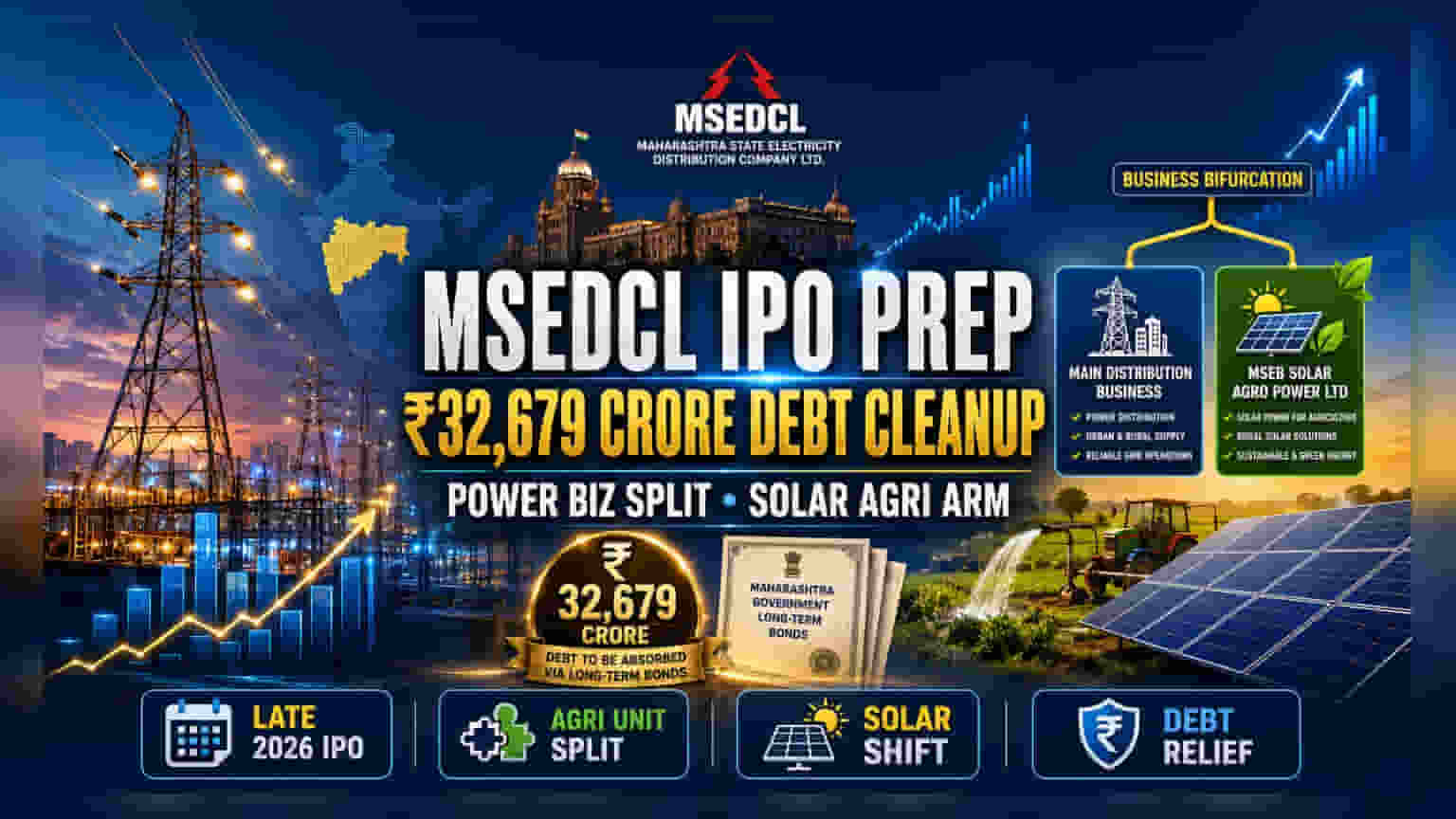


What Happened
Maharashtra State Electricity Distribution Company (MSEDCL), India’s largest power distribution utility, is moving toward a public listing. The Maharashtra government has approved a significant restructuring plan to prepare the company for an Initial Public Offering (IPO), targeted for late 2026. As part of this strategy, the utility is bifurcating its operations into two distinct businesses.
One entity will continue managing power supply for industrial, commercial, and residential consumers—the segment intended for the IPO. The second entity, named MSEB Solar Agro Power Ltd (MSAPL), will focus exclusively on the agricultural segment. To address the utility's long-standing financial stress, the state government has committed to absorbing approximately ₹32,679 crore of MSEDCL’s debt by issuing long-term bonds. This restructuring is designed to separate the typically loss-making agricultural operations from the more revenue-stable non-agricultural business.
Why This Matters For Investors
Power distribution companies (DISCOMs) in India have historically faced financial challenges due to high debt, inefficiencies, and losses from subsidized agricultural power. By carving out the agricultural segment, MSEDCL aims to create a cleaner, more financially viable entity for public market investors. The government's decision to absorb a large portion of the debt is a critical step to improve the balance sheet, as traditional investors often avoid utilities with high leverage and persistent losses.
The Strategy: Focusing on Solar
At the core of the bifurcation is the "Mukhyamantri Saur Krishi Vahini Yojana 2.0" initiative. The company is transitioning agricultural power supply to decentralized solar energy projects. Currently, power procurement costs for thermal energy are significantly higher than for solar power. By shifting agricultural feeders to solar energy, the company intends to lower its overall power purchase costs. This shift is a key part of the plan to improve the operational margins of the new entity before it seeks a listing on the stock exchange.
How Investors May Read This
For investors, the primary question will be whether this restructuring leads to long-term financial stability. While the government-backed debt absorption eases immediate pressure, the long-term success of the IPO will depend on the new entity's ability to maintain healthy margins without recurring financial support. Investors typically monitor the 'Aggregate Technical and Commercial' (AT&C) losses of such utilities, which reflect power theft, billing, and collection efficiencies. A successful listing will likely depend on whether the non-agricultural entity can demonstrate consistent profitability and reliable cash flow after the demerger.
The Business Risks
Despite the restructuring, the power distribution sector inherently carries risks. These include dependence on state regulatory decisions for tariff hikes, the potential for high maintenance costs, and the need to manage a vast consumer base across different categories. Furthermore, the success of the agricultural split is not just operational; it is also a regulatory challenge. The new solar-focused entity must execute its projects efficiently to realize cost savings, and any delays in grid integration or project commissioning could impact the financial benefits expected from the split.
What Investors Should Track
Investors monitoring this development should focus on several key updates in the coming months. First, the actual timeline for the completion of the bifurcation and the transfer of assets will be critical. Second, tracking the performance of the new non-agricultural entity in its initial quarters—specifically its revenue growth and profit margins—will provide insight into whether the cleanup of the balance sheet is yielding the desired results. Finally, regulatory updates regarding tariff approvals and any further government directives related to the IPO process will be essential to understanding the company's valuation and market readiness.