

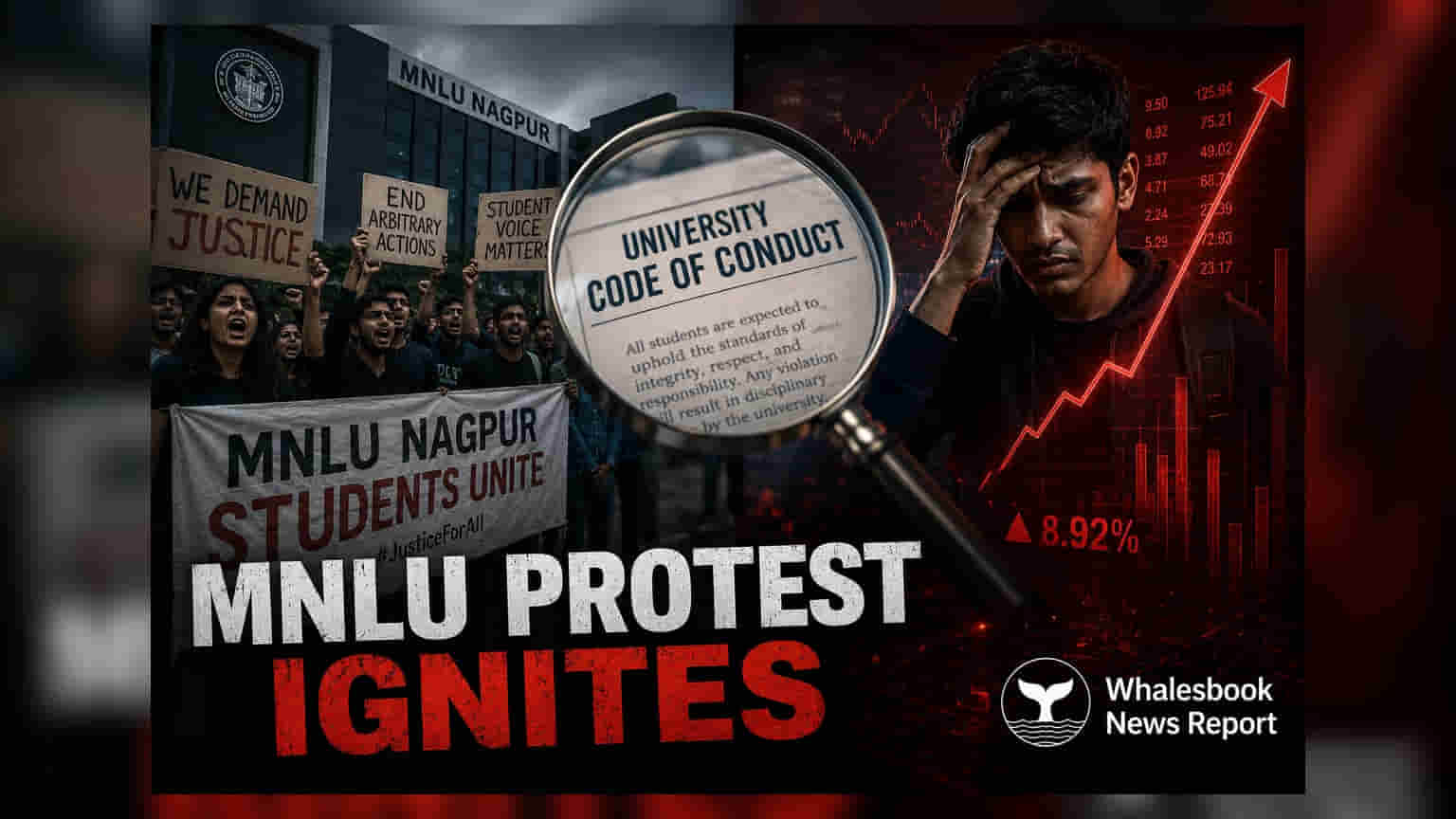
Students at Maharashtra National Law University, Nagpur, have launched protests citing poor living conditions, limited placement support, and restrictive disciplinary codes. The ongoing demonstration follows failed internal representations to university leadership regarding safety and infrastructure. Investors and stakeholders in educational institutions often track such governance concerns as they can impact institutional reputation and long-term academic stability.
Protests by students at Maharashtra National Law University (MNLU), Nagpur, which began on July 5, 2026, continued into July 6 as the student body expressed deep dissatisfaction with university governance and campus facilities. The agitation follows a formal representation submitted to Vice-Chancellor Prof. Vijender Kumar and the Registrar, which students claim was largely ignored.
Governance and Disciplinary Concerns
A major point of contention for students is the university's Academic Code of Conduct. Students argue that this code is used to suppress dissent by labeling peaceful actions, such as sit-ins, as misconduct. There are also reports that students felt intimidated after faculty members allegedly recorded their names during open house sessions when they raised grievances. These actions, students contend, restrict their constitutional freedom of speech.
Infrastructure and Safety Challenges
Students have highlighted several critical infrastructure issues across the main campus and the Dongargaon hostel. Complaints include the lack of a functional canteen, restricted access to basic services like food delivery after 6 PM, and inadequate fire safety measures. The Dongargaon hostel, which has housed students since August 2025, is reportedly suffering from unreliable water supply, frequent power outages, and poor sanitation. Furthermore, safety concerns have been raised regarding the presence of snakes and scorpions on campus grounds, as well as alleged incidents of inappropriate conduct that have left students questioning the security of women residents.
Operational and Academic Hurdles
The protest also highlights broader operational challenges, including transportation issues and a perceived lack of professional support. Students reported being stranded due to insufficient bus services between campuses, forcing them to rely on expensive private transport. Academically, the absence of a dedicated placement officer has shifted the burden of finding internships and career opportunities entirely onto the students. Additionally, students have criticized the university’s disciplinary handling of past events, claiming that the institution failed to provide adequate support during police proceedings involving student-related incidents.
Next Steps and Administration Response
As of July 6, students are preparing a set of time-bound demands and have insisted on an open forum with the university administration to address these issues. While university officials initially proposed a closed-door meeting, students have rejected this, continuing their push for transparency. The effectiveness of the university’s response in addressing these operational, safety, and governance gaps will be the primary monitorable for students and stakeholders in the coming days.