

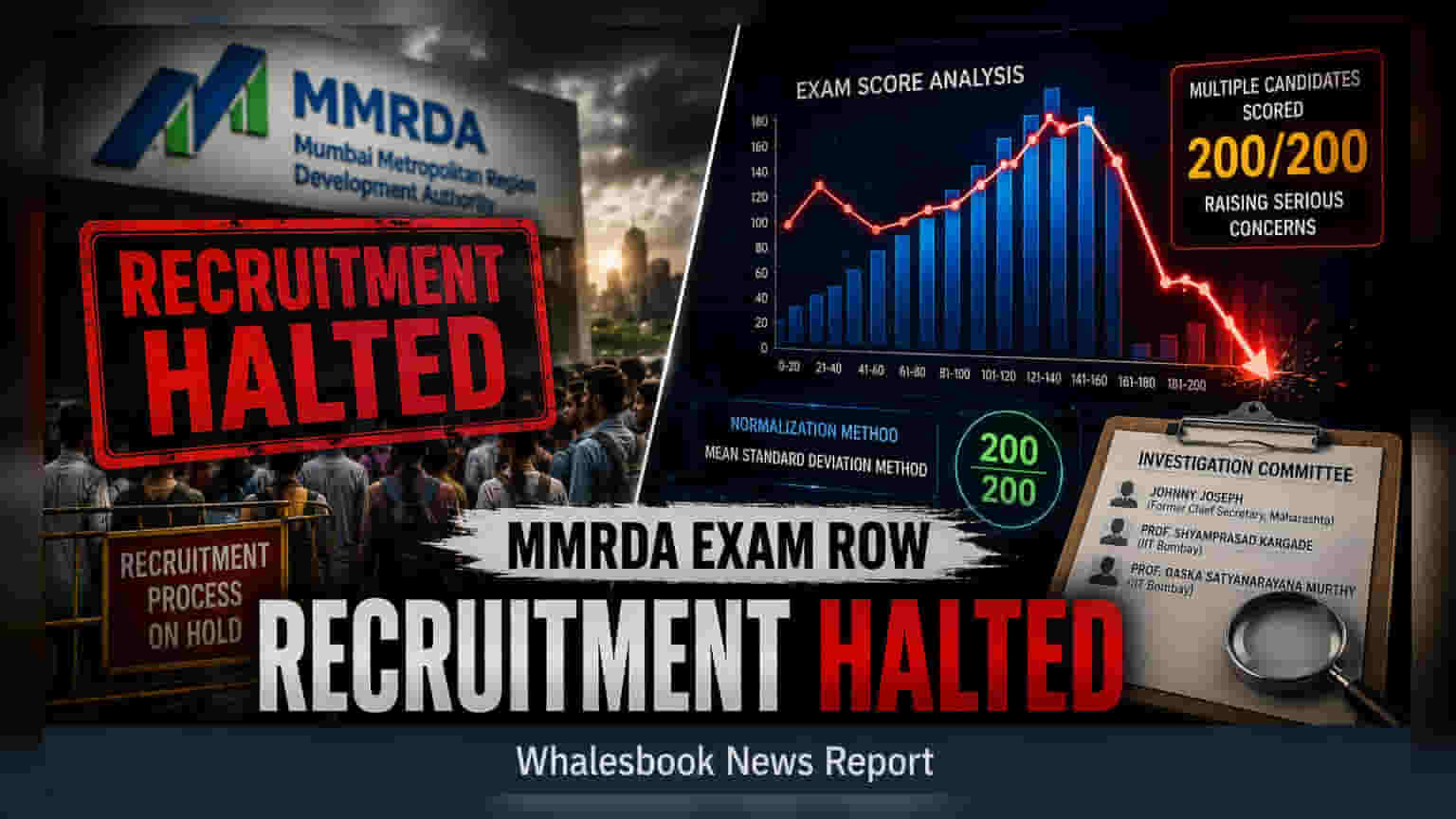
The Mumbai Metropolitan Region Development Authority (MMRDA) has suspended the hiring process for 235 positions due to complaints regarding suspicious exam scores. A high-level committee has been formed to investigate the matter, and the authority has requested a formal explanation from Tata Consultancy Services (TCS), the agency that conducted the tests.
The Mumbai Metropolitan Region Development Authority (MMRDA) has officially put its recruitment drive for 235 vacant positions on hold. This decision follows significant public criticism and complaints from candidates regarding the provisional examination results, which have raised questions about fairness and transparency in the process.
Committee Formed to Investigate Discrepancies
Concerns among candidates intensified after several applicants reportedly achieved perfect scores of 200 out of 200. These results were compared against the performance of similar candidates in recent tests conducted by the Brihanmumbai Municipal Corporation (BMC), leading to questions about the normalization process used for the exam. To address these allegations, the MMRDA has appointed a three-member independent committee to conduct a thorough probe.
This high-level panel is chaired by Johnny Joseph, the former Chief Secretary of Maharashtra. The committee also includes two professors from IIT Bombay, Shyamprasad Kargade and Daska Satyanarayana Murthy. These individuals have extensive experience in managing large-scale, high-stakes competitive examinations, including GATE and JEE (Advanced), which lends credibility to the upcoming review process.
Role of the Examination Service Provider
Tata Consultancy Services (TCS), one of India's largest IT services companies, was responsible for conducting the online examination for over 20,000 applicants. Following the surge in complaints, the MMRDA has formally requested an explanation from the company regarding the conduct and normalization of the exam. For investors and market observers, such developments represent a reputational risk for service providers involved in public sector contracts. While such issues are often resolved through administrative audits, they highlight the operational scrutiny that comes with managing large government-linked projects.
MMRDA has publicly clarified that the scores in question were normalized using the Mean Standard Deviation Method, which is standard practice for exams held across multiple sessions. However, given the nature of the allegations, the authority has stopped all further recruitment steps, including the document verification process, until the investigative committee submits its final report.
Candidates have been given a 30-day window to submit formal objections, along with any supporting evidence, to the authority via email. The ultimate outcome of the investigation—whether it confirms a technical error in normalization or points toward deeper procedural issues—will be the key monitorable for the thousands of candidates who applied for these roles.