

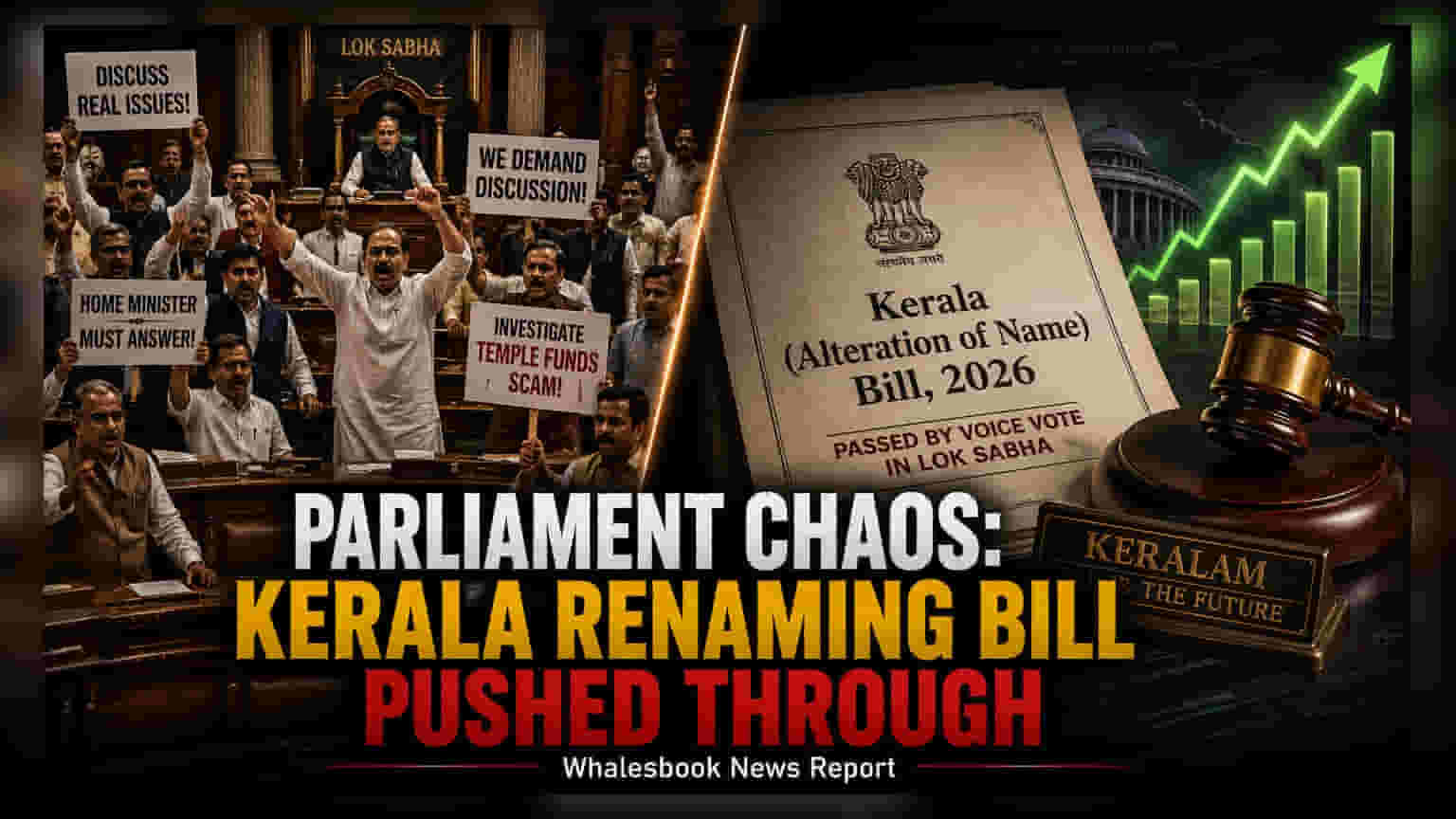
The Lok Sabha has passed the Kerala (Alteration of Name) Bill, 2026, to formally rename the state to Keralam. The bill was approved via voice vote amid ongoing parliamentary disruptions. For investors, the session’s lack of debate highlights a risk of legislative gridlock, which can impact the progress of other key economic and regulatory reforms scheduled for the remainder of the Monsoon Session.
The Lok Sabha on Tuesday passed the Kerala (Alteration of Name) Bill, 2026, which proposes changing the official name of the state of Kerala to Keralam. Alongside this, the House also cleared the National Co-operative Development Corporation (Amendment) Bill, 2026. Both bills were passed by voice vote without debate as the Monsoon Session continues to face significant interruptions.
From a market and investor perspective, the manner in which these bills were passed is notable. Passing legislation without debate indicates a lack of consensus within Parliament, driven by persistent protests from the Opposition regarding unrelated issues. While the renaming of a state is primarily a administrative and identity-focused change, the parliamentary environment in which it was passed is a monitorable for market participants.
Investors typically track parliamentary sessions closely to gauge the speed and ease with which economic, tax, or sector-specific reforms are cleared. When legislative proceedings are frequently disrupted, it raises the risk that other pending bills—potentially affecting foreign investment, regulatory frameworks, or fiscal policy—may be delayed or left undecided before the session concludes.
The renaming proposal follows a unanimous resolution passed by the Kerala Legislative Assembly in June 2024. Following that state-level approval, the proposal was reviewed and cleared by the Union Cabinet before being introduced in the Lok Sabha. The move aims to align the state's official name with its linguistic root.
The current legislative stalemate stems from Opposition demands for a discussion on specific governance and regulatory concerns, including demands for the Home Minister’s presence in the House and investigations into temple-related donation allegations. These protests have resulted in multiple adjournments and a truncated schedule for legislative business.
With the Monsoon Session scheduled to wrap up on Thursday, the remaining time is limited. Investors may now watch for updates on any other major pending legislation that requires attention before the session ends. The focus will remain on whether the government can navigate the remaining agenda items despite the current level of friction between the ruling party and the Opposition.