

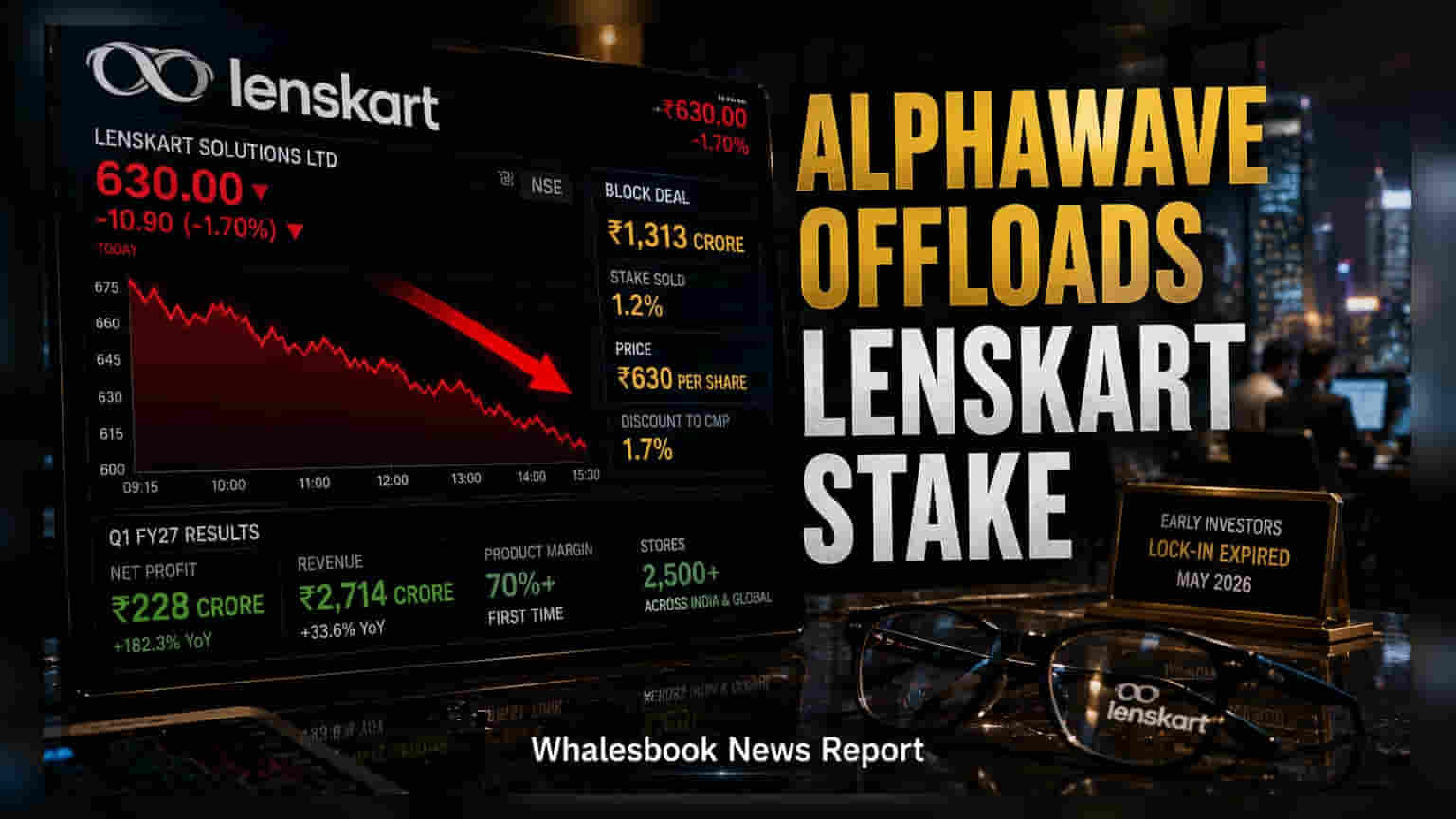
Alpha Wave Ventures II is selling a 1.2% stake in Lenskart through a block deal valued at ₹1,313 crore, with a floor price of ₹630 per share. This move follows a string of exits by early investors since the post-IPO lock-in expiry in May. While secondary market supply is increasing, the company has reported strong quarterly growth, with net profit rising significantly in Q1 FY27.
Alpha Wave Ventures II has initiated a significant divestment, selling a 1.2% stake in the eyewear retailer Lenskart through a block deal valued at ₹1,313 crore. The transaction has been priced at ₹630 per share, representing a 1.7% discount to the company’s recent closing price. This deal is the latest in a series of secondary market transactions by early-stage investors looking to monetize their holdings following the expiry of post-IPO lock-in periods in May 2026.
Strong Financial Growth Amid Sell-Off
While the block deal involves an exit by a private investor, the company’s underlying business performance remains a key focus for market participants. In its most recent quarterly results for Q1 FY27, Lenskart reported a 182.3% year-on-year surge in net profit, reaching ₹228 crore. Revenue during the same period grew by 33.6%, touching ₹2,714 crore. Notably, the company’s consolidated product margins crossed the 70% threshold for the first time, reflecting improved operational efficiency despite the company's aggressive retail expansion strategy.
Market Dynamics and Investor Risks
The recurring block deals from early investors since the IPO lock-in expiry have led to a steady supply of shares in the secondary market. For shareholders, this influx of equity can sometimes create short-term price volatility or downward pressure on the stock, as large quantities of shares change hands.
Beyond the immediate supply dynamics, investors often weigh the company's high valuation multiples against its growth trajectory. While the company is showing rapid profit and revenue scaling, it continues to invest heavily in physical store additions and supply chain infrastructure. This capital-intensive approach puts ongoing pressure on cash flow and margins, even though overall profitability has improved. Furthermore, the retail eyewear sector is highly competitive, and the company’s ability to sustain its premium growth rates while managing these operational costs will be crucial.
What Investors Should Monitor
Following this transaction, the selling shareholder is subject to a 45-day lock-up period, which is intended to provide some stability to the share price by preventing an immediate follow-up sale. Market participants will likely track the volume of shares absorbed by institutional buyers and how the stock price stabilizes once this current liquidity event concludes. The key monitorable for the long term remains whether the company can maintain its rapid profit growth and margin expansion as it continues to execute its expansion plans in both domestic and international markets.