 Whalesbook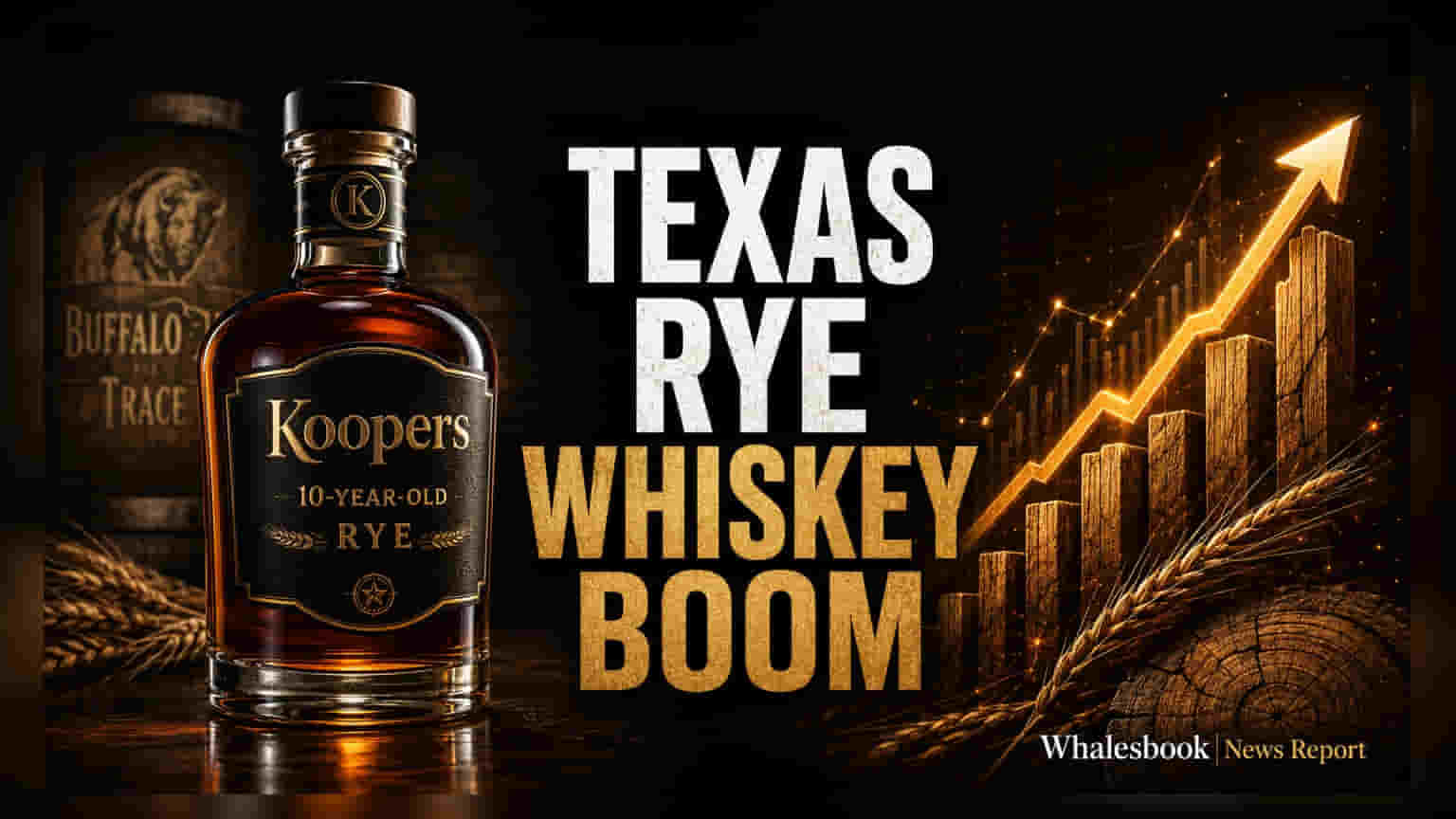


The Economics of Accelerated Maturation
The secondary market fervor surrounding the recent Koopers 10-Year-Old Straight Rye release serves as a case study in the premiumization of independent blending operations. While the whiskey utilizes distillate sourced from Illinois-based Koval Distillery, the value proposition rests entirely on the logistical choice to transfer the product into seasoned Buffalo Trace bourbon casks. This transition mitigates the structural risks associated with the initial nine-month maturation period in smaller, fifteen-gallon vessels. By extending the aging cycle in full-sized, neutral barrels, the producer successfully neutralized the typically harsh tannins associated with smaller-cask, accelerated aging, effectively repositioning a volatile base spirit into a high-margin, collectors-grade asset.
Scaling Complexity Through Sourcing
Unlike large-scale distillers who are tethered to consistent house profiles, independent blending houses leverage the ability to curate specific components for market differentiation. The success of this release at the 100-proof threshold demonstrates a broader trend where enthusiasts prioritize the influence of finishing vessels over distillery provenance. The specific inclusion of seven-year-old Buffalo Trace barrels introduces a layer of secondary market cachet that functions as a proxy for quality. For independent operators, this strategy requires navigating complex supply chain dependencies, as the reliance on third-party casks and base spirits exposes the blender to price fluctuations in the broader aged-spirits supply chain.
The Scarcity Trap and Valuation Risks
The immediate depletion of the 231-bottle inventory highlights the acute imbalance between boutique supply and collector demand. While the ninety-two-point rating validates the technical quality of the spirit, the rapid sell-out creates a significant valuation disconnect between the distillery-gate price and prospective secondary market premiums. Investors should note that blending houses are inherently susceptible to volume constraints; unlike major distillers, they lack the operational scale to stabilize prices through increased production. Furthermore, the reliance on external barrels creates a long-term quality control hurdle, as the availability of high-quality seasoned casks from premium producers remains a finite and highly competitive resource. As the market for independent spirits matures, entities that cannot secure consistent high-quality secondary finishing vessels will inevitably face margin compression, rendering their high-alpha status increasingly difficult to maintain.