

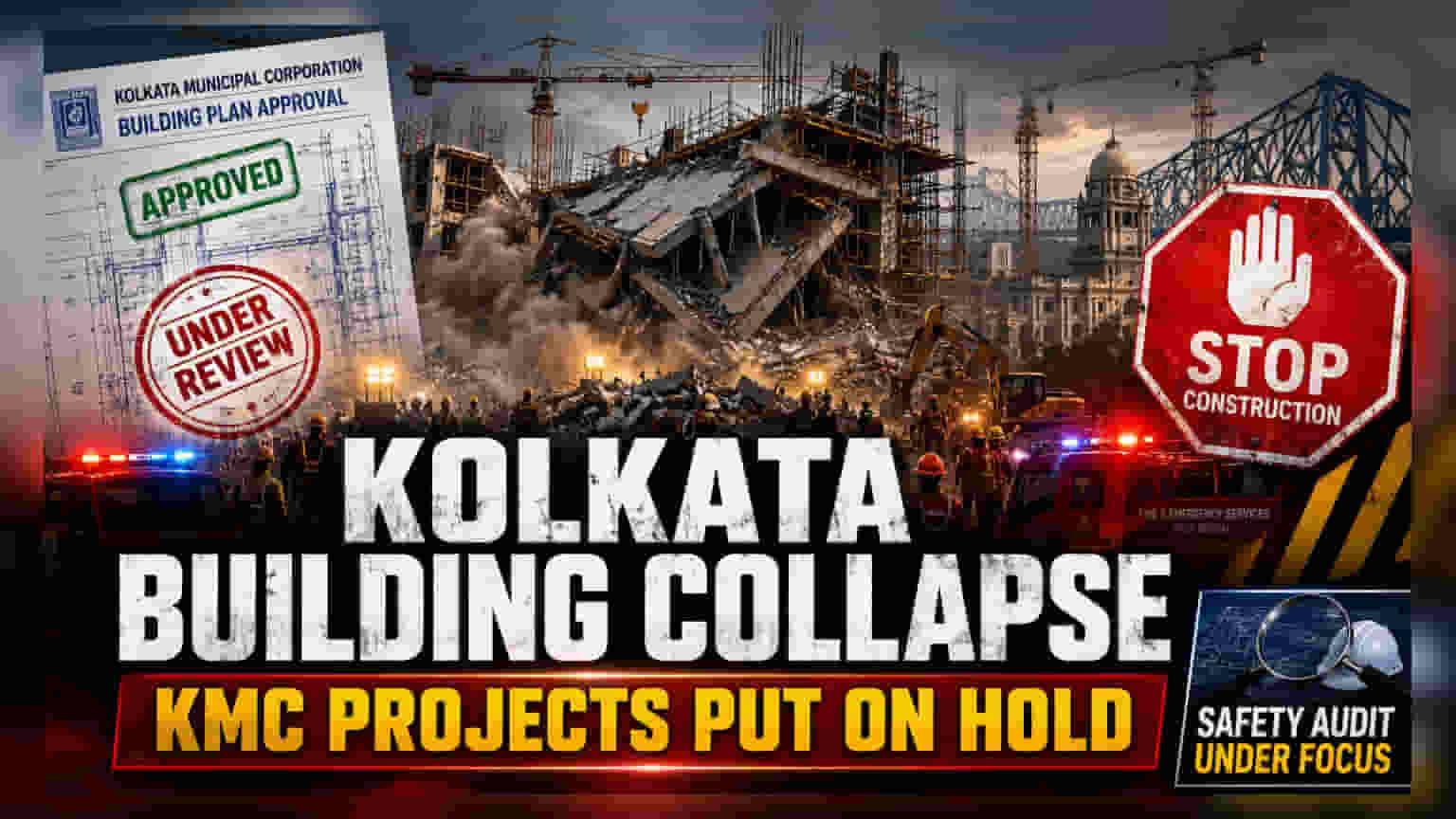
A warehouse collapse in Kolkata's Garden Reach has resulted in at least 15 fatalities. In response, the West Bengal government has ordered a halt to construction on projects approved by the Kolkata Municipal Corporation. The tragedy has triggered calls for stricter regulatory oversight, raising concerns regarding building plan approvals, structural audits, and contractor safety standards across major urban centers.
What Happened
A tragic building collapse occurred at an under-construction warehouse in the Garden Reach area of Kolkata, resulting in at least 15 worker fatalities and numerous injuries. The incident has led to significant concern regarding safety standards and building plan approvals at construction sites. Following the collapse, the Chief Minister of West Bengal has ordered an immediate halt to all ongoing construction projects that received approval from the Kolkata Municipal Corporation (KMC). This regulatory action is intended to facilitate an investigation into the safety protocols and structural integrity of these developments.
The Regulatory Impact
The government's decision to pause construction on KMC-approved projects is a critical step that may influence real estate and infrastructure timelines in the region. Reports indicate that the collapse has prompted scrutiny over the approval process for building plans and the oversight of contractors. Stakeholders are now questioning whether current municipal assessments are sufficient to identify structural flaws before construction begins. The emphasis is shifting toward mandatory, independent structural audits and the public disclosure of statutory approvals to ensure greater transparency and accountability in construction projects.
Systemic Infrastructure Challenges
The Garden Reach tragedy is being viewed by experts alongside broader issues affecting urban infrastructure in India. Concerns have been raised about the selection process for contractors and the need for more rigorous vetting of technical capabilities and past safety records before tenders are awarded. Beyond construction safety, the incident highlights persistent problems in urban planning, such as inadequate drainage systems and infrastructure planning in major cities like Mumbai, Delhi, Bengaluru, and Chennai. These issues often resurface during monsoon seasons, leading to repeated crises that impact urban operations.
What To Monitor Next
Investors and stakeholders with interests in regional infrastructure and real estate should monitor the outcome of the ongoing investigations into the Garden Reach incident. The key monitorable will be potential changes in municipal building approval norms, including requirements for third-party structural monitoring or real-time site oversight. Additionally, the impact of the construction freeze on project delivery schedules and the financial implications for developers and contractors involved in the halted projects will be critical to observe. The government’s approach to revising contractor tendering processes and safety enforcement will also be a primary indicator of future regulatory trends in the construction sector.