

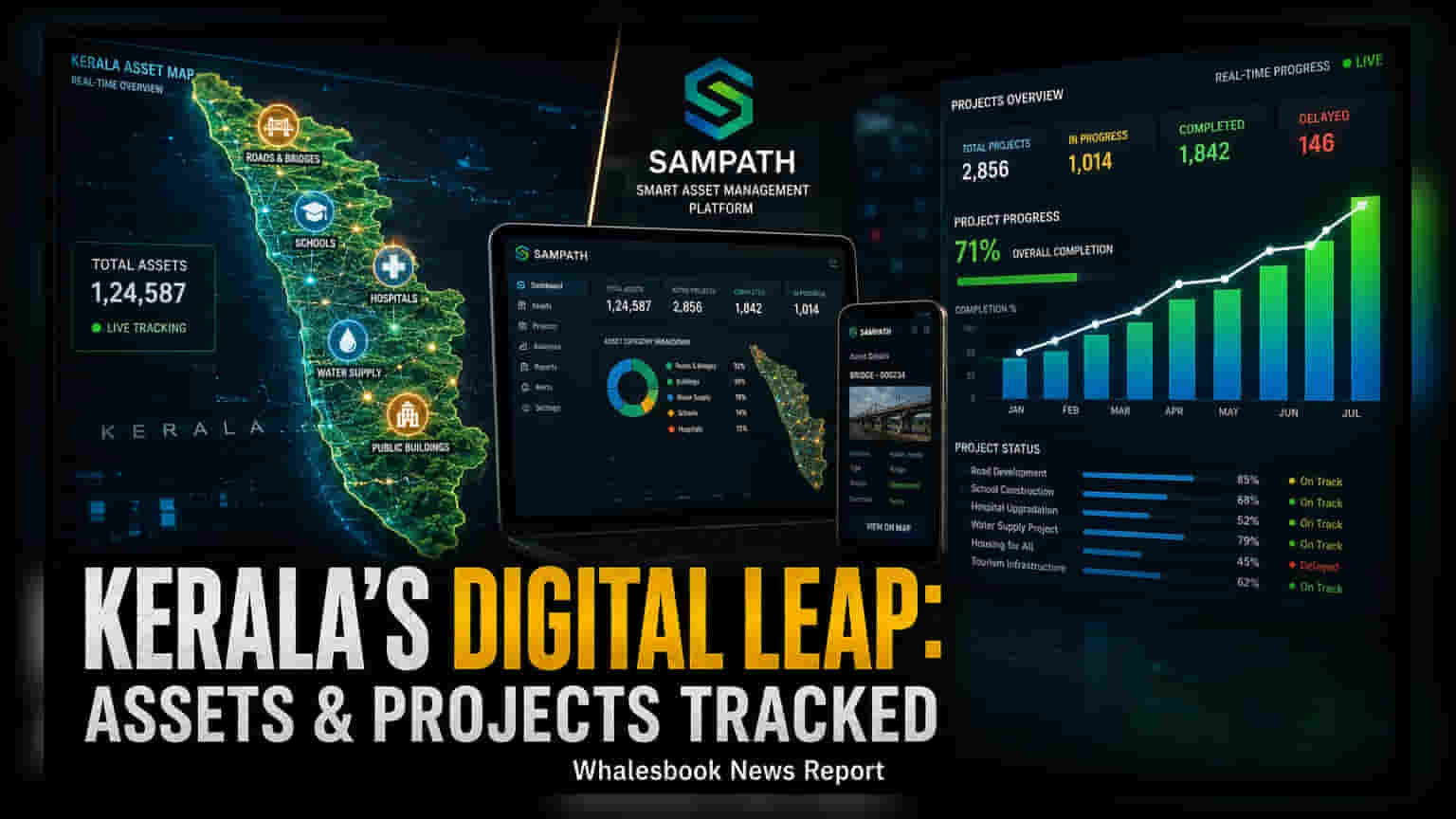
The Kerala government has introduced two digital platforms, SAMPATH and PlanSpace 2.0, to improve asset tracking and project monitoring. These reforms aim to centralize government data and increase accountability in capital spending across departments. The initiative is designed to address financial leakages and improve the efficiency of state-led infrastructure projects.
The Kerala state government has rolled out two major digital governance initiatives, SAMPATH and PlanSpace 2.0, as part of a broader push to modernize its administrative infrastructure. These platforms are intended to bring greater transparency to how the state manages its resources and tracks public spending on infrastructure.
Asset Tracking Through SAMPATH
The Special Asset Management Platform for Administration, Tracking and Harmonisation, or SAMPATH, is designed to serve as a single, centralized database for all state-owned assets. This includes land parcels, government buildings, roads, dams, heritage sites, and machinery. By moving away from decentralized record-keeping, the government aims to create a reliable inventory that tracks the status and value of public property. For observers, this shift could improve the state's ability to monitor asset utilization and prevent the mismanagement of public resources.
GIS-Based Project Monitoring With PlanSpace 2.0
The second initiative, PlanSpace 2.0, focuses on the monitoring of state-funded capital projects. This system utilizes Geographic Information System technology to geotag project sites, linking them directly to their location. The platform tracks critical data points for each project, including the specific government department responsible, the approved funding, the authorizing authority, and the current stage of physical construction.
Addressing Financial Leakages
A primary goal of these reforms is to reduce inefficiencies and financial leakages in project execution. By providing real-time digital oversight, the government intends to improve the accountability of various departments involved in large-scale infrastructure development. Historical challenges in large government projects often involve cost overruns or delays due to fragmented data; by consolidating project timelines and funding streams into one digital registry, the state hopes to enforce stricter control over capital allocation.
While these digital platforms offer a framework for better administration, the success of these reforms will depend on the effective adoption across different government departments and the accuracy of the data entered into the systems. Investors and observers of state-led infrastructure development in Kerala may track whether these tools lead to measurable improvements in project completion timelines and the efficient use of the state budget in future quarterly financial updates.