

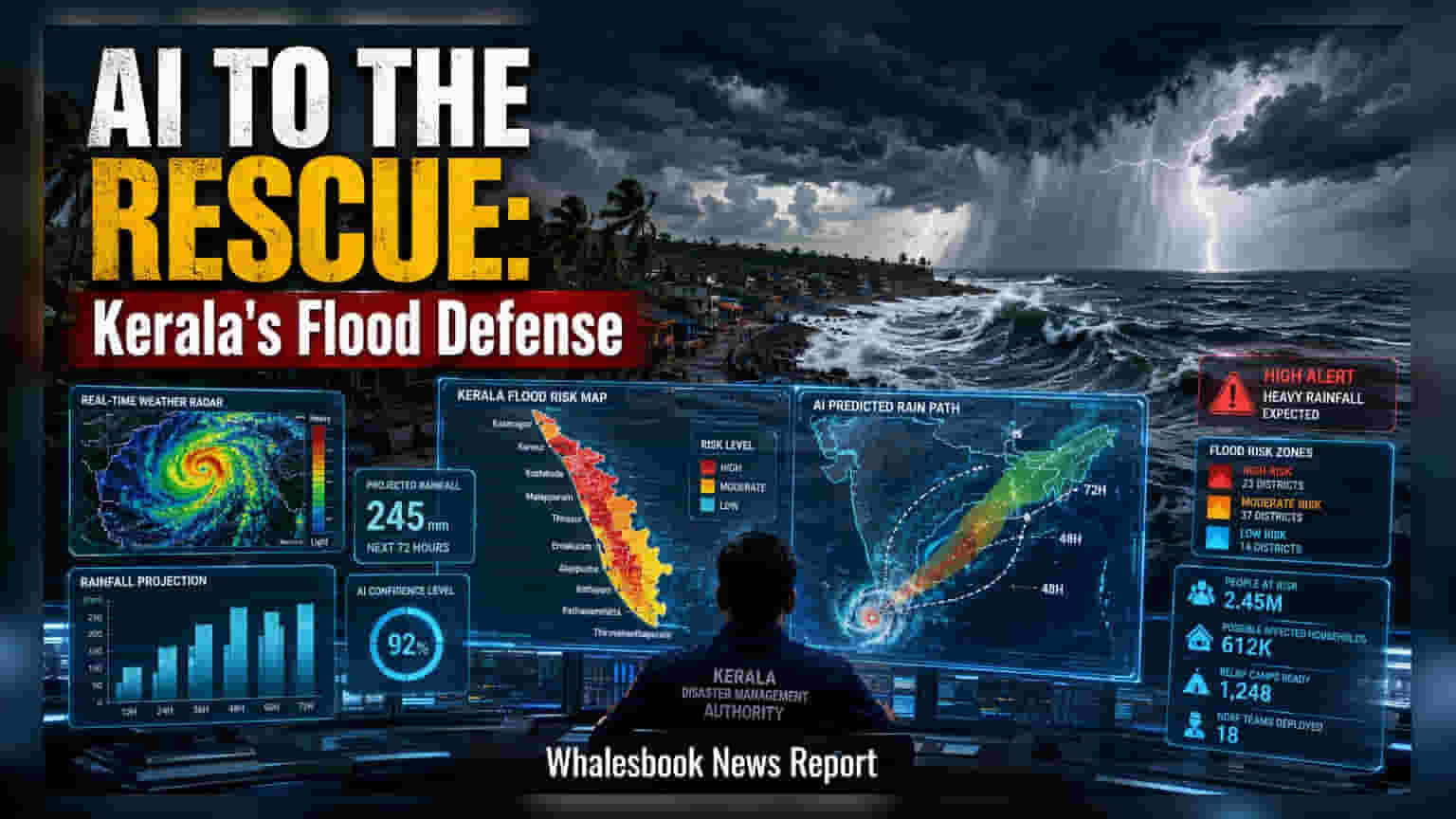
The Kerala government has announced an AI-powered disaster management system to enhance early warning capabilities against severe weather. Beginning with a pilot in Pathanamthitta, the initiative focuses on sensor network expansion and river desilting. As this is a state-funded administrative project, there is no direct impact on any publicly traded company, and investors should avoid speculating on specific stock movements.
The Kerala state government has announced the implementation of an AI-driven disaster management and resilience system designed to strengthen the state’s early warning capabilities against sudden weather shifts. The initiative is a strategic response to recent heavy rainfall events and aims to modernize how the state identifies and reacts to potential climate-related threats.
The project will initially launch as a pilot program in the Pathanamthitta district. This phase includes the expansion of the existing rain gauge network and the integration of data from academic and research institutions, including the Cochin University of Science and Technology (CUSAT) and the Hume Centre. The goal is to create a more responsive framework that can predict severe weather patterns with greater precision than traditional methods, thereby reducing risks to public safety.
Infrastructure and Execution Challenges
Beyond the integration of AI, the government has emphasized the importance of physical infrastructure maintenance. Officials have highlighted that urgent river desilting is a priority, noting that many water bodies in the state have not undergone effective desilting since 2019. This lapse in maintenance has been identified as a factor that reduces the water-carrying capacity of riverbeds, which can exacerbate flood risks even during moderate monsoon activity. The state has issued directives to the Revenue and Water Resources departments to initiate this work once the monsoon season subsides.
The initiative aims to improve upon previous disaster management efforts by systematically addressing both technical data collection and physical flood mitigation. However, historical execution data suggests that the successful rollout of such programs often faces logistical hurdles, including the complexity of coordinating efforts across multiple government departments and ensuring the long-term maintenance of technical infrastructure.
Perspective for Investors
It is important for investors to note that this disaster management program is a state-led administrative policy. While the government has previously engaged private firms—such as Skymet Private Ltd and IBM—for specific weather-related services, this new announcement does not constitute a commercial contract awarded to any single listed entity. Consequently, there is no direct, verifiable financial impact on any publicly traded stock in the Indian market.
Investors should be cautious of speculative market activity or unsubstantiated claims linking this policy to specific corporate stock movements. The project’s success will rely on the government's ability to navigate the complex technical integration and ensure the timely execution of physical infrastructure projects like desilting. Future updates regarding the expansion of the pilot project, the allocation of administrative funds, and the operational efficacy of the AI-integrated warning systems will be the primary metrics for monitoring the government's progress on this initiative.