

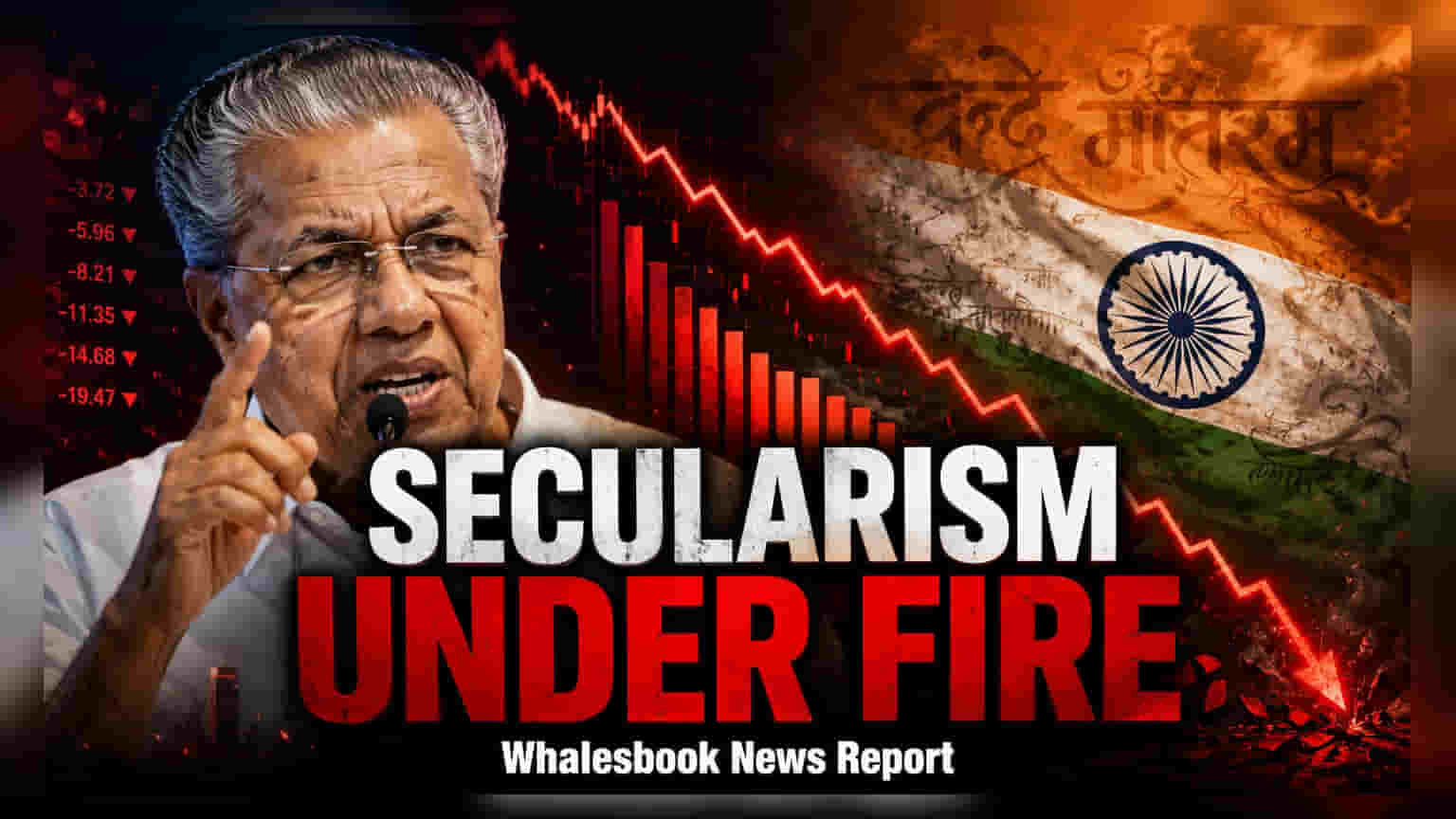
The Kerala government’s directive to sing the full version of 'Vande Mataram' on Independence Day has sparked a sharp political dispute. Opposition leader Pinarayi Vijayan has demanded the order be withdrawn, citing concerns over secular principles and historical precedent. This clash highlights rising friction between state administration and central directives regarding national symbols and cultural policy.
A new political controversy has emerged in Kerala following a state government directive mandating the full rendition of the national song, 'Vande Mataram,' during the upcoming Independence Day celebrations. The order, issued by Chief Secretary Bishwanath Sinha, requires the complete song to be sung during flag hoisting ceremonies across the state.
Opposition leader Pinarayi Vijayan has publicly demanded the withdrawal of this directive. Vijayan argues that the instruction to sing the full version deviates from the established historical consensus. He pointed to the practices adopted by the Constituent Assembly and national leaders like Jawaharlal Nehru, who endorsed only the opening stanzas of the song. Vijayan alleged that the current mandate is a submission to the ideological agenda of the Rashtriya Swayamsevak Sangh (RSS) and warned that it undermines the state’s secular principles.
The state government’s order appears to follow recent communication from the Union Ministry of Culture. This directive is linked to the broader 'Har Ghar Tiranga' campaign and the ongoing 150th-anniversary commemorations of 'Vande Mataram,' as guided by the National Implementation Committee. The instructions emphasize adherence to official guidelines for the recitation of the song during physical events.
This incident follows earlier tensions in Kerala earlier this year. In May 2026, a similar debate occurred during the opening session of the 16th Kerala Assembly when the state police band did not play the full version of the song, leading to political friction. The current situation is further complicated by discussions at the national level regarding a proposed 'Vande Mataram Bill' (an amendment to the Prevention of Insults to National Honour Act) aimed at providing statutory protection to the national song.
For observers and stakeholders, such political disputes between state administrations and central government directives are significant. They often signal wider administrative friction, which can occasionally lead to operational delays, policy impasses, or public unrest. While this is primarily a socio-political issue, investors often monitor the stability of the state policy environment, as consistent friction between the state and the center can influence the speed of regulatory approvals and the overall business climate in the region. The immediate monitorable will be whether the state government proceeds with the order or modifies it in response to the growing opposition.