

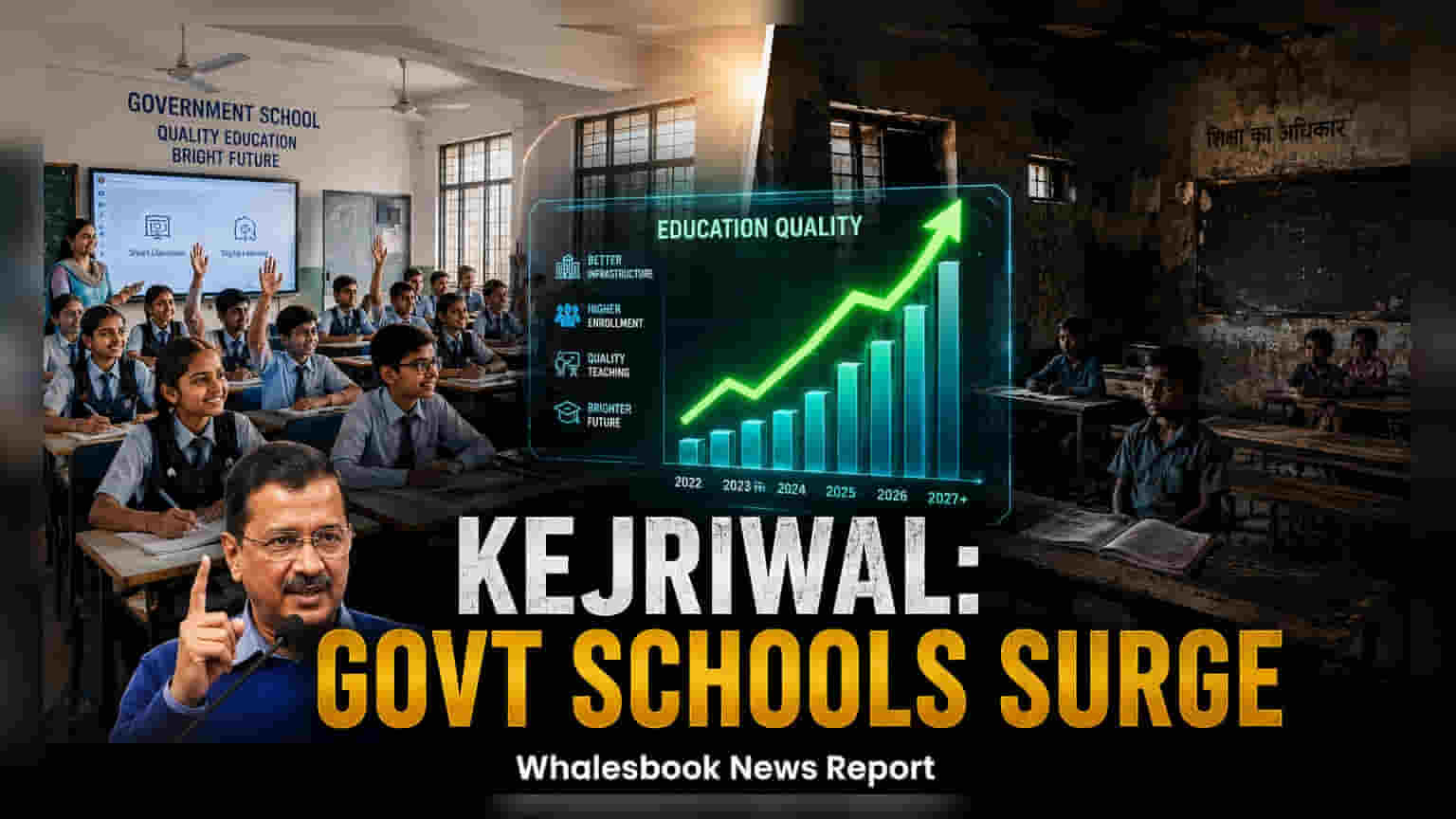
Arvind Kejriwal stated that the national focus on education has become a grassroots movement, citing progress in Delhi and Punjab government schools. As education remains a major line item in state budgets, fiscal analysts and citizens monitor the balance between heavy social spending and state fiscal health in regions governed by the Aam Aadmi Party.
Aam Aadmi Party national convenor Arvind Kejriwal described the ongoing national discussion on education as a significant people-led movement on August 18, 2026. Kejriwal claimed that the governance model in Delhi and Punjab has transformed government schools into competitive alternatives to private institutions, leading to an increasing shift of student enrollments toward the public sector.
This statement followed a recent clarification by Punjab Education Minister Harjot Singh Bains, who addressed concerns regarding the infrastructure of a government school in Jhalla village. Bains stated that a video circulating online, which showed poor conditions, was outdated and did not represent the current status of the facility.
From a public policy and economic perspective, education and healthcare remain the two most significant areas of government spending for the Aam Aadmi Party. For stakeholders analyzing state finances, the focus is often on the long-term sustainability of such high-expenditure social models. While these investments aim to improve human capital, they also place substantial pressure on state budgets. Analysts who monitor state-level fiscal health often examine the trade-offs between increased social spending and the management of public debt or fiscal deficits.
While the party points to improvements in infrastructure and quality as a sign of success, the model faces scrutiny from various quarters. Critics and opposition groups have frequently pointed to persistent challenges in the education sector, including teacher vacancies, reported infrastructure deficits in remote areas, and questions regarding the effectiveness of public expenditure. Furthermore, economists and rating agencies often monitor the broader fiscal impact of welfare-heavy schemes in AAP-governed states, weighing the benefits of social development against the constraints of state revenue and rising debt levels.
Moving forward, the primary area for observers to track is the transparency of public spending and the tangible long-term impact of these education models on literacy and skill outcomes. The state budget presentations and audit reports from the Comptroller and Auditor General (CAG) will continue to be the official documents that provide clarity on how effectively funds are being utilized and whether these states can maintain their fiscal targets while prioritizing high social spending.