

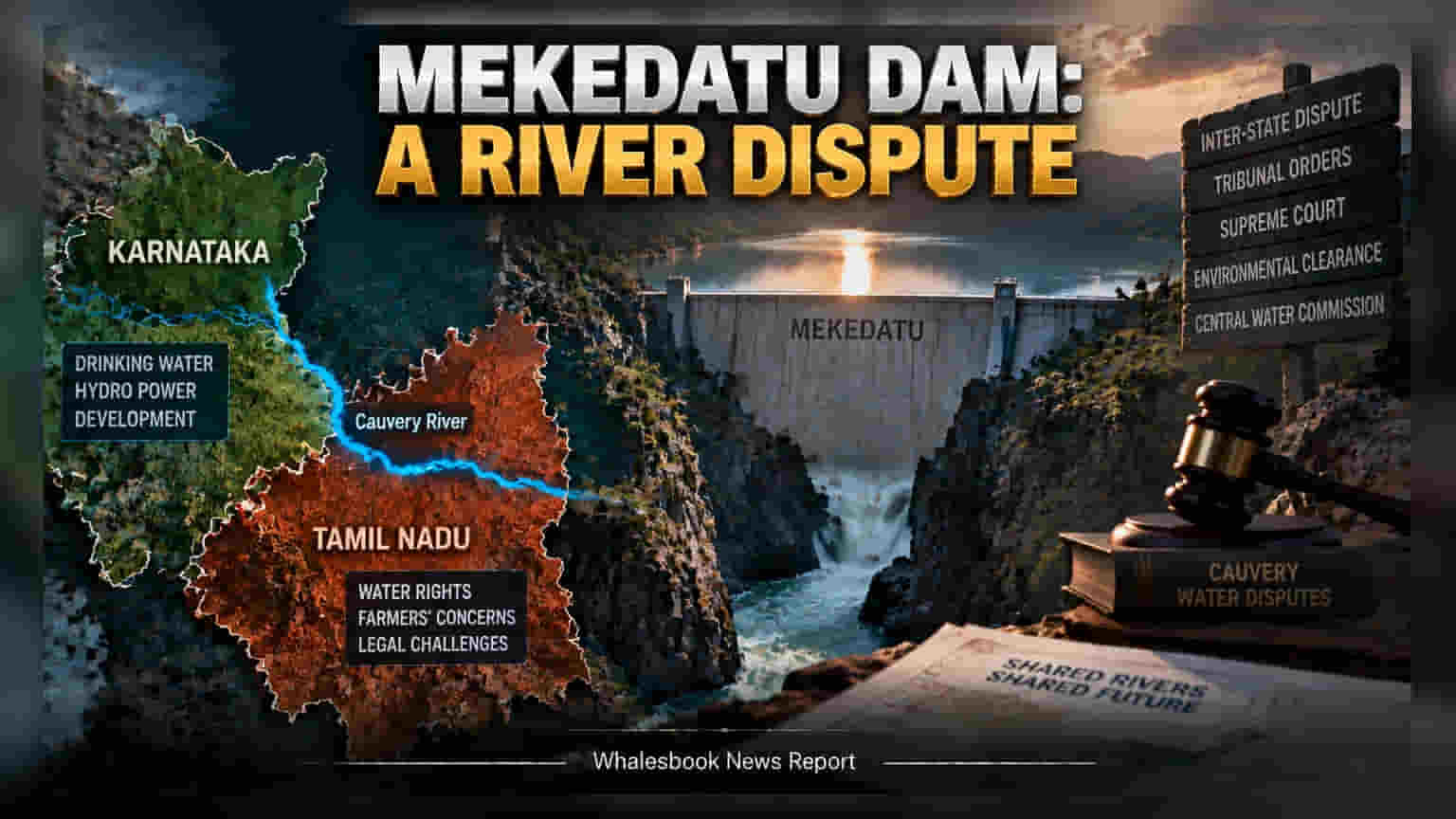
The Karnataka government has submitted a revised proposal for the Mekedatu reservoir project. With an estimated cost of ₹16,745 crore, the plan faces legal and regulatory hurdles over water-sharing agreements with Tamil Nadu. Readers tracking infrastructure projects should note the significant execution risks involved in such large-scale inter-state initiatives.
The Karnataka government has re-submitted its Detailed Project Report (DPR) for the Mekedatu balancing reservoir and hydroelectric project to the Central Water Commission. This latest proposal outlines a project cost of ₹16,745 crore and includes a storage capacity of 67.16 TMC. The project aims to provide drinking water to Bengaluru and generate hydroelectric power, but it has become a central point of conflict between the state governments of Karnataka and Tamil Nadu.
The core of the standoff lies in how the reservoir would manage water flows. Tamil Nadu has raised strong objections, arguing that the project would violate existing water-sharing agreements established by the Cauvery Water Disputes Tribunal. The state has challenged the project in legal and federal forums, expressing concerns that the reservoir would give Karnataka control over the timing of water releases, potentially hurting downstream agriculture during monsoon deficits.
From an infrastructure and regulatory perspective, the project faces major challenges. The Central Water Commission has previously returned the proposal to the state, citing a lack of compliance with the 2018 Supreme Court judgment regarding Cauvery water sharing. The project must now clear several layers of technical and environmental scrutiny. For observers of the infrastructure sector, this situation highlights the common execution risks associated with large, inter-state projects in India, where political and legal disagreements often lead to significant delays.
This initiative is being managed by state-level entities such as Cauvery Neeravari Nigam Limited, rather than a listed corporate entity. Therefore, the direct impact of the project's progress or delays is felt primarily through state finances and regional infrastructure development timelines rather than stock market valuations. However, the outcome of the project serves as a key indicator of how inter-state regulatory hurdles can impact the speed of large-scale public infrastructure execution.
The next critical updates for stakeholders to monitor will be the technical findings of the Central Water Commission, any further legal proceedings in the Supreme Court, and formal statements from the Union government regarding inter-state water rights. Given the history of litigation surrounding the Cauvery river, the timeline for potential approvals or construction remains uncertain, as the legal battle over water-sharing protocols continues to be the primary factor influencing the project's future.