

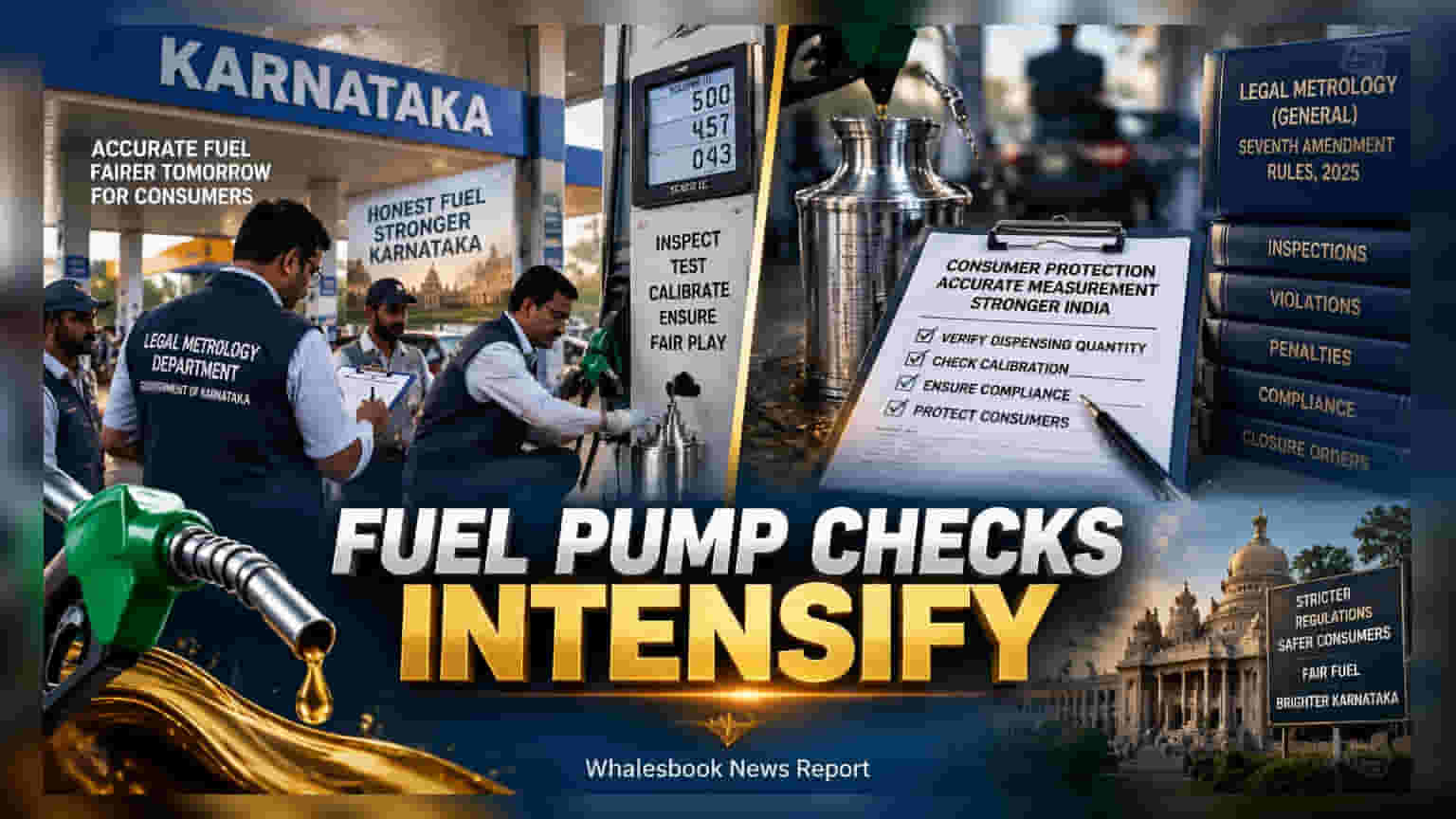
Karnataka has launched a strict compliance drive for petrol pumps following 'Mission Nikhara' inspections that revealed widespread fuel under-delivery. The state is now urging the central government to revert the mandatory calibration period from 24 months back to 12 months, increasing compliance scrutiny for retail fuel operators.
The Karnataka government has initiated a stricter enforcement drive against petrol pump operators under its 'Mission Nikhara' program following findings of significant fuel dispensing irregularities. During recent inspections, the state’s Legal Metrology Department examined 805 of the state's 5,946 petrol pumps. The data revealed that 768 of these outlets required immediate recalibration, indicating that the vast majority of tested sites were not meeting precise dispensing standards.
Officials identified under-delivery as the primary issue, with 8.5 out of every 10 fuel nozzles tested showing deviations in volume. As a result, the authorities have registered 101 cases and collected ₹6.66 lakh in fines. The state government has issued a stern warning that outlets failing to comply with accuracy standards may face orders for closure, signaling a push for greater accountability in the retail fuel sector.
From a regulatory standpoint, the Karnataka government is now preparing to approach the central government to request a review of the Legal Metrology (General) Seventh Amendment Rules, 2025. This central amendment currently allows for a 24-month verification period for fuel dispensing equipment. Karnataka authorities are seeking to restore the mandatory 12-month calibration cycle, arguing that more frequent oversight is necessary to ensure consumer protection and accurate fuel measurement.
For investors and market observers, the impact of these developments is primarily concentrated on the operational compliance of retail fuel dealers. While this crackdown targets the retail pump level, any shift in regulatory norms can increase operational expenses and administrative burdens for fuel station operators across the state. Should this push for stricter, annual calibration be accepted by the central government, it would change compliance schedules for operators nationwide.
Investors in the energy sector should note that while this specific regulatory action involves retail pump compliance, the broader downstream fuel ecosystem is sensitive to shifts in government policy and consumer protection standards. The next important update to monitor will be any formal response from the central government regarding the request to revise the Legal Metrology rules and whether other states choose to adopt similar inspection drives.