

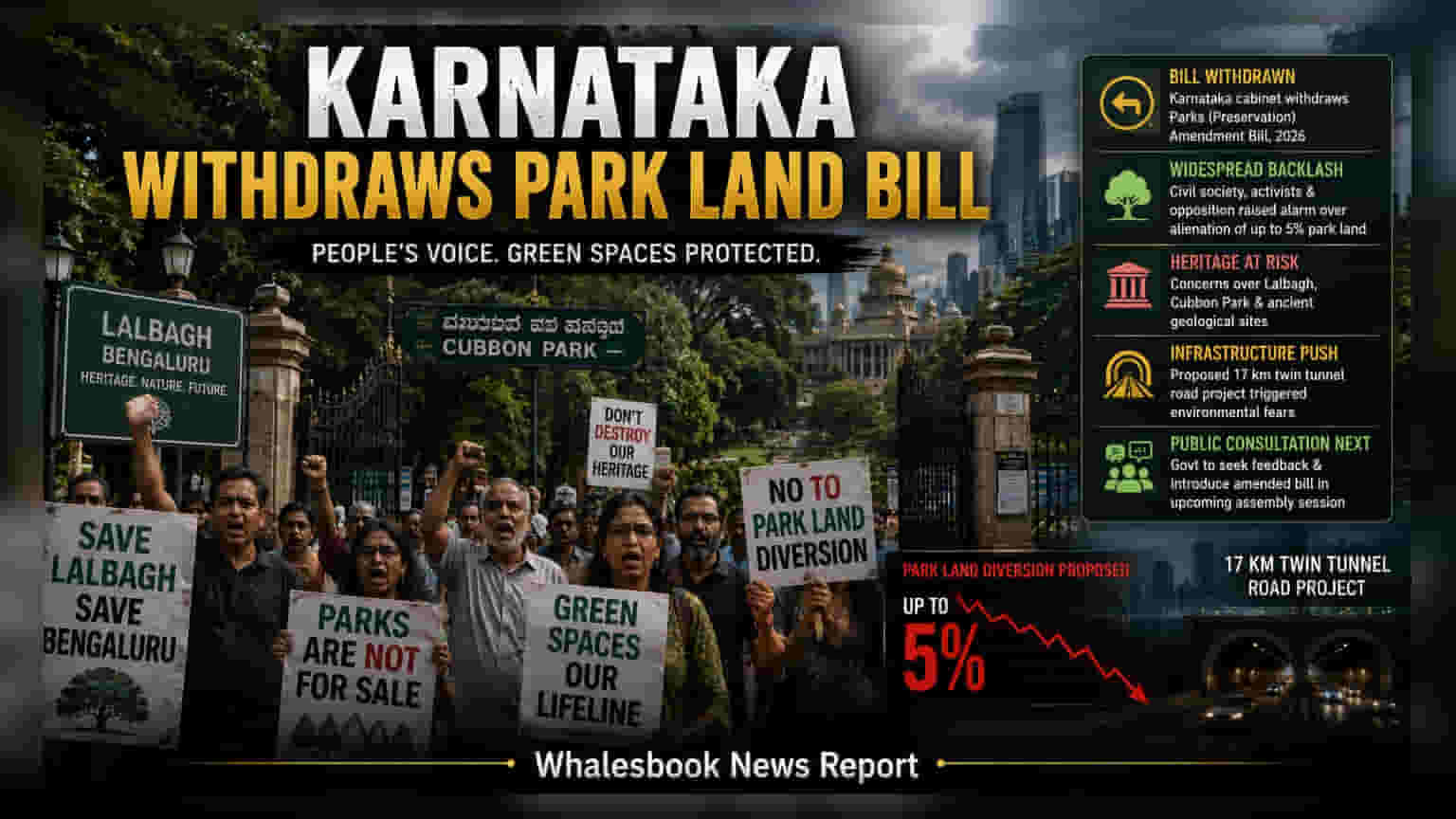
The Karnataka government has officially withdrawn the controversial bill that proposed diverting up to 5% of state-owned park land for infrastructure projects. The decision follows intense public and political opposition regarding the potential impact on heritage sites like Bengaluru's Lalbagh. The government now plans to hold public consultations before reintroducing an amended version of the bill in the next legislative session.
The Karnataka cabinet has decided to withdraw the Karnataka Government Parks (Preservation) (Amendment) Bill, 2026, marking a significant policy shift following widespread backlash. The bill, which had been passed during the recent assembly session without extensive debate, proposed allowing the state to alienate up to five percent of land within public parks and gardens for infrastructure and utility projects. This withdrawal comes after a surge of protest from civil society, environmental activists, and opposition leaders who argued that the legislation threatened the city’s essential green cover.
Impact on Heritage Spaces
The core of the controversy centered on the potential use of iconic spaces such as Lalbagh and Cubbon Park for large-scale construction. Critics raised alarms that the five percent provision could lead to the loss of significant green areas, which are critical for Bengaluru’s ecological health. Concerns were specifically directed at the potential diversion of land for the proposed 17-kilometer twin tunnel road project, a major infrastructure initiative intended to reduce traffic congestion in the city. Environmental groups warned that such projects could irreversibly damage historical sites, including the ancient geological formations within Lalbagh.
Government Strategy and Future Consultations
While the current bill has been rescinded, the state administration has not abandoned the underlying infrastructure objectives. Deputy Chief Minister G. Parameshwara clarified that the government intends to place the proposal in the public domain to gather feedback and address concerns. This approach aims to mitigate the criticism that the bill was pushed through without sufficient legislative or public scrutiny. The state plans to draft an amended version of the bill based on this feedback for introduction in the upcoming assembly session.
Infrastructure Versus Ecology
The situation highlights the ongoing tension between Bengaluru's rapid urban expansion and the preservation of its remaining open spaces. For the government, the challenge lies in balancing the need for massive infrastructure improvements—often cited as essential for long-term economic growth and traffic management—against the community's demand for environmental protection. As the government prepares for public consultation, the key monitorable for residents and urban planners will be how the administration defines 'public utility' projects and whether future drafts include stricter safeguards to prevent the degradation of parks. The debate remains a critical issue, as the future of both the infrastructure projects and the city's heritage parks remains closely linked to the final legislative outcome.