

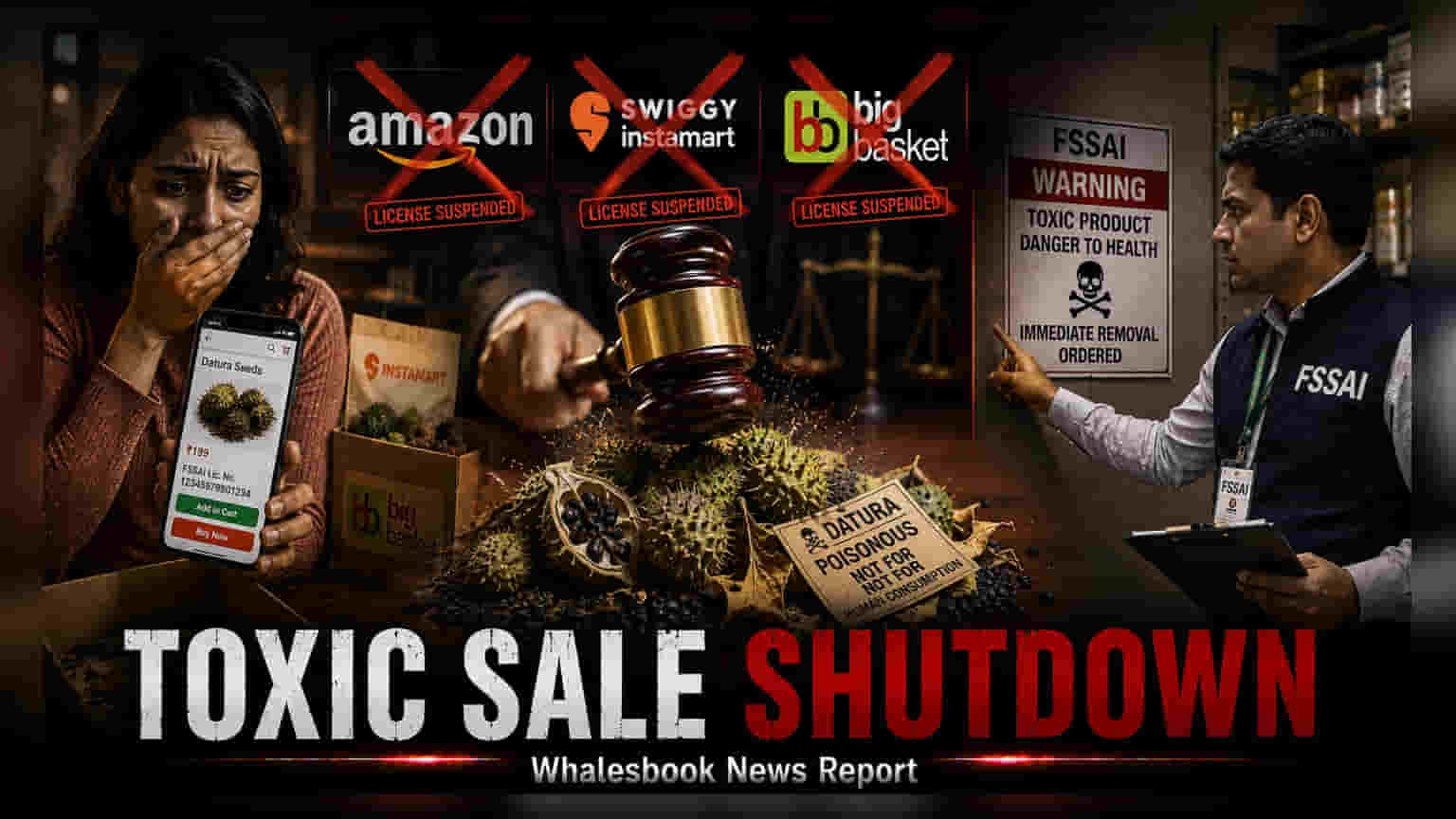
The Karnataka Food Safety and Drugs Administration has suspended the food licenses of Amazon, Swiggy Instamart, and BigBasket. The regulator took this action after discovering the online sale of toxic Datura seeds for human consumption. Investors may monitor how these companies strengthen their third-party seller compliance to address this regulatory risk.
The Karnataka Food Safety and Drugs Administration (FDA) has ordered the immediate suspension of food licenses for Amazon, Swiggy Instamart, and BigBasket. This regulatory action follows a departmental probe which confirmed that these e-commerce platforms were offering Datura (Dhatura) fruits and seeds for human consumption. Datura is recognized as a poisonous plant, and its consumption poses a severe danger to public health.
The regulatory investigation revealed that some of these toxic items were listed on the platforms with FSSAI (Food Safety and Standards Authority of India) registration numbers, which the authority found to be misleading. Consequently, the FDA has ordered the companies to immediately remove all such listings and stop any advertisements for these products. The license suspension also extends to the specific vendors and suppliers involved in the supply chain of these items.
The decision to suspend the licenses comes after the regulator reviewed the responses from the companies involved. According to the regulatory findings, the responses provided by the platforms were deemed unsatisfactory. The records show that Amazon did not submit a response to the notice, Swiggy Instamart requested additional time to detail its corrective actions, and BigBasket proposed adding labels indicating the products were not for human consumption. None of these measures were considered sufficient by the authorities to address the immediate health risk posed by the listings.
For investors and market observers, this event highlights the increasing regulatory scrutiny on e-commerce marketplaces regarding the products listed by third-party sellers. As these platforms act as intermediaries, they are expected to implement robust systems to verify that all food products listed by vendors meet safety and quality standards. This incident underscores the operational and legal risks associated with third-party listing oversight.
The immediate monitorable for stakeholders will be the companies' ability to resolve this regulatory suspension with the Karnataka FDA. Investors may also track whether this incident leads to stricter compliance mandates or higher monitoring costs for food-related e-commerce operations in the state and potentially at the national level.