

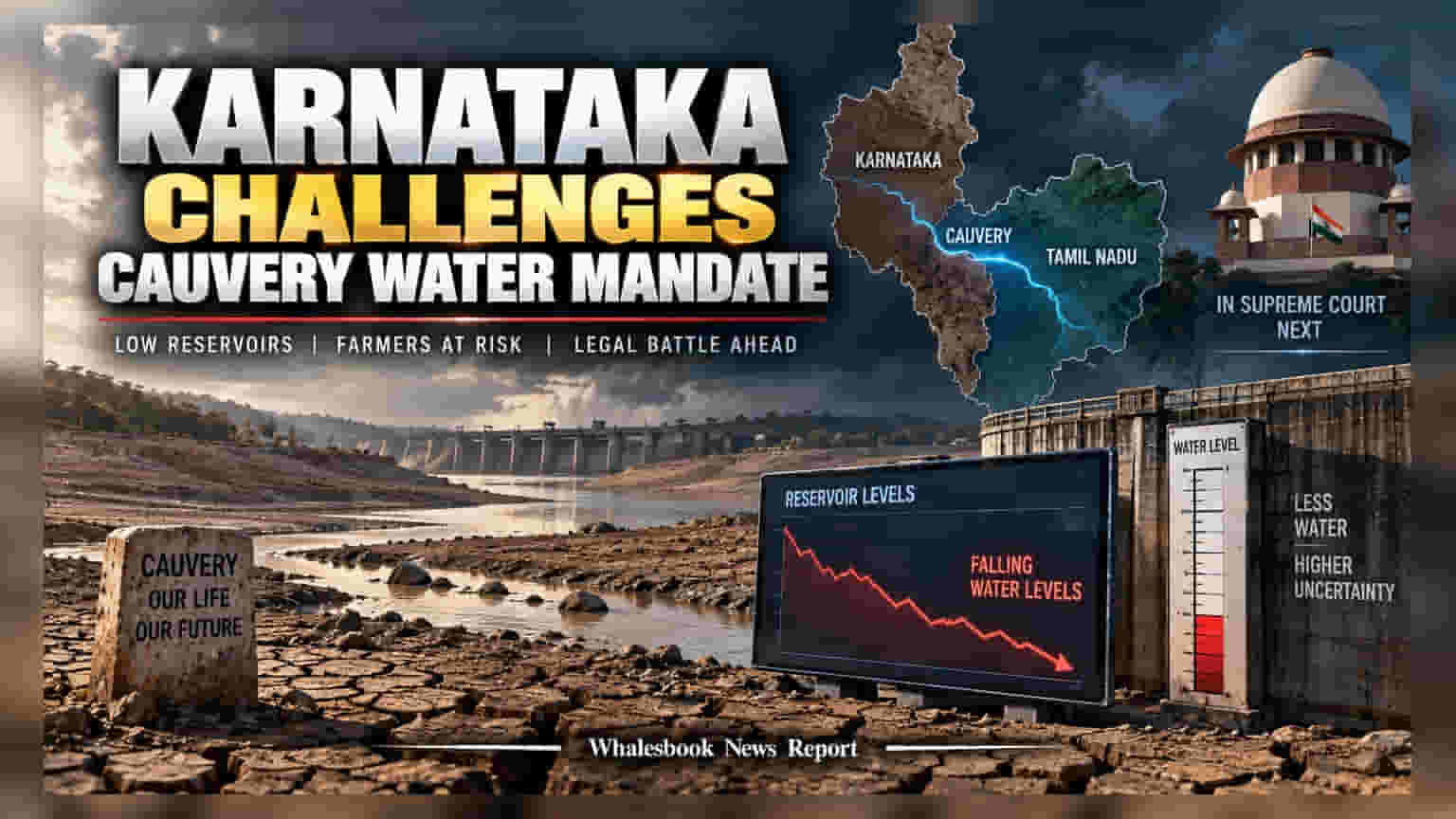
The Karnataka government is moving to the Supreme Court to contest the Cauvery Water Management Authority’s directive to release 6,000 cusecs of water daily to Tamil Nadu for 15 days. Officials cite critically low reservoir levels and are prioritizing drinking water needs. Investors may monitor this situation, as water scarcity risks could impact regional agriculture and the operational costs of water-intensive industries.
The Karnataka government has announced its intention to approach the Supreme Court to challenge the directive issued by the Cauvery Water Management Authority (CWMA). The mandate requires the state to release 6,000 cusecs of water daily to Tamil Nadu for a 15-day period, which commenced on September 9, 2026.
Water Resources Minister N. Chaluvarayaswamy confirmed the administration's decision, emphasizing that the state's current water storage levels are at a critical threshold. The government argues that it cannot comply with the outflow mandate while simultaneously ensuring adequate supply for essential drinking water needs and the restoration of local lakes and tanks. In addition to the Supreme Court challenge, the administration is preparing a formal review petition to be filed with the Cauvery Water Regulation Committee (CWRC).
Economic and Industrial Impact
While this is an administrative and legal dispute, the situation carries indirect implications for the regional economy. The Cauvery basin is a vital agricultural hub for both states, supporting crops such as paddy and sugarcane. Sustained water disputes can create uncertainties for the agricultural supply chain and impact the earnings of regional agribusinesses if irrigation is curtailed to manage reservoir levels.
Furthermore, water-intensive industries operating in the region, including manufacturing units, textile mills, and beverage producers, often face operational risks during acute water shortages. If the water crisis deepens, local authorities may prioritize residential consumption, potentially leading to supply restrictions or increased costs for industrial water usage. Investors with exposure to companies heavily dependent on operations in the Karnataka-Tamil Nadu corridor may track the outcome of these legal proceedings, as well as any official restrictions on industrial water consumption.
Monitoring Future Developments
The legal battle introduces a layer of regulatory and operational uncertainty. The primary monitorable for investors and stakeholders remains the actual reservoir levels and upcoming rainfall data. The Karnataka government has indicated that the relief for the state's water systems currently depends on rainfall patterns in the coming week. Future court hearings, updates on the CWRC review petition, and any shift in the water release mandate will be the next important indicators to watch. Additionally, any signals from the state government regarding industrial water rationing could become a factor for companies with large manufacturing footprints in the affected districts.