

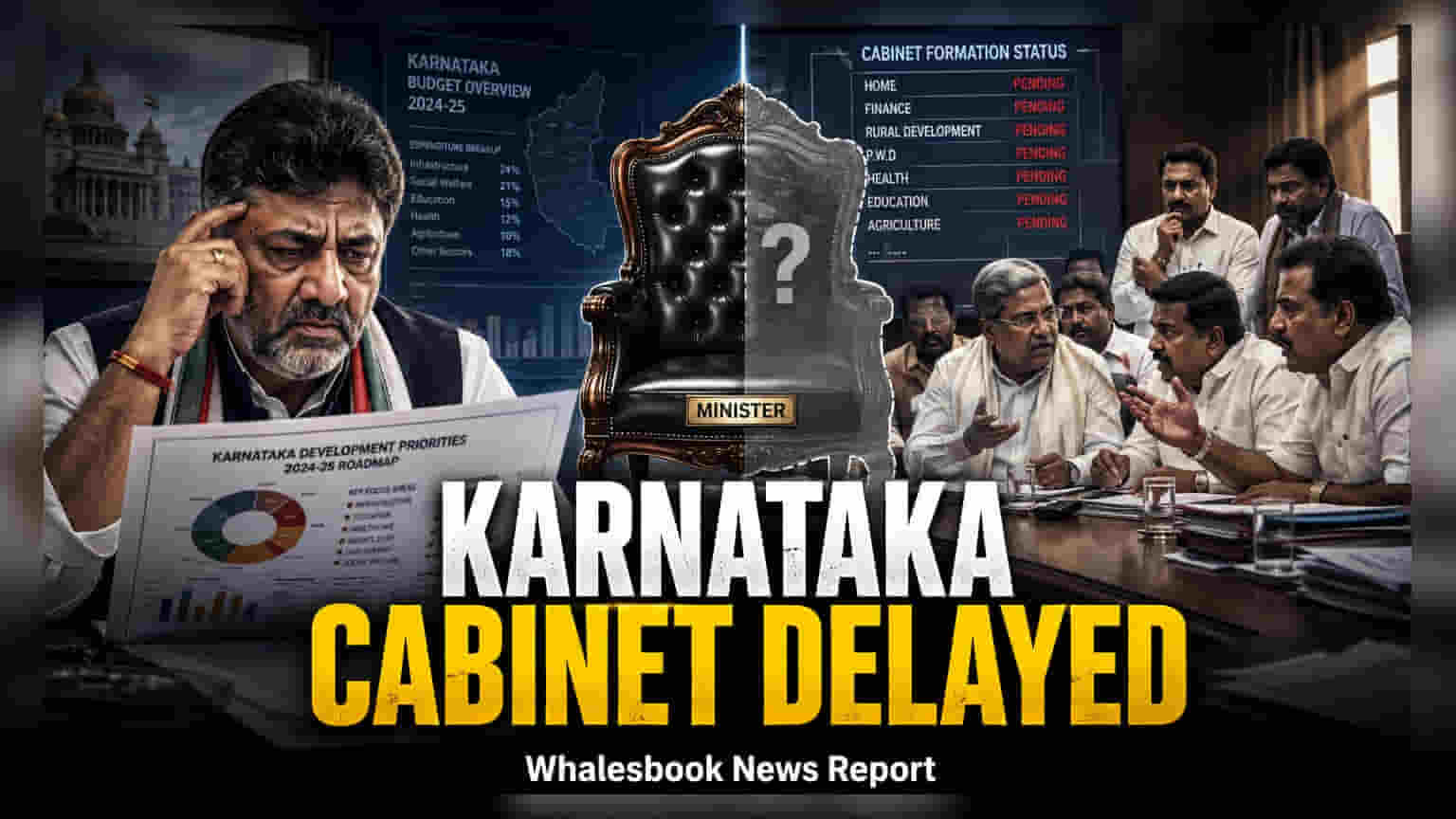
Karnataka’s full Council of Ministers remains incomplete nearly 60 days after the initial swearing-in. The delay in government formation follows complex negotiations over caste, regional, and factional representation. Investors may monitor this situation as it could influence administrative decision-making ahead of the upcoming state monsoon session.
Nearly two months have passed since the initial swearing-in ceremony in Karnataka, yet the state is still operating without a full Council of Ministers. While Chief Minister Siddaramaiah, Deputy Chief Minister DK Shivakumar, and 12 other ministers assumed their roles in the first phase, the subsequent expansion of the cabinet remains pending. Political observers and reports indicate that high-level consultations in New Delhi are the primary cause, as the leadership navigates the delicate task of balancing regional interests, caste equations, gender representation, and generational shifts within the party.
Historical Precedents in State Governance
Although the current wait in Karnataka is substantial, approaching 58 days, it is not an isolated incident in Indian state politics. Several other states have experienced similar, or even longer, periods where governments functioned with a truncated cabinet. For instance, in 2018, Telangana saw a two-member cabinet operate for approximately 66 to 68 days following the state assembly election results. Similarly, Maharashtra navigated a prolonged period in 2022 where the executive branch consisted of only a two-man team for several weeks following a significant political realignment.
Karnataka has also faced its own share of governance delays in the past. In 2019, following the transition of power after the collapse of the previous coalition, the government operated with a single-member cabinet for 25 days. Such instances, while often dictated by the complexities of coalition politics or internal party management, highlight that the lack of a full cabinet does not necessarily halt all government functions, but it can slow down the speed of administrative decision-making.
Impact on State Administration
For the business community and market participants, the primary concern lies in the efficiency of governance. A full cabinet is typically required to manage the diverse portfolios that oversee everything from state-level infrastructure projects to industrial policy and regulatory approvals. With the state monsoon session of the legislative assembly scheduled to commence on August 13, there is mounting pressure to finalize the cabinet appointments to ensure that all departments are fully represented and functional during legislative debates.
While the Indian Constitution does not prescribe a strict timeline for the completion of a cabinet, extended periods of governance by a smaller team can lead to administrative bottlenecks. Investors and stakeholders in Karnataka-based businesses or those monitoring state-level policy changes will be watching for the final announcement of ministers, which is expected to provide clarity on the state’s priorities for the remainder of the fiscal year.