

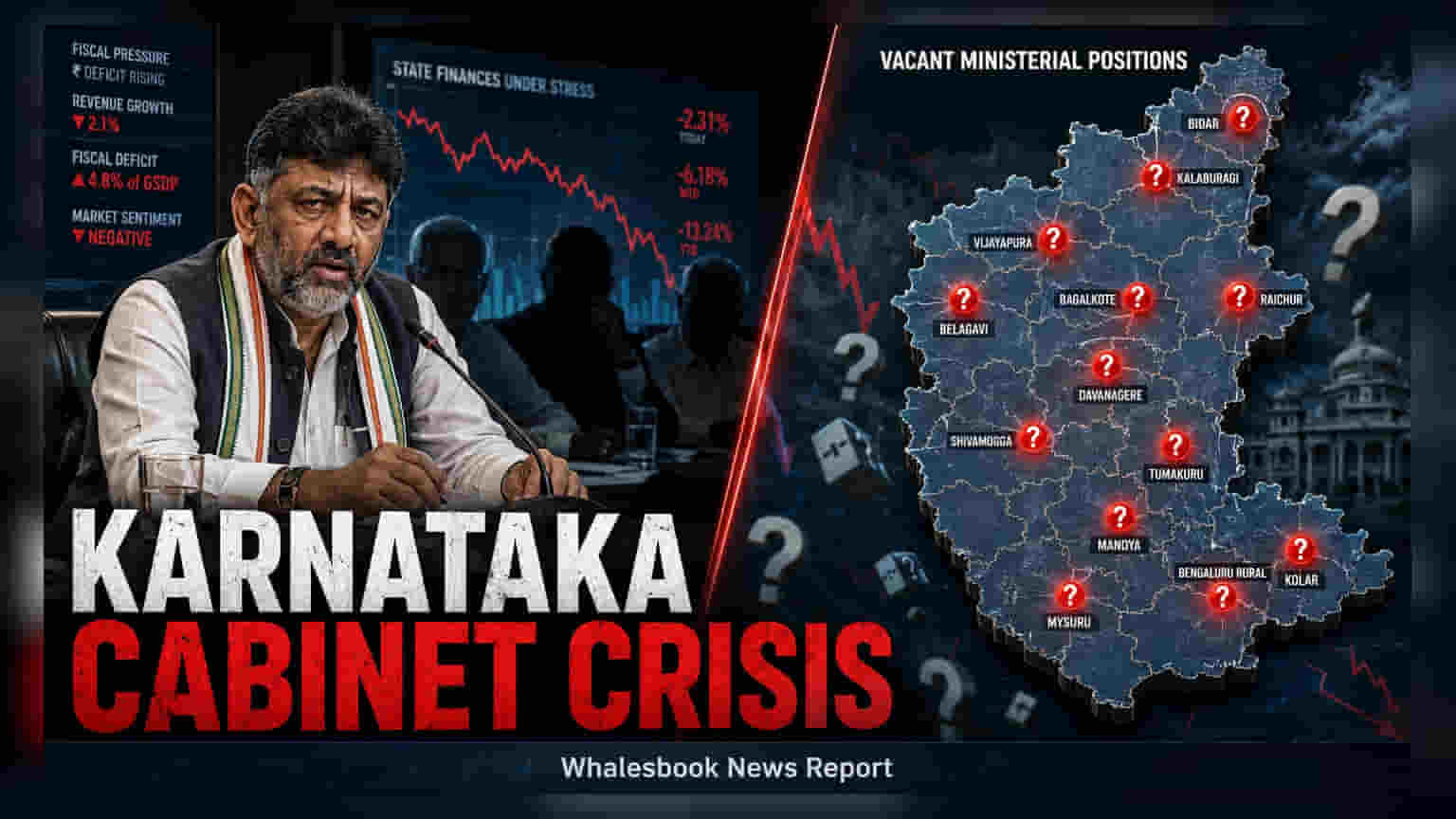
Karnataka Chief Minister D.K. Shivakumar is meeting Congress leadership in New Delhi to discuss filling 20 vacant ministerial berths. The expansion is crucial for balancing political and regional representation in the state government. Investors and observers are tracking this to see how the reshuffle impacts policy stability and governance in Karnataka.
Karnataka Chief Minister D.K. Shivakumar arrived in New Delhi on Wednesday, triggering expectations of a breakthrough regarding the state’s long-pending cabinet expansion. The current state council of ministers consists of only 13 members, leaving 20 positions vacant out of the maximum permitted strength of 34.
Balancing Political Interests in Karnataka
The Chief Minister’s visit centers on consultations with the Congress high command. Managing these appointments is a complex process for the administration, as it requires balancing various caste, regional, and political factions within the party. With 20 seats remaining, the competition among ministerial aspirants has intensified, creating a significant focus on how the final cabinet structure will be balanced to ensure stable governance.
The delay in finalizing the cabinet has drawn criticism from the opposition Bharatiya Janata Party (BJP), which has raised concerns regarding the government’s speed of decision-making. The opposition has pointed to these vacancies, along with pressing administrative issues like the ongoing drought conditions in the state, to challenge the current pace of governance. For the business community and state stakeholders, a full cabinet is often seen as a prerequisite for more efficient administration and policy implementation.
Monitoring Government Stability
While the Chief Minister has indicated that his visit includes meetings with Union ministers to discuss state-related matters, political observers are specifically monitoring the outcome of the discussions on the reshuffle. The ability of the state leadership to resolve these internal deliberations efficiently is often viewed as a key indicator of political stability, which can influence business sentiment and the pace of decision-making on state-level infrastructure or investment policies.
Investors typically look for clarity in state-level governance as it relates to the execution of public projects and administrative approvals. The key monitorable remains whether the upcoming talks lead to a prompt announcement of the new ministerial appointments and how that transition affects the government's ability to address state economic challenges.