

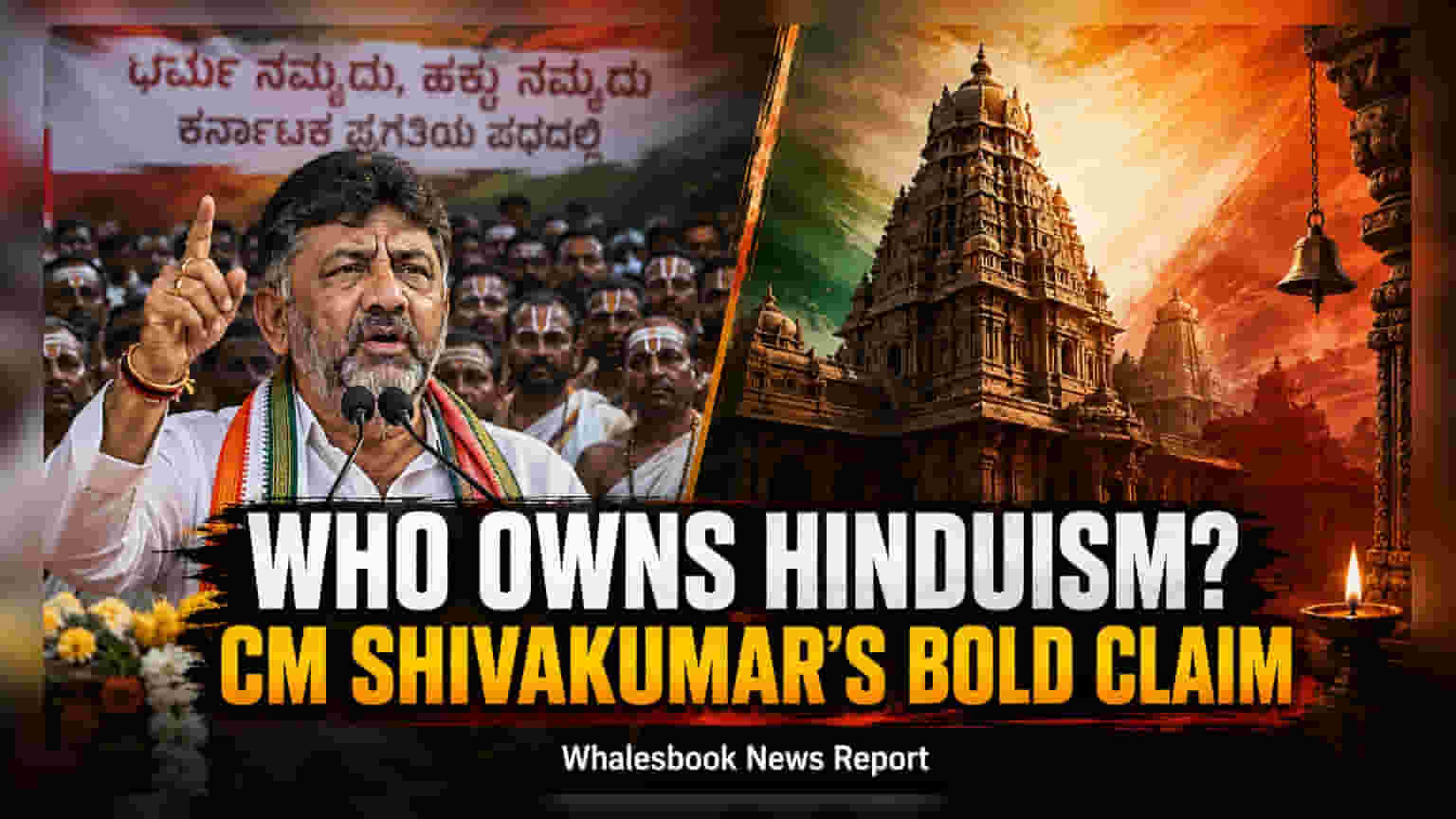
Karnataka CM D.K. Shivakumar addressed the Muzrai Temple Priests' Association, stating that religious practices are independent of political party affiliations. During the event, he announced that the state government will support a structured training program for priests across 34,000 rural temples. The development highlights the administration's ongoing focus on institutional management and outreach as it balances traditional temple administration with its current welfare agenda.
Karnataka Chief Minister D.K. Shivakumar addressed a state-level convention of the Muzrai Temple Priests' Association and Employees' Association on Wednesday, emphasizing the government's role in maintaining religious institutions. During his address in Bengaluru, he asserted that Hinduism and religious traditions do not belong to any single political party, delivering a sharp critique of the political appropriation of religious identity.
Beyond the political discourse, the Chief Minister announced a tangible initiative for the state’s Muzrai Department. He confirmed that the Karnataka government is prepared to provide necessary support for a structured training program for priests serving in approximately 34,000 rural temples across the state. The Chief Minister encouraged priest associations and mutts to collaborate on this initiative to standardize religious traditions and improve the quality of service for devotees.
Shivakumar noted that the current government has actively managed religious institutions, pointing to the renovation and construction of temples within his own constituency as examples of this commitment. He emphasized that the government treats religious administration as a duty, while maintaining a clear separation between personal faith and political messaging. The Muzrai Department, which falls under his purview, oversees these thousands of institutions, making the administration of these spaces a significant aspect of state governance.
In his speech, the Chief Minister also defended the Congress government’s welfare schemes, such as Gruha Lakshmi and Anna Bhagya, contrasting these service-based delivery programs with the political rhetoric surrounding religious issues. He argued that the government should be judged on its performance in fulfilling welfare promises rather than on claims of religious exclusivity. This stance highlights the state administration's strategy to maintain a dual focus: delivering broad-based social welfare initiatives while asserting its role in managing and preserving traditional religious infrastructure.
For those monitoring the state’s governance landscape, the focus remains on how the government balances these religious institutional programs with its existing economic and social welfare commitments. The implementation of the priest training program will be the next key step to track in the administration’s management of the Muzrai Department.