

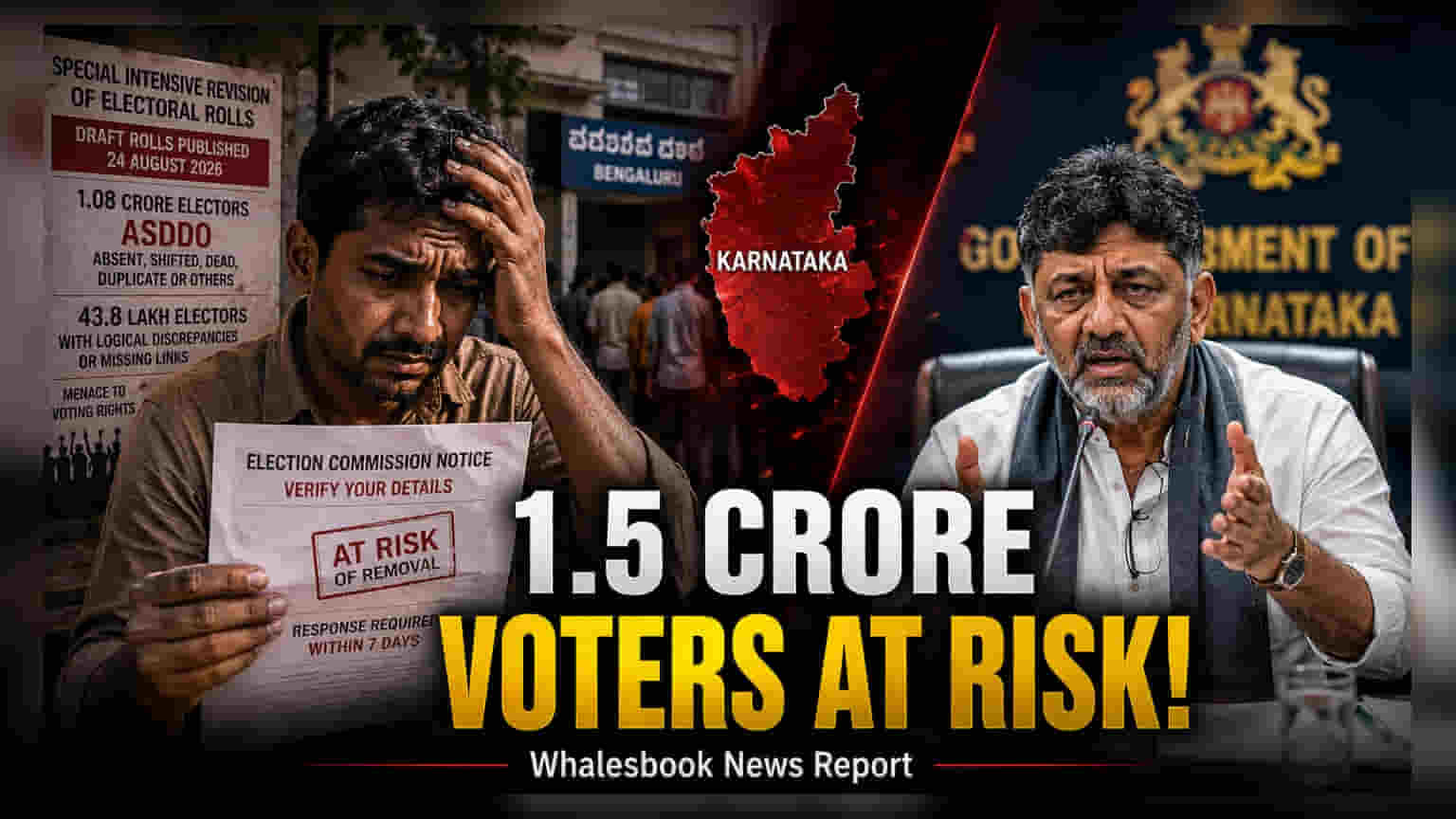
Karnataka Chief Minister D.K. Shivakumar has formally requested the Election Commission of India to extend the deadline for electoral roll claims. The move follows the flagging of over 1.5 crore voters for potential deletion or scrutiny during the ongoing Special Intensive Revision. The state is aiming to ensure that no eligible citizens are excluded due to short timelines or documentation hurdles.
Karnataka Chief Minister D.K. Shivakumar has written to the Election Commission of India requesting an extension for the submission of claims and objections during the current Special Intensive Revision of the state's electoral rolls. The request follows the publication of draft electoral rolls on August 24, 2026, which revealed that a significant portion of the electorate is facing scrutiny.
According to the details shared by the Chief Minister, approximately 1.08 crore electors have been categorized under the 'Absent, Shifted, Dead, Duplicate, or Others' (ASDDO) group out of a total electorate of 5.54 crore. Furthermore, an additional 43.8 lakh voters are expected to receive notices regarding logical discrepancies or missing links to older electoral records, such as those from 2002. Combined, these figures mean that roughly 1.5 crore voters are currently at risk of being removed from the rolls unless they verify their details.
Administrative Challenges in Bengaluru
The issue is particularly pronounced in Bengaluru, which is a major economic hub. In this region alone, 46.88 lakh electors have been placed in the ASDDO category. The Chief Minister pointed out that the current timeline for verifying these records is extremely compressed, often providing only a week for citizens to respond. He noted that marking many of these individuals as 'absent' may be inaccurate, as they could have been unavailable during the specific times that Booth Level Officers conducted house-to-house verifications.
Impact on Eligible Voters
The state government has expressed concern that the current schedule places an unreasonable burden on working individuals, migrants, and the elderly. Many of these citizens may find it difficult to arrange travel or locate the necessary documentation within the provided window to clear their names and retain their voting rights. By seeking an extension of three to four weeks, the Chief Minister aims to provide sufficient time for electors to address these discrepancies.
To facilitate the process, the Karnataka government has offered full support to the Election Commission, including the deployment of local administrative staff and the launch of awareness campaigns to assist citizens in filing the necessary claims. This administrative exercise is part of the preparation for the final electoral roll, which is scheduled to be published on October 27, 2026. The coming weeks will be critical, as the Election Commission evaluates the state's request for more time to manage the high volume of verification notices and to ensure that the electoral process remains inclusive.