

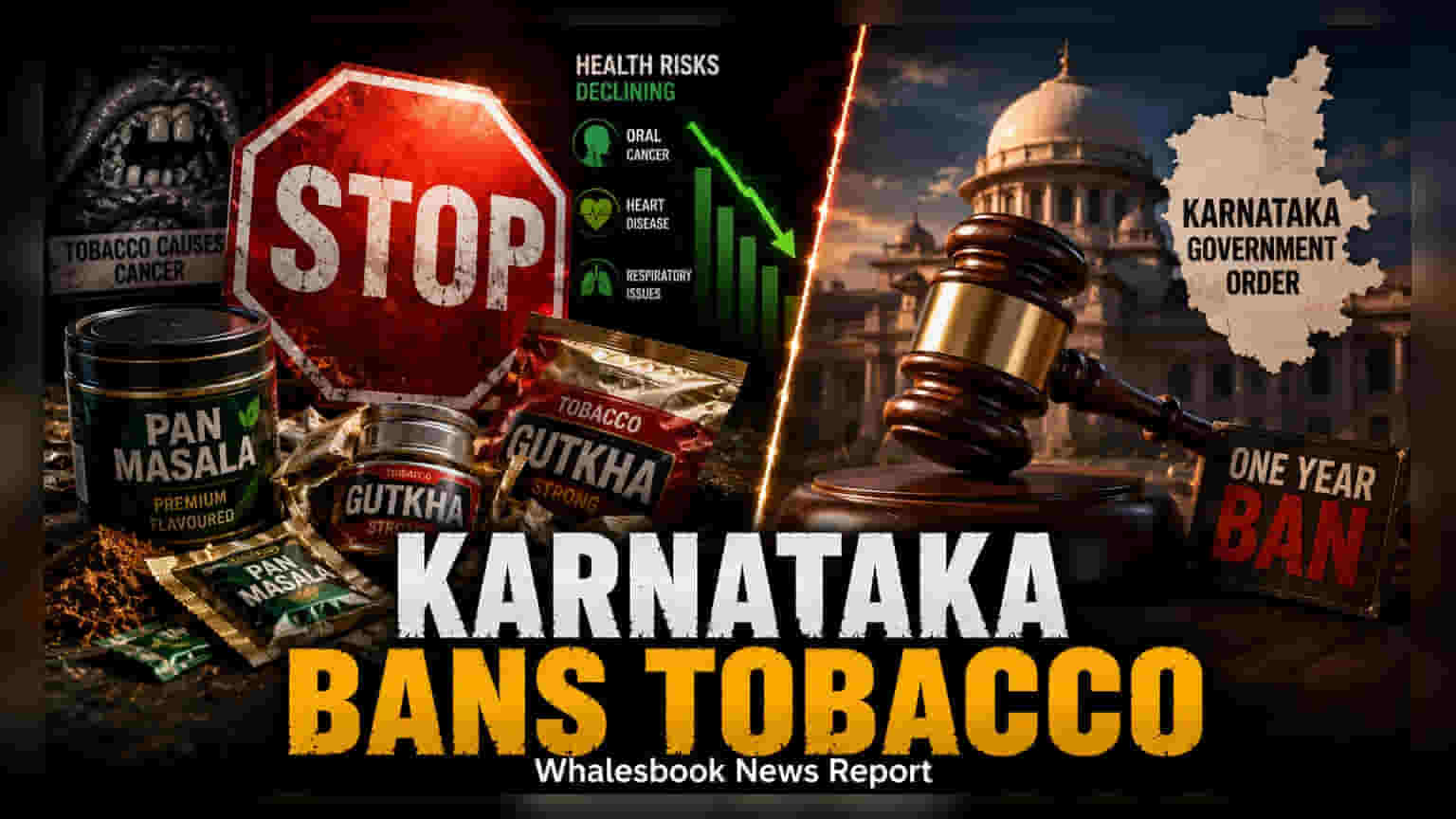
The Karnataka government has implemented a one-year ban on the manufacture, sale, and distribution of gutkha and pan masala containing tobacco or nicotine. Effective August 10, 2026, the order aims to mitigate public health risks. The move affects the supply chain and product availability for manufacturers and distributors operating within the state.
The Karnataka government has officially prohibited the production, storage, distribution, transportation, and sale of gutkha and pan masala products that contain tobacco or nicotine. The notification, issued by the Commissioner of Food Safety on August 10, 2026, enforces a one-year ban across the state. The move is part of the government’s efforts to curb health risks associated with the consumption of these substances, which are linked to various lifestyle-related diseases.
Regulatory Framework and Scope
The ban is enacted under the authority of the Food Safety and Standards Act, 2006, specifically utilizing Section 30(2)(a). This provision allows state authorities to impose restrictions on the sale of food articles in the interest of public health. The order is further supported by Regulation 2.3.4 of the Food Safety and Standards (Prohibition and Restrictions on Sales) Regulations, 2011.
The scope of this order is comprehensive, covering all forms of gutkha and pan masala that include tobacco or nicotine. It applies to products sold in sachets, pouches, or any other packaging format. The regulation also addresses instances where components are sold separately for later mixing, aiming to prevent attempts to bypass the restrictions. The prohibition applies to all market brands, regardless of their name or the type of packaging used.
Business and Operational Impact
For companies in the tobacco and pan masala industry, this regulation creates an immediate operational challenge in Karnataka. Manufacturers and distributors must now halt the supply of tobacco-blended products within the state to ensure compliance. Historically, companies in this sector have adapted to such state-level bans by adjusting their product portfolios, often emphasizing the sale of plain pan masala—which does not contain tobacco—or by reformulating products to comply with local laws.
However, the primary risk for businesses involves supply chain disruption and the potential for enforcement actions. Retailers and distributors face the burden of inspection, and any failure to adhere to the order could result in penalties under the Food Safety and Standards Act. Additionally, there is the persistent risk of an illicit market emerging, where banned products might be traded illegally, which can create unfair competition for compliant players who have withdrawn their stock.
Sector Context
This move by the Karnataka government aligns with a broader trend across various Indian states, where authorities frequently impose annual bans on gutkha and similar tobacco-based food products to address public health concerns. Investors often view these bans as a recurring operational hurdle for the tobacco and FMCG sector. The long-term impact on a company's revenue usually depends on the size of its market share in the affected state and its ability to pivot toward non-tobacco product variants that remain permitted under the law. Moving forward, the most important monitorable for stakeholders will be the effectiveness of enforcement by local food safety officials and whether the ban is extended beyond the one-year period.