

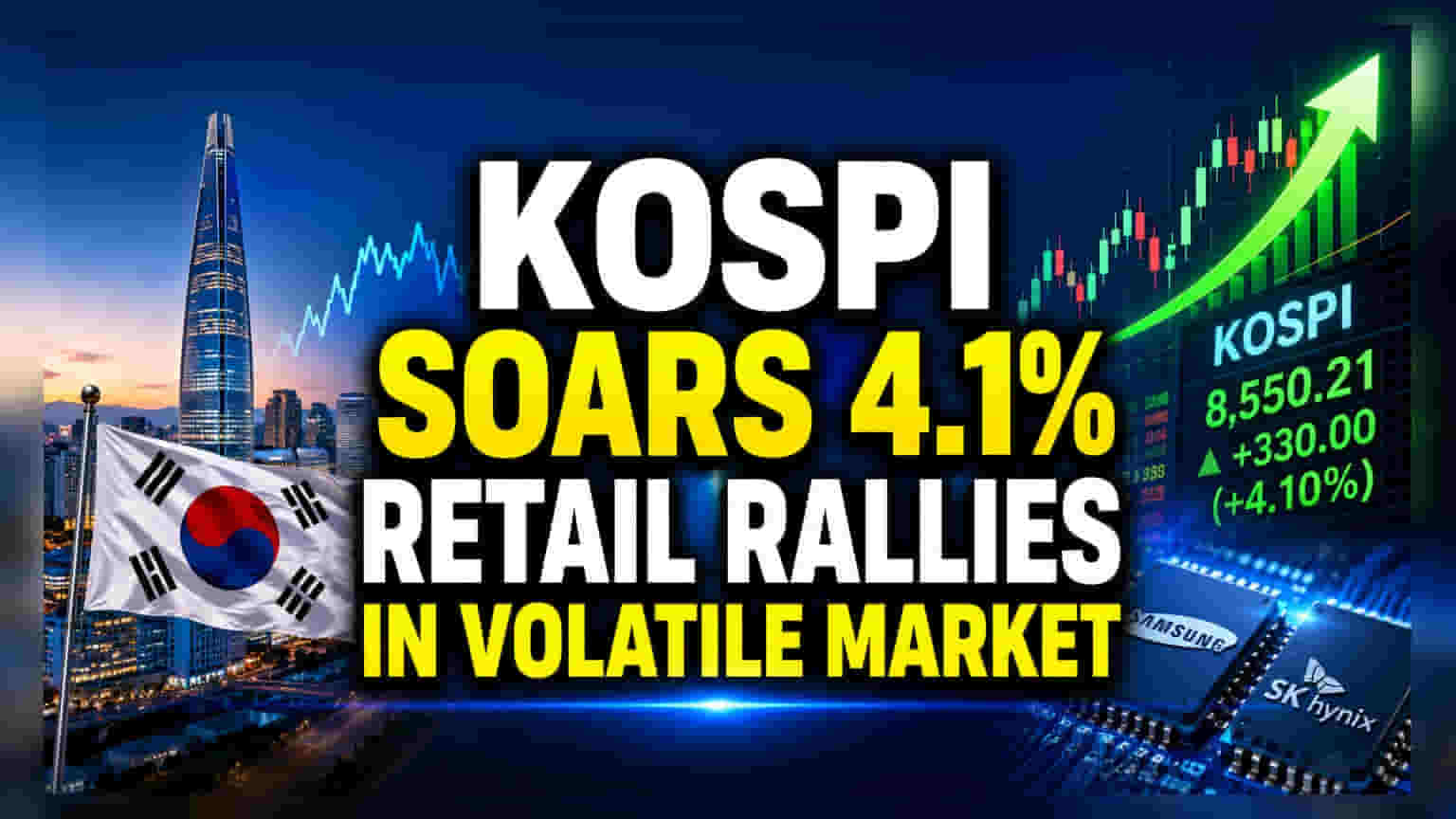
South Korea's KOSPI index jumped 4.1% today, recovering from a 10% plunge in the previous session. The rebound was led by local retail investors targeting semiconductor giants like Samsung Electronics and SK Hynix. However, persistent selling by foreign investors and currency weakness highlight ongoing market volatility.
What Happened
South Korea's benchmark KOSPI index recorded a significant rebound on Wednesday, climbing 4.1% within the first 30 minutes of trading. This recovery comes immediately after a severe 10% decline in the previous session, reflecting high volatility in the market. The index gained over 330 points to reach 8,550.21 shortly after opening. This quick swing has drawn attention to the intensity of current market sentiment in the region.
Retail Frenzy vs. Institutional Caution
The primary driver of Wednesday's rally was a surge in activity from local retail investors. Market observers noted that many individuals entered the market aggressively, likely driven by a desire to capitalize on the recent price drop. This "buy-the-dip" behavior has been particularly visible in leveraged exchange-traded funds (ETFs).
However, this retail optimism contrasts sharply with the stance of foreign institutional investors. Official market data indicated that foreign investors remained net sellers, offloading shares worth 626.3 billion won. This divergence often signals that while local sentiment remains bullish, international participants continue to view the market with caution.
The Semiconductor Factor
The rebound was heavily anchored by the semiconductor sector, which is a major component of the South Korean market. Market bellwether Samsung Electronics saw its shares jump more than 9%, while peer SK Hynix climbed 5%. Because these companies are global leaders in chip manufacturing, their stock movements often influence broader investor sentiment regarding the technology sector and the global supply chain.
Economic And Macro Pressures
Beyond the daily stock movements, the South Korean market is grappling with broader economic headwinds. The South Korean won has depreciated by 6.2% against the U.S. dollar year-to-date, a factor that often complicates market stability and investor returns.
Additionally, the debt market is showing signs of tension. The yield on the liquid 3-year Korean treasury bond rose to 3.783%, and the benchmark 10-year yield climbed to 4.184%. When bond yields rise, it typically increases the cost of borrowing for companies and can make equities less attractive compared to fixed-income assets. Other major sectors, including automotive players like Hyundai Motor and Kia Corp, alongside steelmaker POSCO Holdings, also posted gains, but the broader index remains sensitive to these macro shifts.
What Investors Should Track
For investors observing these trends, the key monitorable is whether the retail-led momentum can be sustained without foreign institutional support. Persistent selling by foreign investors, coupled with currency volatility, suggests that the market may remain susceptible to further swings. Investors should look for stability in the won and consistency in trading volumes as signs that the current volatility is settling.