

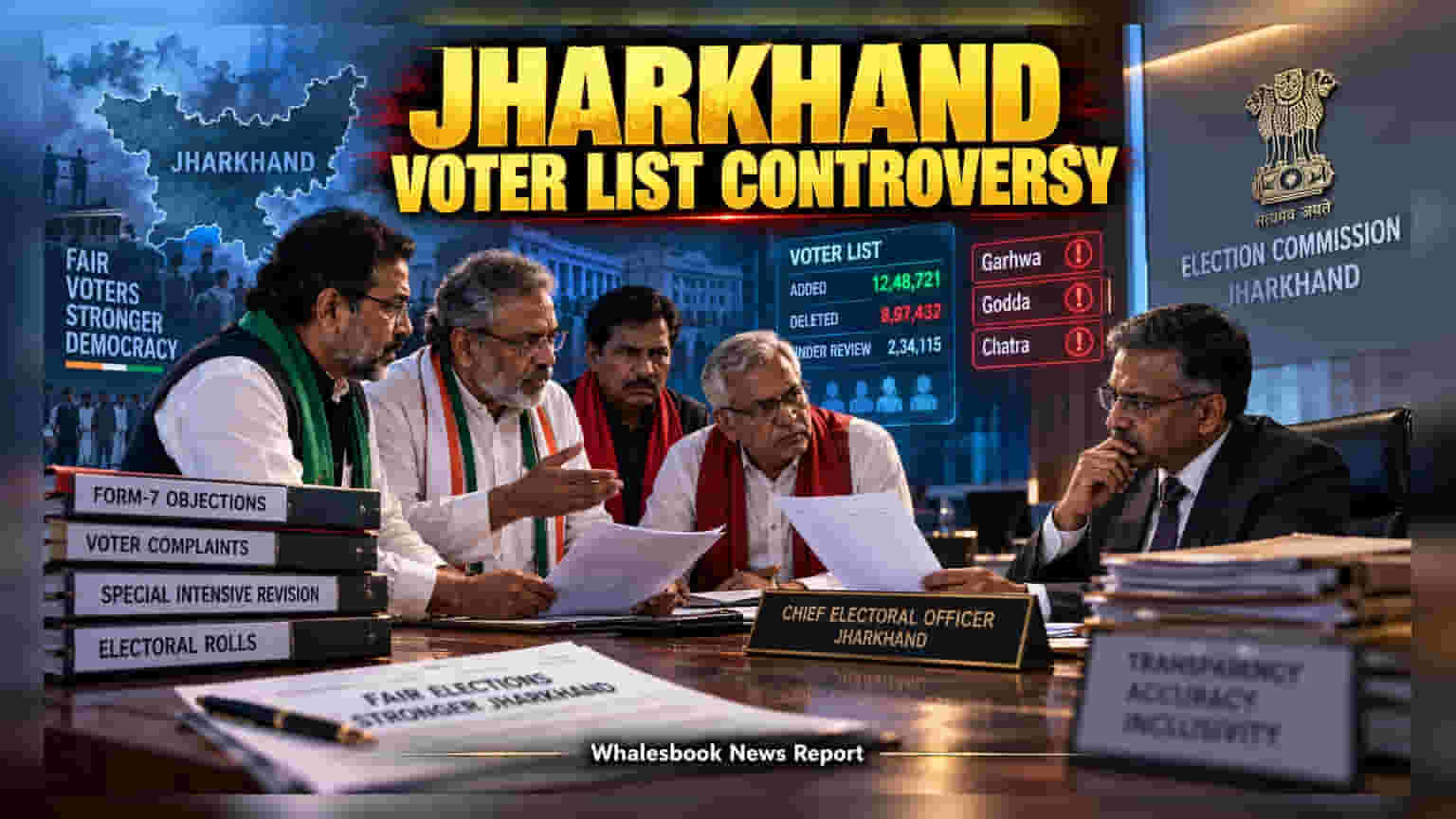
The INDIA bloc has formally complained to Jharkhand's Chief Electoral Officer, alleging that BJP agents are manipulating voter rolls in districts like Garhwa, Godda, and Chatra. The Chief Electoral Officer has rejected these claims, asserting that the Special Intensive Revision process remains transparent. This dispute underscores ongoing political tensions regarding the integrity of voter registration procedures.
A delegation from the INDIA bloc, including representatives from the Jharkhand Mukti Morcha, the Indian National Congress, the Rashtriya Janata Dal, and the Communist Party of India (Marxist-Leninist) Liberation, recently met with Jharkhand Chief Electoral Officer K. Ravi Kumar. The coalition has lodged a formal complaint alleging that local Bharatiya Janata Party agents are pressuring booth-level officers to remove voters from electoral rolls.
According to the opposition, this alleged activity is occurring during the ongoing Special Intensive Revision of electoral rolls. The INDIA bloc claims that Form-7, a document used to lodge objections to voter entries, is being misused in districts such as Garhwa, Godda, and Chatra. The coalition argues that this process is being unfairly used to facilitate the bulk deletion of specific voter segments, which they contend threatens the fairness of the electoral process.
In response to these allegations, Chief Electoral Officer K. Ravi Kumar has defended the integrity of the Special Intensive Revision. He stated that the process is robust, transparent, and strictly regulated. The Chief Electoral Officer emphasized that the Election Commission allows for the submission of objections, but each application undergoes rigorous scrutiny by administrative officials before any action is taken. He dismissed the assertions of clandestine manipulation as factually incorrect and maintained that no eligible voter can be removed from the rolls without following the established legal framework. Furthermore, he noted that citizens have the right to track the status of their registration applications via official web portals.
The Bharatiya Janata Party has denied the opposition’s allegations, describing them as political posturing. The party maintains that its booth-level agents are performing their legitimate, procedural duty by flagging ineligible or non-genuine voters using the official Form-7 process. They argue that this is a standard and necessary step to maintain the accuracy of the electoral registry.
For observers and citizens, this development highlights the high-stakes nature of administrative procedures in Jharkhand. The primary concern is maintaining public trust in the neutrality of the Election Commission and local officials. Disagreements over voter lists are common in democratic processes, yet the intensity of these claims underscores the heightened political climate in the state. The next important step for stakeholders will be to monitor the official verification of these objections by the Election Commission. Investors and residents tracking the region’s stability may look for further clarifications from the Election Commission or potential legal developments if the opposition decides to escalate the matter through judicial channels.