

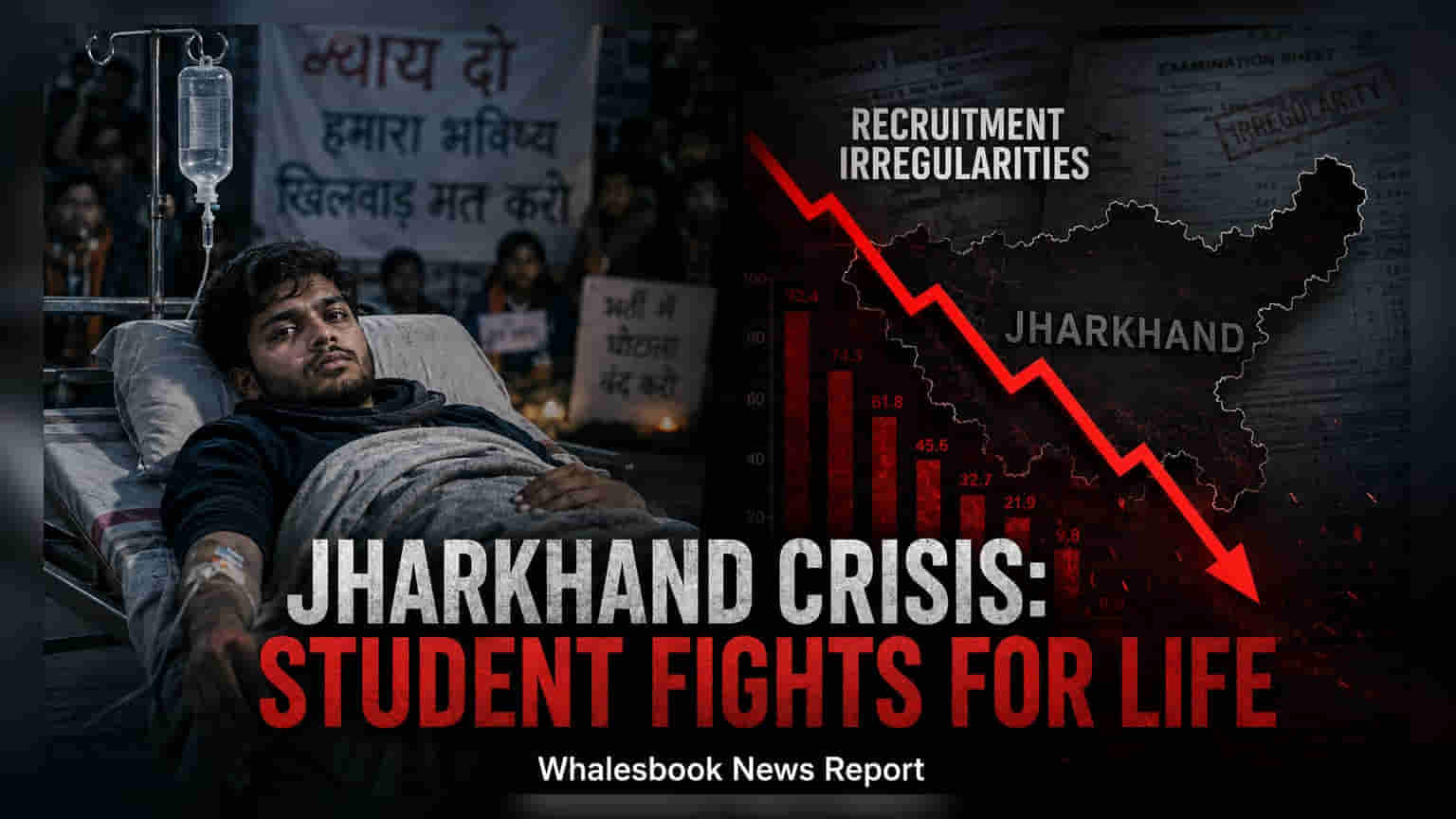
The 23-day protest by JPSC and JSSC aspirants in Ranchi has reached a critical stage as hunger strikes enter their second week. Students are demanding a CBI inquiry into alleged recruitment irregularities, while the government has promised systemic changes. Tensions are expected to rise further with a planned demonstration at the Chief Minister's residence on August 20.
The ongoing agitation by job aspirants in Ranchi, Jharkhand, has entered its 23rd day, marking a deepening crisis that has drawn significant public and political attention. Protesters from the JPSC (Jharkhand Public Service Commission) and JSSC (Jharkhand Staff Selection Commission) are demanding immediate reforms and transparency in the state's recruitment process. The situation has reached a critical phase as several students, including Prem Nayak, have been on a prolonged hunger strike for over 13 days, leading to serious concerns regarding their health.
Core Demands and Allegations
The protestors are seeking the cancellation of the JSSC-CGL and 11th-13th JPSC examinations, citing alleged irregularities. Their primary demand is a CBI-led probe into these issues, alongside an investigation conducted by a panel of retired judges from outside the state. The movement, coordinated by the JPSC-JSSC Reforms Manch, argues that systemic corruption in recruitment has eroded trust in the state's public service system, leaving thousands of aspirants uncertain about their future.
Government Response and Systemic Changes
In his recent Independence Day address, Chief Minister Hemant Soren acknowledged that the recruitment examination concerns have negatively affected the confidence of job seekers. He assured the public that the government is committed to taking strict action against any entity found guilty of paper leaks or corrupt practices. Furthermore, the Chief Minister emphasized the need for long-term systemic improvements. These include the implementation of a time-bound annual examination calendar, the use of advanced technology to secure exam processes, and the establishment of multi-level accountability structures to prevent future manipulation.
Potential for Further Disruption
Despite the government's assurances, the deadlock between the administration and the protesting students remains unresolved. Discussions among student groups indicate plans to escalate their movement. They have announced a protest scheduled for August 20, which includes a planned siege, or 'gherao,' of the Chief Minister's residence. There have also been discussions regarding broader disruptive measures, such as the potential shutdown of local educational institutions to increase pressure on the government to meet their demands.
Implications for Regional Stability
For those monitoring the business and administrative environment in Jharkhand, the situation highlights the importance of institutional trust and administrative stability. Prolonged civil unrest and the disruption of public services can impact the local economic environment and the smooth functioning of governance. As the August 20 deadline approaches, the key monitorable for stakeholders will be whether the government and the protest leaders can reach a consensus or if the escalation will lead to further administrative and public service disruptions in Ranchi.