

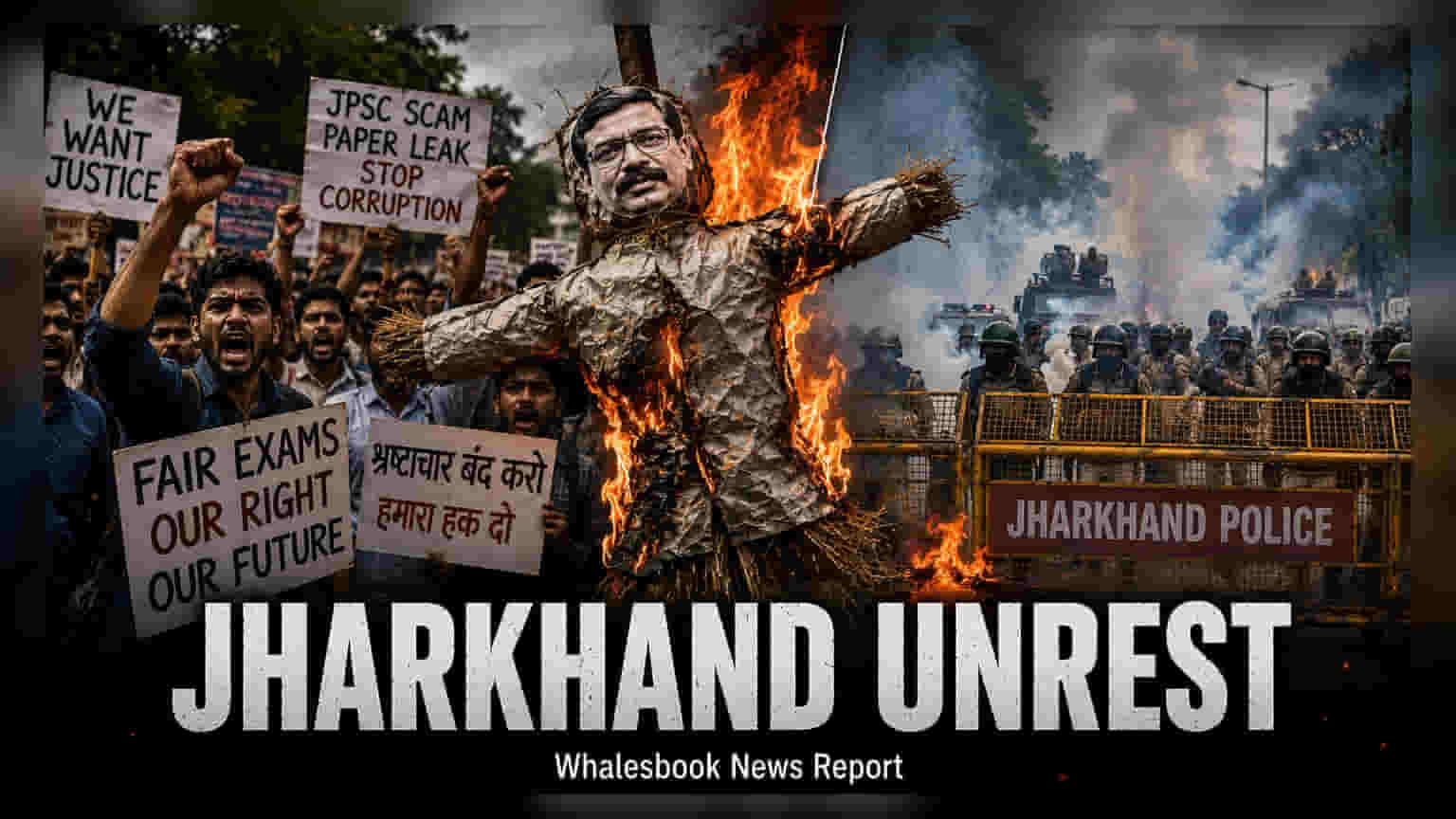
Authorities have filed legal cases against over 900 individuals following protests by job aspirants over recruitment irregularities in Jharkhand. The situation reflects ongoing tension regarding transparency in state examinations conducted by the JPSC and JSSC. Investors and stakeholders are watching these developments, as the administrative instability and legal disputes over hiring processes continue to create uncertainty in the state.
Legal and administrative tensions in Jharkhand have escalated following violent clashes between job aspirants and law enforcement. Authorities have registered First Information Reports (FIRs) against more than 900 individuals, including both named and unidentified persons, across districts such as Giridih and Hazaribag. These actions stem from protests against alleged irregularities, including claims of paper leaks and a lack of transparency in examinations conducted by the Jharkhand Public Service Commission (JPSC) and the Jharkhand Staff Selection Commission (JSSC).
The protests turned violent earlier this week, leading to confrontations that resulted in injuries to police personnel and the destruction of public property. The demonstrators have been protesting for months, demanding a more transparent and fair hiring process for state government jobs. In response to the unrest, the state government had previously initiated investigations into recruitment agencies, including TDPL, and announced the cancellation of several recent examinations.
However, the legal landscape surrounding these recruitments remains complex. The Jharkhand High Court has intervened in the matter, staying the government’s notifications that cancelled various recruitment exercises, including those for the Child Development Project Officers (CDPO) and the JSSC-CGL examinations. This judicial intervention has added another layer of uncertainty, as both the government's cancellation orders and the job seekers' demands face ongoing legal scrutiny.
For the state’s economic and administrative outlook, these events signal persistent friction between job aspirants and the government. While these protests are not directly linked to specific listed companies on the stock exchanges, they highlight broader governance and social stability risks. Prolonged unrest can impact state-level labor productivity, the morale of the civil service workforce, and the overall pace of government-led development projects.
Looking ahead, the situation remains sensitive. The primary monitorables for residents and stakeholders include the outcome of the ongoing police investigations, the state government’s next steps regarding recruitment policy, and upcoming hearings in the Jharkhand High Court. Further protests have been suggested by student groups, keeping the risk of localized economic disruption active in the near term.