

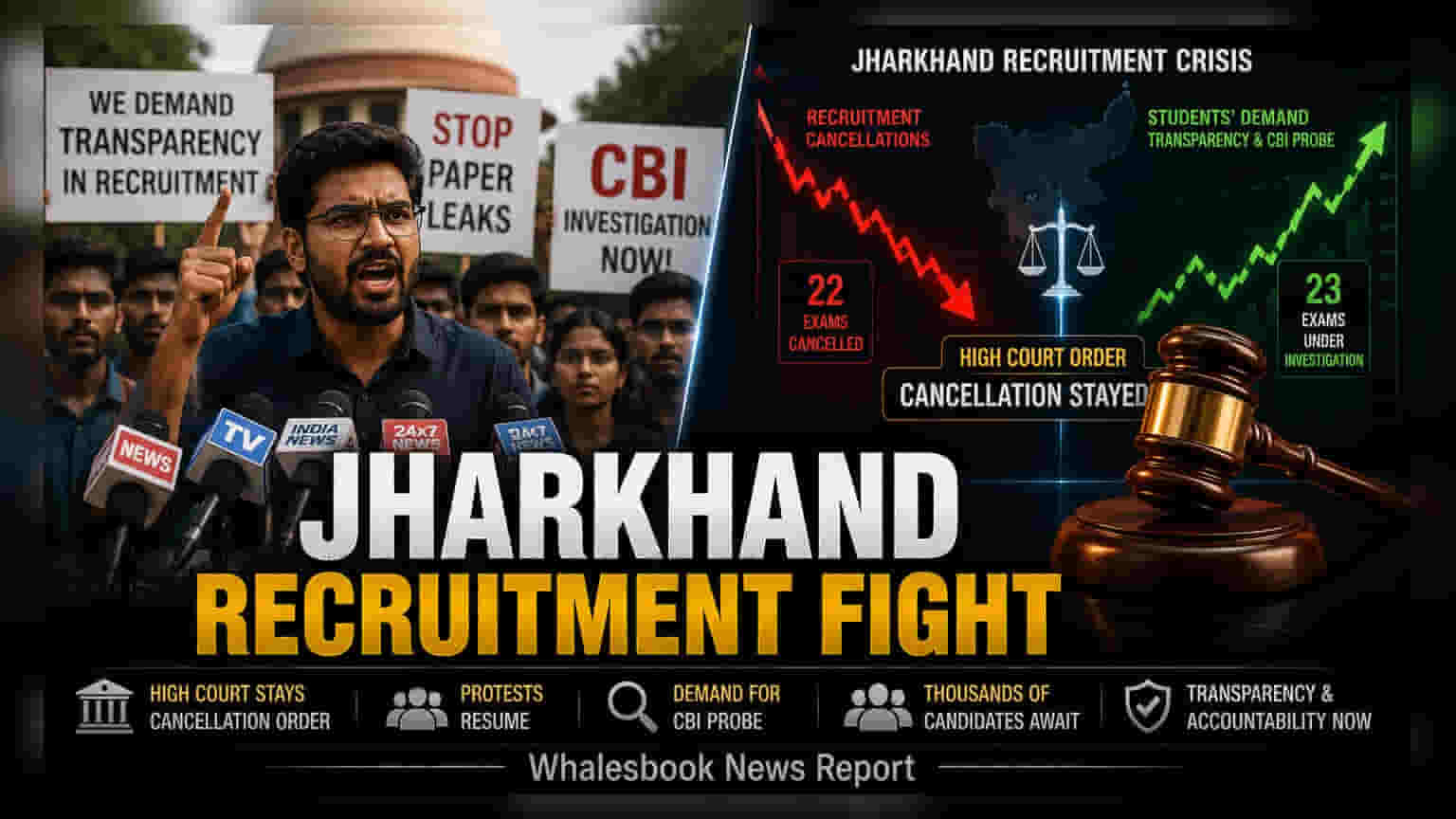
The Jharkhand High Court has stayed the state government’s order to cancel various JPSC and JSSC recruitment examinations. This legal development has reignited student protests, as aspirants demanding an independent CBI probe into alleged irregularities feel their core concerns remain unaddressed. The ongoing situation continues to create administrative uncertainty regarding state hiring.
The Jharkhand High Court issued an interim order on August 20, 2026, staying the state government's recent decision to cancel several recruitment examinations. These included processes conducted by the Jharkhand Public Service Commission (JPSC) and the Jharkhand Staff Selection Commission (JSSC). This court ruling has effectively paused the cancellation move, offering temporary relief to candidates who had already been selected or appointed through these processes.
Following the court's order, student organizations have announced the resumption of their agitation. Protesting aspirants, who had recently suspended a 26-day protest after receiving government assurances, expressed deep dissatisfaction with the outcome. Leaders of the movement argue that the government’s legal representation was inadequate and described the sequence of events as a setback to their demands for transparency and accountability in the recruitment system.
The core of the conflict stems from long-standing allegations of corruption, paper leaks, and lack of transparency in state-level recruitment since 2014. While the government had initially moved to cancel 22 examinations and order investigations into 23 others—a move intended to pacify the protestors—the students maintain that these measures do not resolve the systemic issues. Their primary demand remains an independent investigation by the Central Bureau of Investigation (CBI) to probe deep-seated malpractice in the selection processes.
This situation has created a complex administrative challenge for the state. On one side, thousands of candidates who have cleared various stages of these examinations are anxious about their job security and career prospects, fearing that widespread cancellations would unfairly penalize them. On the other side, the protesting student community argues that continuing with exams tainted by alleged corruption compromises the integrity of the state’s administrative machinery.
For the state government, the challenge lies in balancing administrative continuity with the growing public pressure for governance reform. The uncertainty surrounding the status of these recruitment exams is likely to weigh on administrative efficiency, as critical posts in various departments may remain in limbo until the legal and investigative processes are clarified. Investors and observers of state governance will be watching the next steps in the legal proceedings, as well as any further government response regarding the demand for an independent probe, as these factors will determine the stability of the state's hiring framework.