

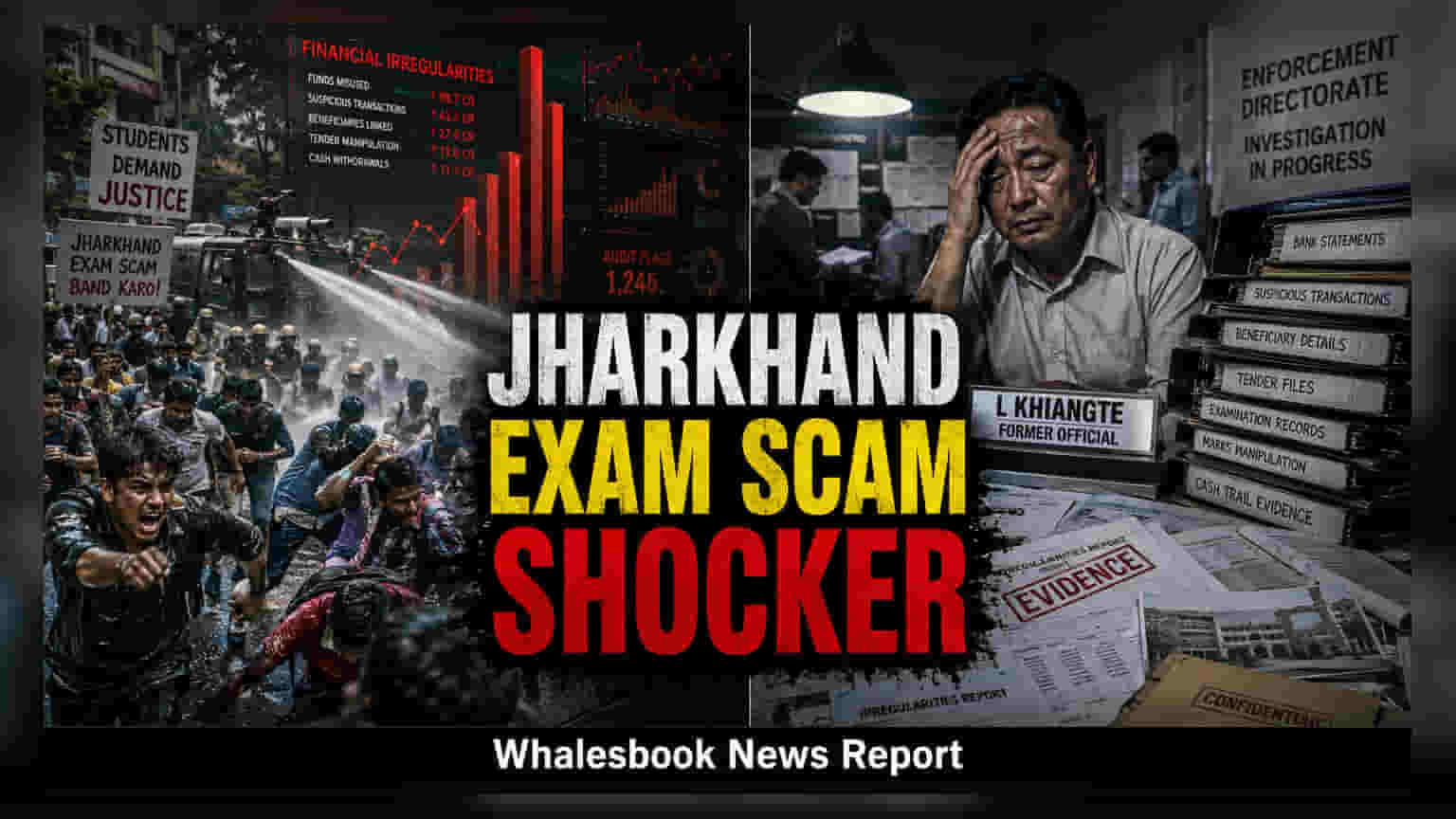
Former JPSC chairperson L. Khiangte was arrested by the Jharkhand CID over bribery allegations, while the Enforcement Directorate launched a money laundering probe. The escalation of recruitment exam irregularities has led to the resignation of all JPSC members and a statewide protest, signaling potential administrative disruptions in the state.
The administrative crisis in Jharkhand intensified significantly on August 10, 2026, following the arrest of L. Khiangte, the former chairperson of the Jharkhand Public Service Commission (JPSC), by the state’s Criminal Investigation Department (CID). The arrest is part of an expanding probe into alleged irregularities surrounding recruitment examinations, a matter that has triggered weeks of public unrest across the state.
The CID's investigation has focused on allegations of systemic corruption, including claims that L. Khiangte accepted approximately ₹2 crore in bribes and a 20% commission for awarding examination-related contracts to TSR Data Processing Private Limited (TDPL). The core of the complaint involves the appointment of this agency, which had reportedly been blacklisted previously. As of August 10, the CID has apprehended a total of 20 individuals in connection with these recruitment irregularities.
In a parallel move, the Enforcement Directorate (ED) has registered an Enforcement Case Information Report (ECIR) to investigate potential money laundering activities tied to these irregularities. This development adds a layer of regulatory scrutiny to the case, as the federal agency examines the financial flows and potential misuse of public funds involved in the examination processes.
The instability within the state’s recruitment bodies reached a critical point when all three members of the JPSC resigned on August 9, 2026, amid the ongoing protests. This mass resignation effectively creates an administrative vacuum within the body responsible for conducting civil services examinations, raising concerns about the timeline and reliability of future public recruitment processes in the state.
For observers and businesses operating within the state, these developments highlight significant governance risks. The involvement of a previously blacklisted private outsourcing agency in sensitive government contracts suggests a need for stricter vendor due diligence and procurement oversight. The resulting political fallout, including a statewide bandh called by the opposition Bharatiya Janata Party (BJP) for August 11, 2026, underscores the potential for operational disruptions and a heightened risk environment in the region.
The next steps for stakeholders to monitor include the progress of the Enforcement Directorate’s investigation and whether the state government moves toward a central agency (CBI) probe, as demanded by the protesting students. The restoration of stability within the JPSC and the resolution of the recruitment controversies will be essential for returning to regular administrative functioning.