

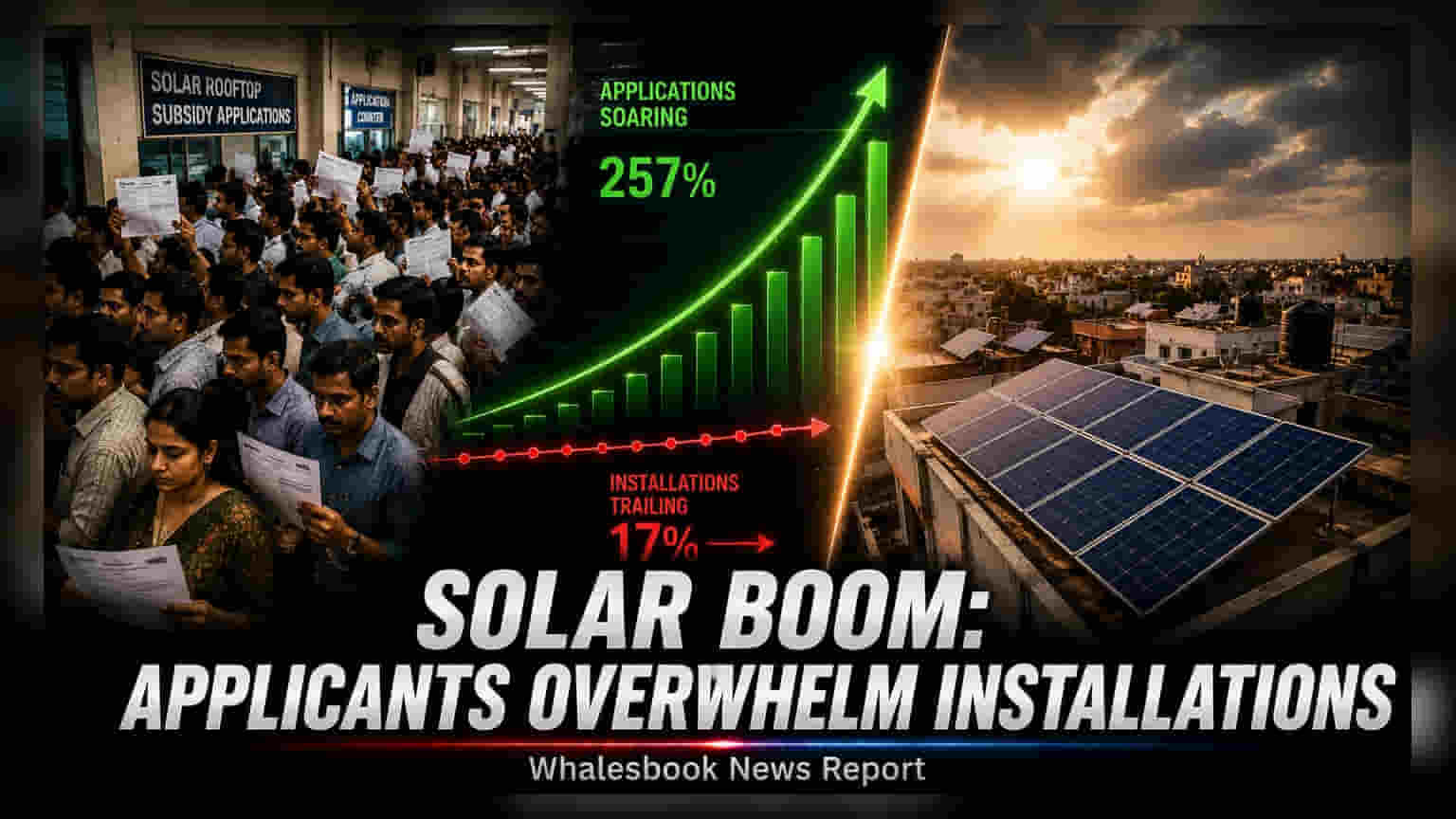
The PM Surya Ghar scheme in Jammu and Kashmir has reached 85,908 applications, with 39,160 installations completed. While this shows strong public interest, the backlog highlights a need for faster execution by DISCOMs and vendors. For stakeholders in the solar supply chain, the focus is now on how quickly this demand can be converted into actual project completions.
The PM Surya Ghar: Muft Bijli Yojana in Jammu and Kashmir has reached a significant implementation milestone. As of August 2026, the region has recorded 85,908 applications for rooftop solar systems, with 39,160 installations already commissioned. This wide gap between total interest and completed projects marks a critical phase for the local solar sector, where the focus is shifting from generating demand to accelerating execution.
The progress in Jammu and Kashmir reflects the broader national trend of the government-backed scheme, which has successfully achieved over 50 lakh installations and 14.8 GW of capacity across India. In the Union Territory, the financial support mechanism is active, with over 24,308 loans totaling Rs 437.34 crore already disbursed to beneficiaries. This indicates that funding is readily available for consumers, which serves as a positive indicator for solar equipment vendors and contractors participating in the program.
However, the gap between applications and completed installations highlights the practical hurdles of a demand-driven model. The process involves several complex steps, including consumer application, site feasibility assessment, DISCOM (JPDCL and KPDCL) approvals, and subsidy processing. Any delay in these administrative or technical stages can act as a bottleneck for vendors who rely on a steady flow of project completions to maintain their cash flow and operational efficiency.
From an investor perspective, the solar equipment and manufacturing sector faces both opportunities and risks during this expansion. While the high number of applications confirms strong end-user demand, companies providing solar panels, inverters, and installation services must navigate potential operational risks. These include the dependency on timely government subsidy disbursements and the transition to new models for government buildings, which can impact the margins of contractors if project timelines are stretched.
Furthermore, the rapid national expansion of solar manufacturing capacity carries the risk of potential oversupply by FY28, which could lead to pricing and margin pressures for manufacturers if the pace of installation across all states does not keep up with production.
The primary monitorable for investors and stakeholders in this space is the execution speed of regional DISCOMs. The ability of the local administration to streamline vendor empanelment and reduce the time taken for technical approvals will be the key factor in converting the current application pool into realized revenue for the solar supply chain. Investors may track future updates on the conversion rate of these pending applications as a gauge for the health of the local solar adoption cycle.