

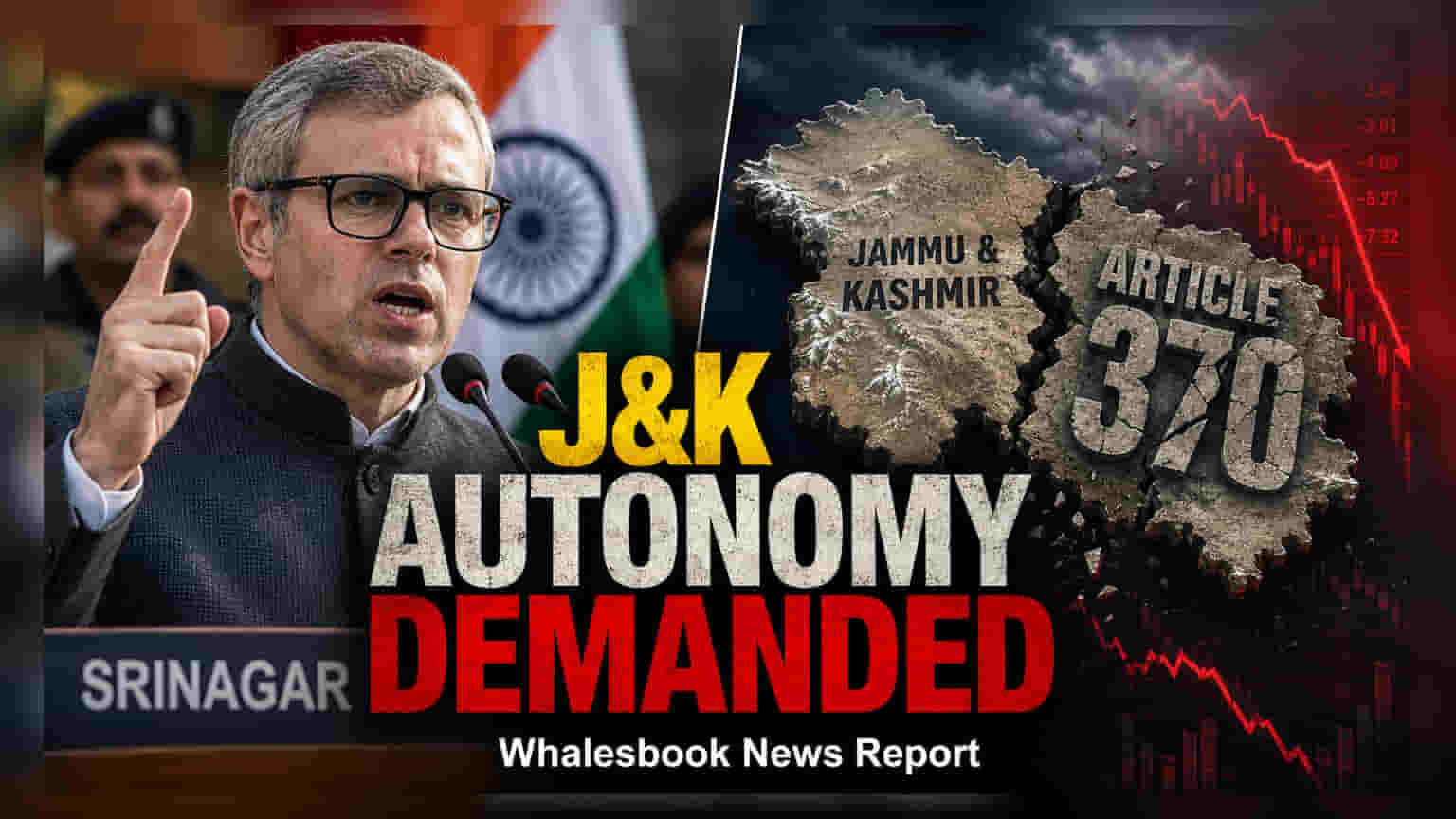
Jammu and Kashmir Chief Minister Omar Abdullah reiterated his government's demand for the restoration of statehood and special status during his Independence Day speech in Srinagar. While the event is political, administrative clarity and regional stability remain key factors for the local business and investment environment.
Jammu and Kashmir Chief Minister Omar Abdullah utilized the 80th Independence Day function at Bakshi Stadium in Srinagar to reaffirm his administration's commitment to seeking the restoration of the region's statehood and special constitutional status. The statements, delivered on August 15, 2026, highlight the ongoing discourse between the regional government and the central authorities regarding the governance structure of the Union Territory.
Abdullah noted that the decision to accede to India in 1947 was correct, while framing the 2019 revocation of Article 370 as a significant change that continues to be a central point of local political debate. He argued that returning statehood is essential not only for fulfilling previous commitments but also for strengthening India's federal structure. The Chief Minister also voiced concerns regarding the centralization of decision-making, specifically citing national entrance examinations like NEET and JEE as examples where he believes state-level control over education and admissions has been eroded.
From an investor and economic perspective, this event is political in nature and does not directly impact the stock market or any listed corporate entities. However, for those tracking the regional economy, the stability of the business climate in Jammu and Kashmir is closely tied to political developments. The region relies heavily on tourism, horticulture, and infrastructure development as its primary economic drivers. A predictable and stable administrative environment is generally considered vital for long-term growth and private sector confidence in the region.
The key monitorable for market participants interested in the broader regional economy is the progression of administrative and political policies. Investors typically watch for how the balance of power between the Union Territory administration and the central government evolves, as this often dictates policy implementation, infrastructure project timelines, and the overall ease of doing business in the region. There is currently no immediate market reaction to these statements, and future economic sentiment will likely depend on continued peace, infrastructure progress, and the resolution of long-standing administrative debates.