

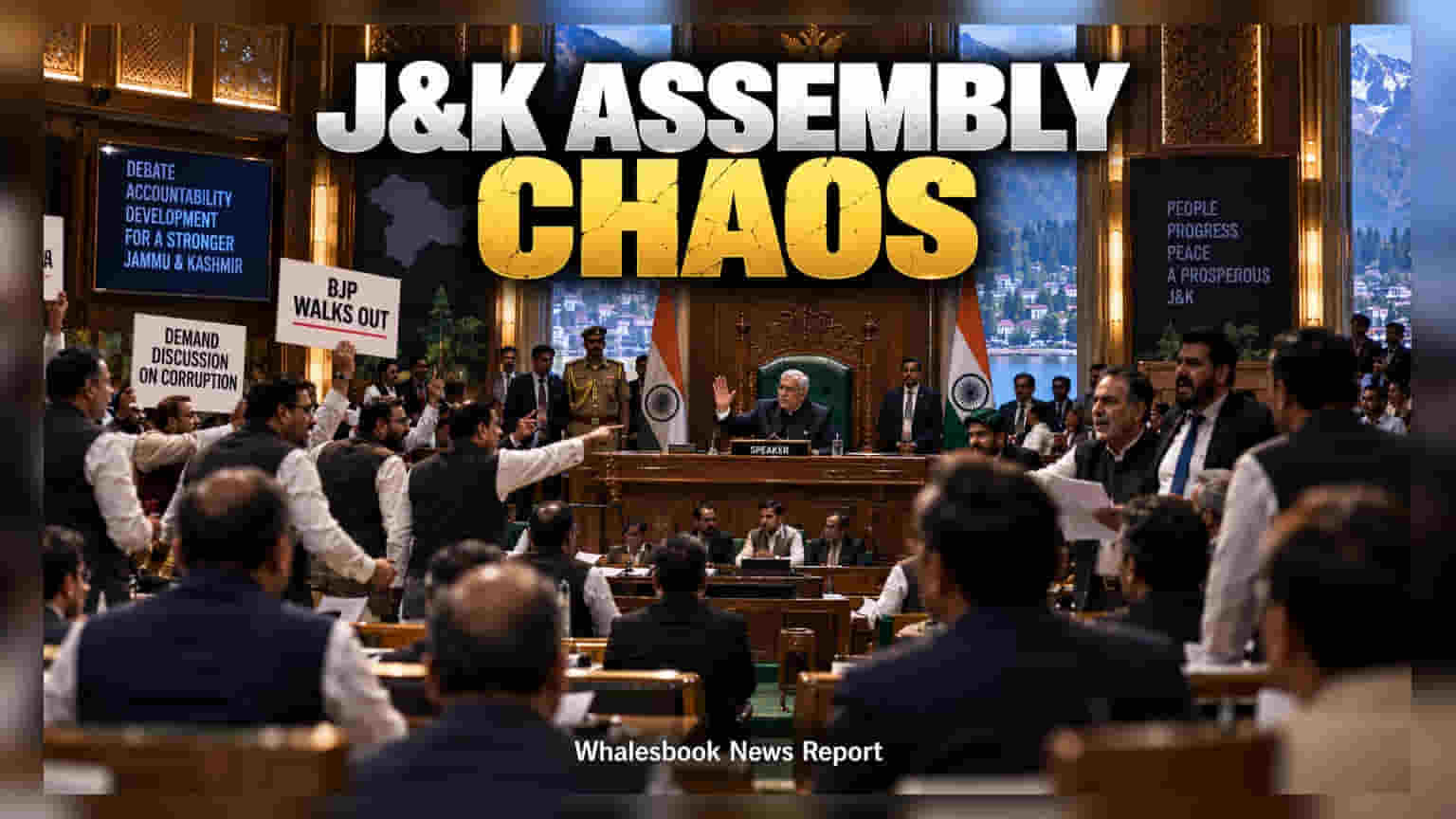
The Jammu and Kashmir Legislative Assembly saw disruptions on Tuesday after opposition members staged a walkout over holiday debates and governance concerns. For market watchers, ongoing political friction in the region can signal potential delays in policy implementation and administrative decision-making, which are crucial for maintaining regional economic stability.
The Jammu and Kashmir Legislative Assembly faced significant operational challenges on Tuesday as proceedings were disrupted during the autumn session. The disruption occurred when opposition members from the Bharatiya Janata Party (BJP) walked out of the chamber after the Speaker declined a request to open a debate concerning allegations of corruption within the current administration. This move underscores the ongoing political friction within the assembly, which is currently in its second day of the session.
The legislative gridlock was further intensified by ideological debates regarding the regional holiday calendar. Legislative proposals were introduced by the National Conference (NC), with legislator Abdul Majid Larmi suggesting the reinstatement of public holidays marking the birth and death anniversaries of party founder Sheikh Mohammad Abdullah. The debate expanded as the People's Democratic Party (PDP), represented by legislator Waheed Para, advocated for the return of July 13 as a state-sanctioned holiday. Known as Martyrs' Day, this date commemorates protesters from 1931 and was removed from the official calendar following the administrative reorganization of the territory in 2019.
For investors and market participants, these developments are relevant due to the impact of legislative functionality on regional governance. Legislative assemblies serve as the primary platform for approving policies, budgets, and regulatory frameworks that influence the business environment. When sessions are stalled by protests or walkouts, it can lead to delays in crucial administrative decisions and policy rollouts, potentially slowing down economic initiatives such as infrastructure projects or business development programs in the region. Stability in legislative operations is typically viewed as a positive indicator of administrative efficiency.
The current atmosphere highlights the challenges of balancing historical identity politics with modern governance. The opposition’s focus on governance failures and corruption allegations serves as a reminder of the heightened scrutiny the administration faces regarding its operational transparency. As the assembly navigates these ideological and administrative clashes, the primary monitorable for observers will be the resumption of routine legislative business.
Investors may track whether the assembly can move past these procedural hurdles to address substantive legislative work. The ability of the governing body to resolve these internal disputes and maintain a functional environment will be the key indicator of how effectively the administration can move forward with its economic and development agendas in the coming quarters.