

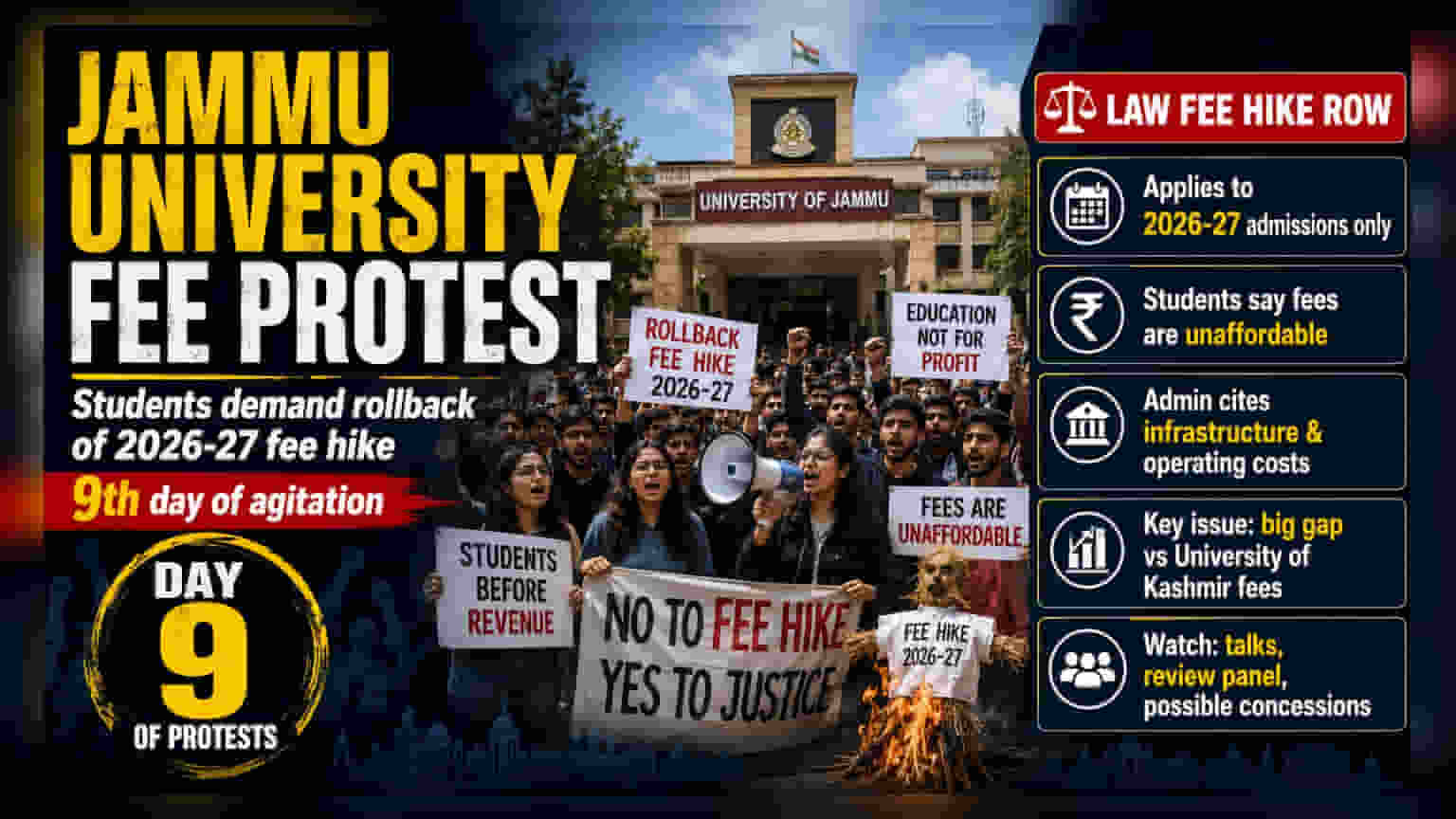
Students at Jammu University are in their ninth day of protests against a significant fee hike for the 2026-27 academic session. The agitation highlights concerns over educational affordability and discrepancies in fee structures compared to other institutions in the region.
What Happened
Students at the University of Jammu have entered the ninth consecutive day of protests, demanding a reversal of the fee structure announced for the 2026-27 academic year. The agitation, led by student groups including the Akhil Bharatiya Vidyarthi Parishad (ABVP), has intensified, with demonstrators organizing public displays of dissent. The core of the issue lies in the increased annual fees for law programs, which students argue are unaffordable for families from average financial backgrounds. Protesters have staged demonstrations, including the symbolic burning of effigies, to press for an immediate rollback of the revised rates.
The Fee Structure Debate
The discontent stems from a shift in the cost of education. Students point to a significant increase in the annual costs for the 3-year LL.B. and the 5-year B.A.LL.B. programs. While the university administration has defended the revision as a necessary step for infrastructure and operational maintenance, students argue that the hike is excessive. A key point of contention is the fee gap compared to the University of Kashmir. Protesting students have raised questions about why two prominent public universities within the same union territory maintain such a vast difference in tuition costs for similar legal programs, creating a perception of inequity among the student body.
Administration's Position
The university administration has clarified its stance amidst the ongoing protests. The Dean of Academic Affairs has stated that the new fee structure is applicable only to students enrolling in the 2026-27 academic session. According to official statements, students who were already enrolled in previous years (2025-26 and earlier) will not see any change in their fee obligations. The administration maintains that the adjustment is essential for upgrading facilities and meeting current operational costs, though this explanation has not yet satisfied the protesting students who continue to call for a review of the decision.
Why This Matters For Stakeholders
For any large public institution, transparency and communication are critical in managing stakeholder expectations. When there is a significant change in pricing—in this case, student fees—the gap between administrative justification and public perception can lead to prolonged disruptions. The current situation highlights a governance challenge: balancing the need for institutional revenue with the mandate to provide affordable education. The prolonged nature of the protest suggests a breakdown in dialogue between the university leadership and the student body, which can impact the institution's operational stability and public reputation.
What To Watch Next
The next important monitorable is the outcome of potential negotiations between the university administration and student representatives. Future updates will likely focus on whether the administration chooses to form a committee to review the fee structure, offers any concessions for economically weaker sections, or maintains its current policy. Stakeholders will also be tracking any formal interventions by regional authorities to resolve the impasse and restore normalcy to the campus.