

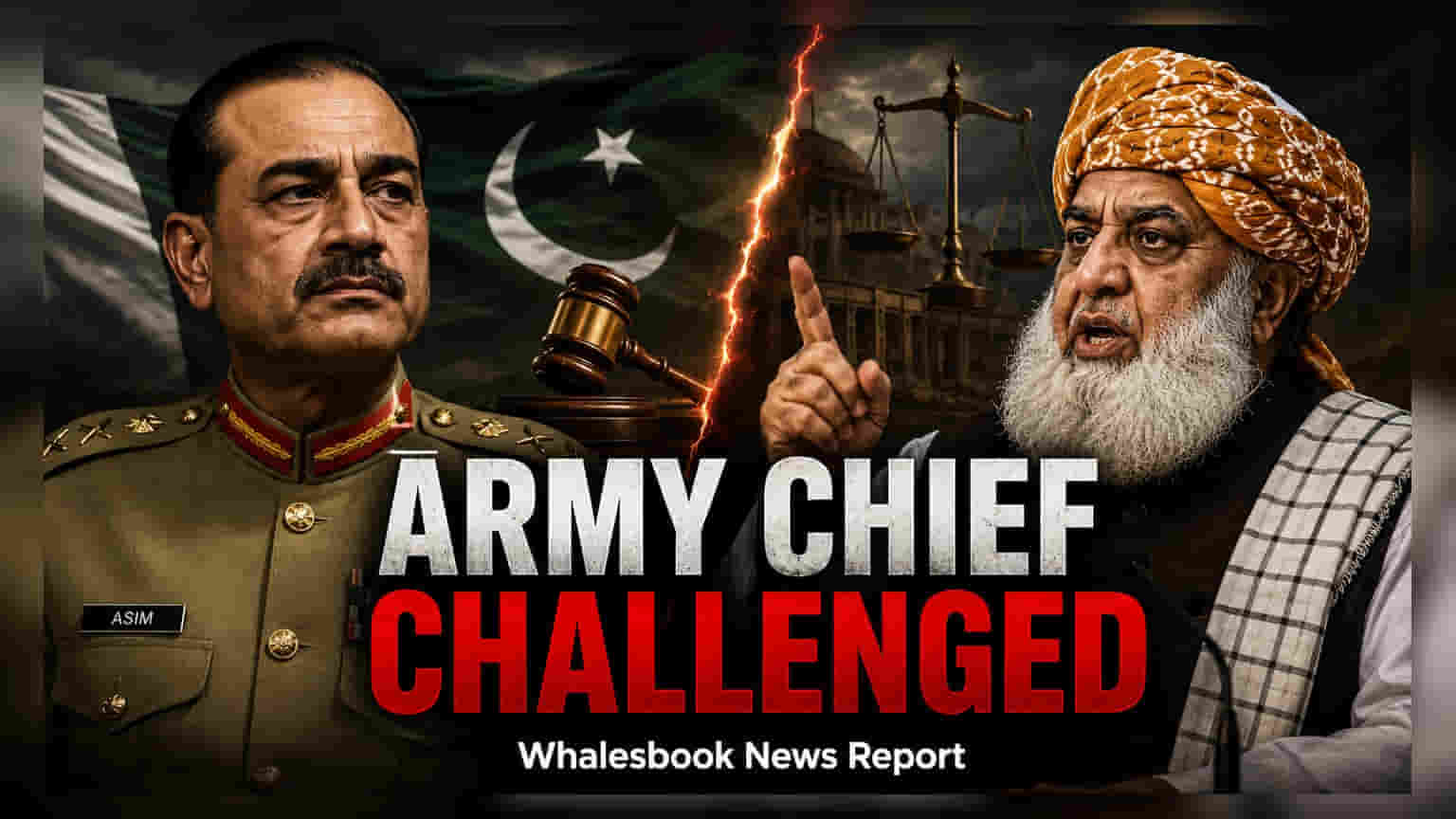
Maulana Fazlur Rehman, leader of Pakistan's JUI-F party, has challenged Army Chief General Asim Munir to resign and enter politics. This confrontation highlights growing political tensions regarding the military's influence in the country. Investors and market watchers often monitor such political volatility as it can impact regional stability and the economic environment in Pakistan.
Maulana Fazlur Rehman, the chief of the Jamiat Ulema-e-Islam (JUI-F) party, has issued a direct challenge to Pakistan's Army Chief, General Asim Munir. In a recent public statement, Rehman urged the military leader to shed his uniform and join the political arena if he wishes to influence the nation's governance. This move marks a notable escalation in the ongoing friction between the country’s established political factions and its military leadership.
Political Background and Influence
Rehman is a long-standing figure in Pakistani politics, having led the JUI-F since the early 1980s. The party maintains a strong political base in the Khyber Pakhtunkhwa and Balochistan provinces. In the 2024 general elections, the JUI-F secured 11 seats in the National Assembly, maintaining its position as a significant parliamentary player. Rehman's political career has been characterized by his advocacy for the implementation of Sharia law and his historical ideological support for the Afghan Taliban movement.
Historical Context and Past Alliances
Despite his current confrontational stance toward the military establishment, Rehman’s political history includes strategic cooperation with state institutions. In 2020, he led the Pakistan Democratic Movement (PDM), a coalition that was instrumental in the removal of former Prime Minister Imran Khan. The political shifts following that period led to the appointment of General Asim Munir as the Chief of Army Staff in 2022 by the then-ruling coalition. Rehman’s recent shift to openly questioning the military's role reflects the evolving and often unpredictable nature of political alliances in the country.
Regional Stability and Economic Implications
For market observers and investors with interests in the region, such political developments are closely monitored due to their potential impact on national stability. Rehman’s recent comments, which include claims regarding the state's control over Balochistan and criticism of cross-border policies, add to the existing geopolitical uncertainty. Historically, periods of heightened political friction between major civilian parties and the military in Pakistan have often led to delays in policy implementation and shifts in the country's economic outlook.
Investors typically track these political developments as they can influence regional security, trade relations, and the overall business environment. The long-term impact of this specific confrontation will depend on whether this rhetoric leads to broader civil-military instability or remains a localized political maneuver. The next important updates will likely involve the military's official response and how other major political parties align themselves in the wake of Rehman's statements.