 Whalesbook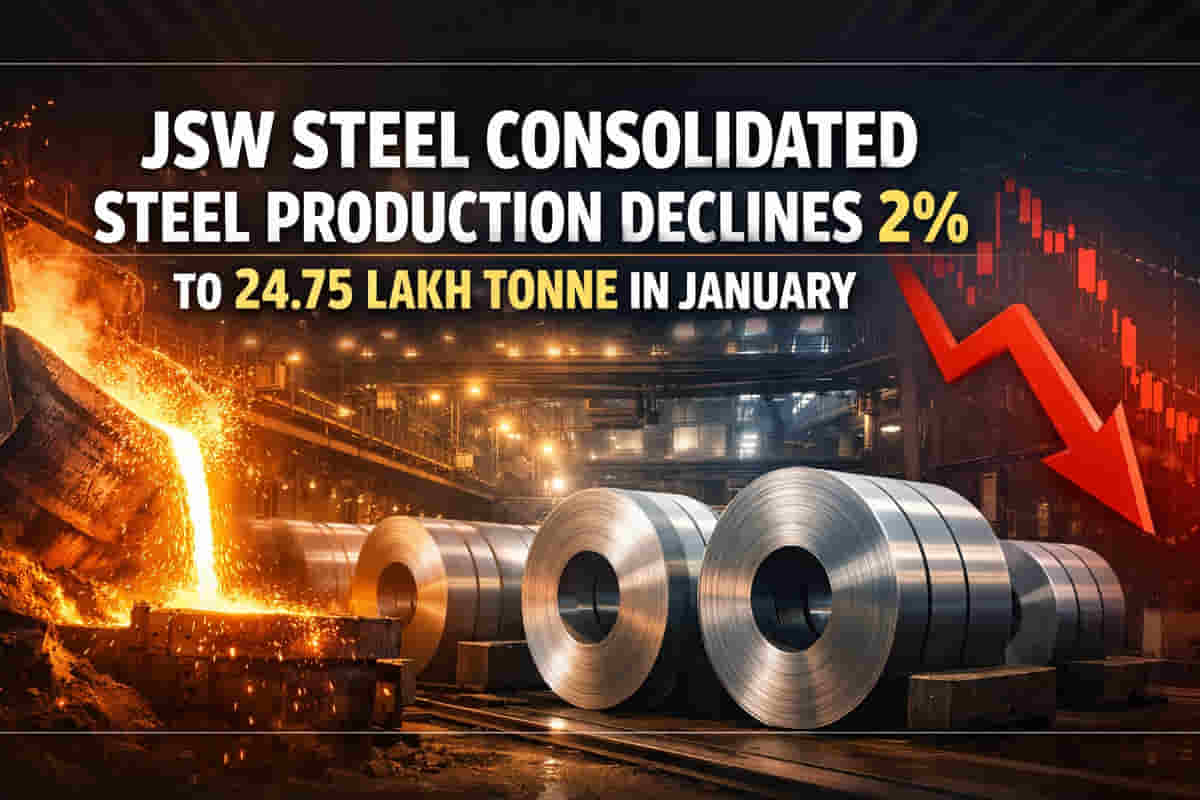
Q4 Earnings Resilience & Demand Strength
JSW Steel's recent financial disclosures paint a picture of robust underlying demand and operational execution, largely overshadowing short-term production adjustments. The company's December quarter earnings decisively beat market expectations, with a net profit of ₹2,410 crore substantially exceeding consensus estimates. This financial strength was complemented by an 11.1% revenue increase to ₹45,991 crore, propelled by an all-time high consolidated sales volume of 7.64 million tonnes, marking a 14% year-on-year surge. This performance suggests strong customer uptake and effective market penetration despite temporary operational constraints.
Operational Headwinds: Strategic Upgrades & Temporary Impact
January 2026 saw a 2% year-on-year decline in consolidated crude steel production, reaching 2.475 million tonnes. This dip was primarily attributed to the planned shutdown of Blast Furnace 3 (BF3) at its Vijayanagar plant since September 2025 for capacity upgrades, expected to conclude by the end of the fourth quarter. Capacity utilization for Indian operations, including BF3, stood at 85% for the quarter. Concurrently, US Ohio operations experienced a significant 74% production decrease, falling to 0.17 million tonnes due to a scheduled caster upgrade outage from mid-December to early January. While these upgrades temporarily affect output, they are strategic investments aimed at enhancing future production capabilities and efficiency.
Valuation and Sector Context
JSW Steel currently trades with a trailing twelve-month Price-to-Earnings (P/E) ratio around 40.5x. This valuation is considered expensive when benchmarked against its peers, such as Tata Steel (P/E ~28-36x) and SAIL (P/E ~24-33x), and also higher than the Indian Metals and Mining industry average of 22x. However, compared to its estimated fair P/E, JSW Steel is viewed as offering good value. The broader Indian steel sector is poised for a positive start to 2026, supported by a government-imposed 12% safeguard duty on flat steel products, intended to curb imports and bolster domestic producers. Domestic finished steel consumption rose 7.4% year-on-year from April to November 2025, and India is projected to lead global steel demand growth at approximately 9% for both 2025 and 2026, driven by construction and automotive sectors. Despite global price pressures from increased Chinese exports, domestic prices have shown recovery due to these protective measures.
Analyst Sentiment and Future Outlook
Despite the short-term production headwinds and its relatively higher P/E ratio, analyst sentiment for JSW Steel remains largely positive. The consensus rating among analysts is "Moderate Buy" or "Outperform," with average price targets hovering around ₹1,200-₹1,255. Recent reports show analysts like Nomura and Jefferies adjusting price targets upwards while maintaining buy recommendations, and Kotak Securities upgrading the stock to "Add". This suggests that the market views the current operational disruptions as temporary and is optimistic about the company's long-term growth trajectory, supported by strong sector tailwinds.
The Bear Case: Execution Risks & Legal Entanglements
Significant risks loom over JSW Steel, primarily stemming from recent legal entanglements and potential execution challenges. The Supreme Court's decision to declare JSW Steel's acquisition of Bhushan Power & Steel (BPSL) illegal poses a substantial financial and reputational threat. The court cited procedural lapses and delayed implementation, a development that will require banks to refund approximately ₹19,350 crore and could result in a substantial loss of interest income for JSW Steel. This ruling highlights potential issues in the company's acquisition strategies and execution capabilities. Furthermore, while the company has a history of capacity upgrades, such as the ongoing BF3 expansion at Vijayanagar, delays or unforeseen complications could impact future output. Additionally, past allegations against MD Sajjan Jindal, which he has denied, add another layer of scrutiny. These factors, coupled with global steel price volatility and moderating domestic capex growth projections, present considerable downside risks.