 Whalesbook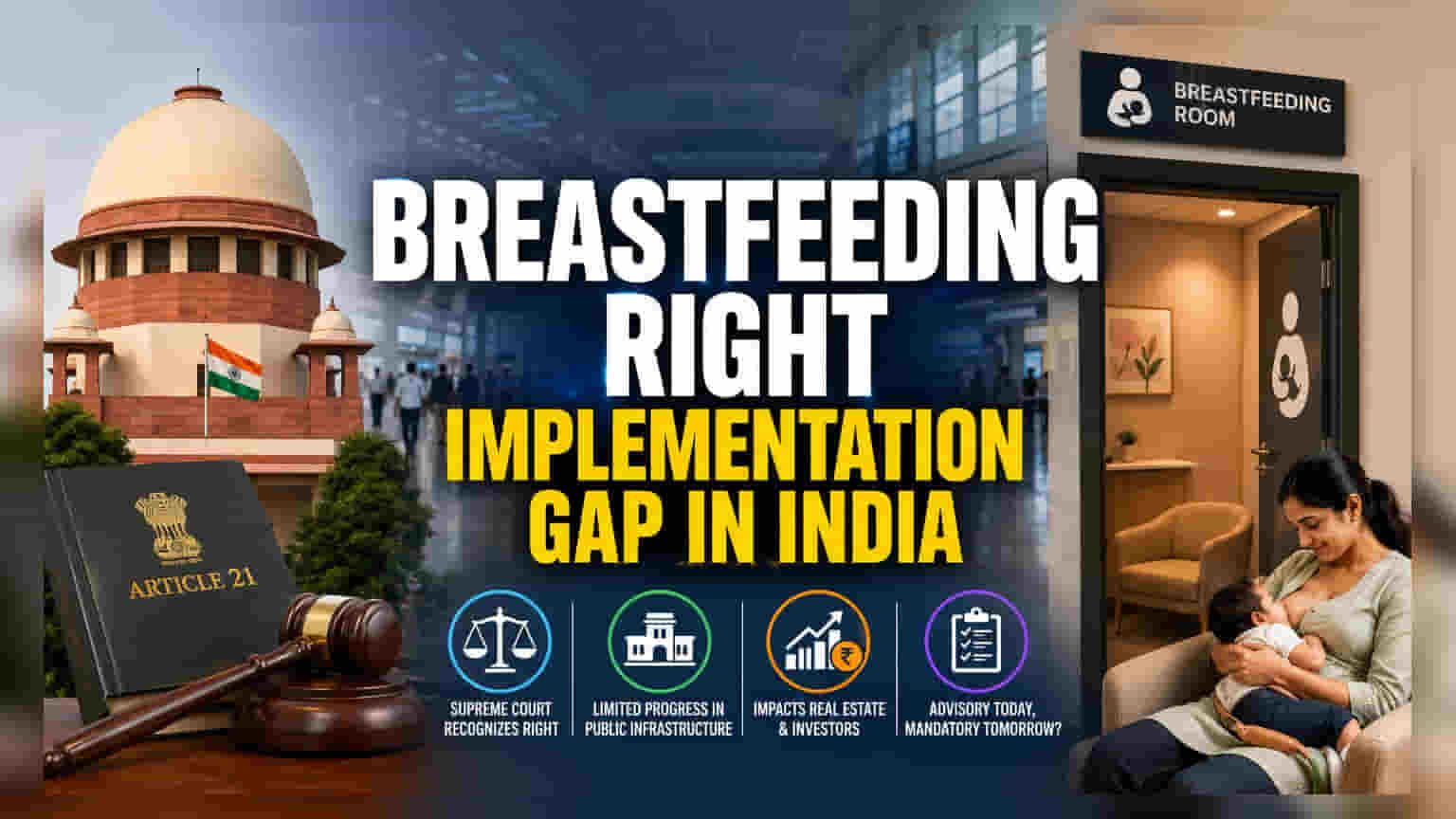


One year after the Supreme Court ruled breastfeeding a fundamental right, dedicated spaces remain scarce in public areas. For investors tracking commercial real estate and ESG compliance, this policy gap signals a potential shift toward stricter infrastructure mandates, which could influence future operational costs and design standards for high-footfall assets.
What Happened
In February 2025, the Supreme Court of India passed a landmark judgment in the Maatr Sparsh Initiative case, recognizing breastfeeding as a fundamental right under Article 21. The ruling linked breastfeeding to a child's right to life and a mother's right to privacy and dignity. However, as of June 2026, there has been limited progress in establishing dedicated breastfeeding rooms across India’s public infrastructure. The judiciary had opted to issue advisories to administrative bodies rather than creating binding legal directives, leaving the implementation to be largely voluntary.
Why This Matters for Investors
This ongoing gap between judicial intent and physical implementation is an important monitorable for investors, particularly those exposed to commercial real estate, including malls, transit hubs, airports, and large office complexes. While many modern, premium properties have proactively adopted these facilities as part of their design, a significant portion of public and older commercial infrastructure has not.
For institutional investors and REITs (Real Estate Investment Trusts), the business of managing high-footfall spaces is increasingly linked to 'Social' and 'Governance' (ESG) benchmarks. As public awareness grows and government policy potentially shifts from non-binding advisories to mandatory infrastructure standards, property owners may face new compliance requirements. This could lead to a future need for capital spending on retrofitting existing buildings to accommodate such facilities.
The Shift from Advisory to Mandatory
Currently, the primary hurdle is that the existing guidelines are classified as advisories. These lack the legal teeth required to compel administrative bodies or private commercial operators to provide dedicated spaces. If this changes, it would mark a shift in operating costs and design planning. Investors often keep a close watch on such regulatory trends, as they can directly influence the operational expenditure for maintaining public and commercial assets.
Peer and Sector Context
Within the real estate sector, there is a clear divide. High-end, recently constructed retail spaces and international-standard office parks often feature such amenities to attract premium tenants and footfall. In contrast, older public infrastructure and lower-tier commercial assets face significant challenges, including space constraints and a lack of basic maintenance, such as clean water and sanitation. This disparity highlights that compliance is often tied to the quality of the asset and the financial capacity of the owner.
What Investors Should Track
Investors may monitor for any future notifications from central or state-level authorities that could transition these advisories into binding norms. Any government push to standardize public infrastructure—particularly in transit hubs or large-scale retail developments—would be the primary trigger for industry-wide changes. Additionally, developments in ESG reporting standards might increasingly factor in inclusive facility metrics, which could eventually influence the valuation or tenant profile of commercial properties. The focus for shareholders remains on potential policy updates that could impact project design, operational costs, or regulatory compliance timelines.