

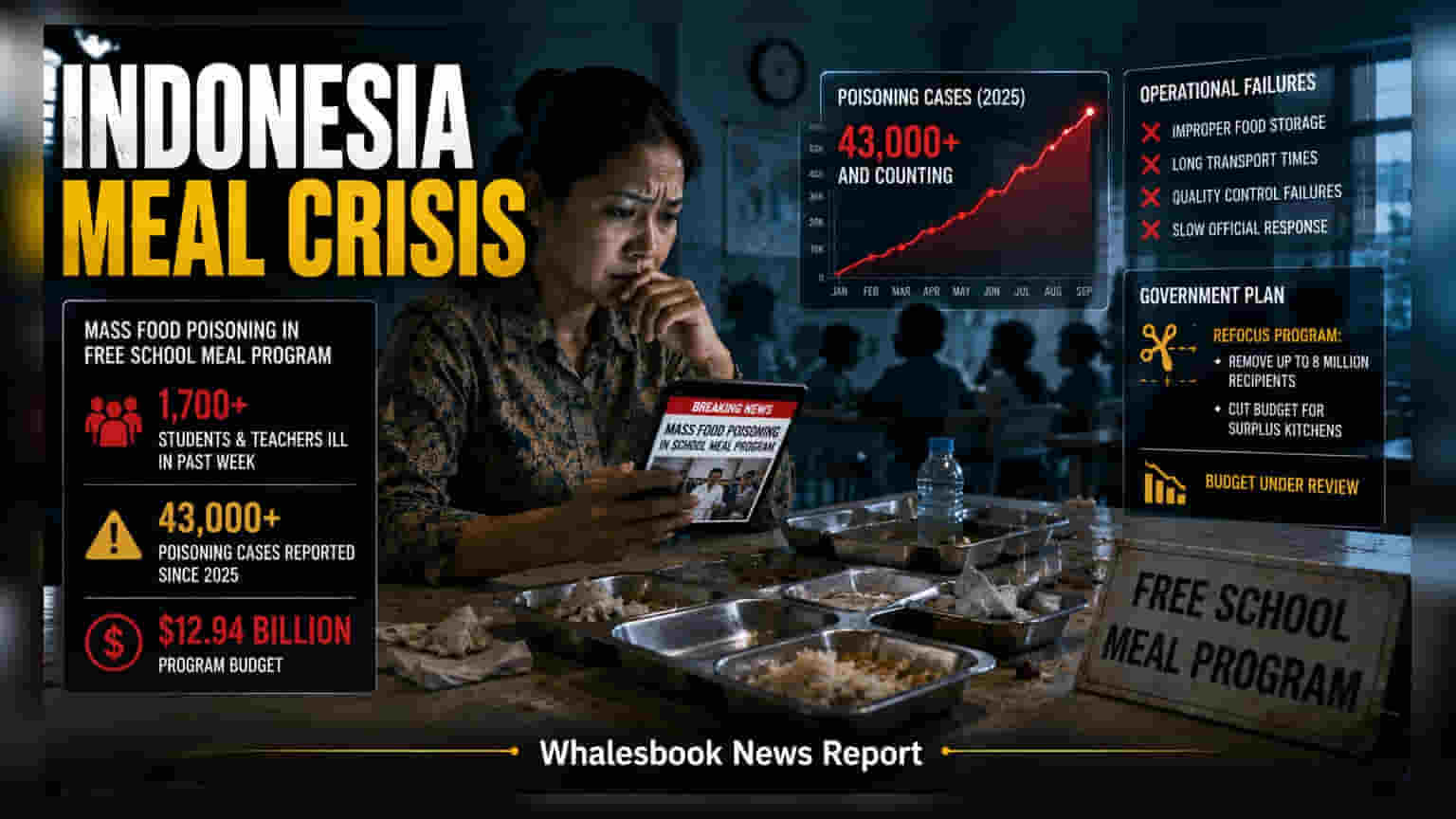
Indonesia’s $12.94 billion free meal program is under pressure after mass food poisoning outbreaks affected over 1,700 people in one week. With over 43,000 cases linked to the scheme since 2025, the government is now planning budget cuts and recipient reductions. This shift highlights significant fiscal and operational risks for the flagship policy.
Indonesia's massive $12.94 billion free school meal program is facing a severe crisis as reports of mass food poisoning spread across the country. In the past week alone, more than 1,700 students and teachers have fallen ill in regions like Central Java and East Java after eating government-supplied meals. These incidents have raised urgent concerns regarding the program's safety and management.
Scale of Operational Failures
This is not an isolated event. Data from the Indonesian Education Monitoring Network indicates that over 43,000 poisoning cases have been linked to the scheme since it began in 2025. The program, a flagship initiative of President Prabowo Subianto, aims to improve national nutrition standards but is now struggling with serious logistical and oversight failures. The National Nutrition Agency, which oversees the project, has faced criticism for slow responses and systemic problems, including improper food storage and long transport times. These operational breakdowns have triggered public backlash and concerns about the management of the multibillion-dollar budget.
Fiscal Impact and Policy Shifts
The government is now forced to reconsider the program's structure. Plans are underway to "refocus" the initiative, which may involve removing up to 8 million recipients and cutting budgets for surplus kitchens. For private contractors and kitchen operators involved in the supply chain, these changes could mean payment delays, contract adjustments, or lost opportunities. Investors and stakeholders are watching this closely, as the program's massive financial scale makes it a significant line item in the national budget. Beyond the direct operational costs, the project has also faced ongoing allegations regarding corruption and financial leakage, which adds another layer of risk to its long-term viability.
Monitoring Future Updates
The path forward involves assessing whether the government can stabilize the program while addressing concerns about quality control and financial accountability. The next important updates will be the specific scale of the announced budget cuts and how these changes impact the thousands of contractors currently running the supply kitchens. Investors will also monitor the government's ability to maintain political support for the policy as public dissatisfaction grows due to these recurring health risks.