

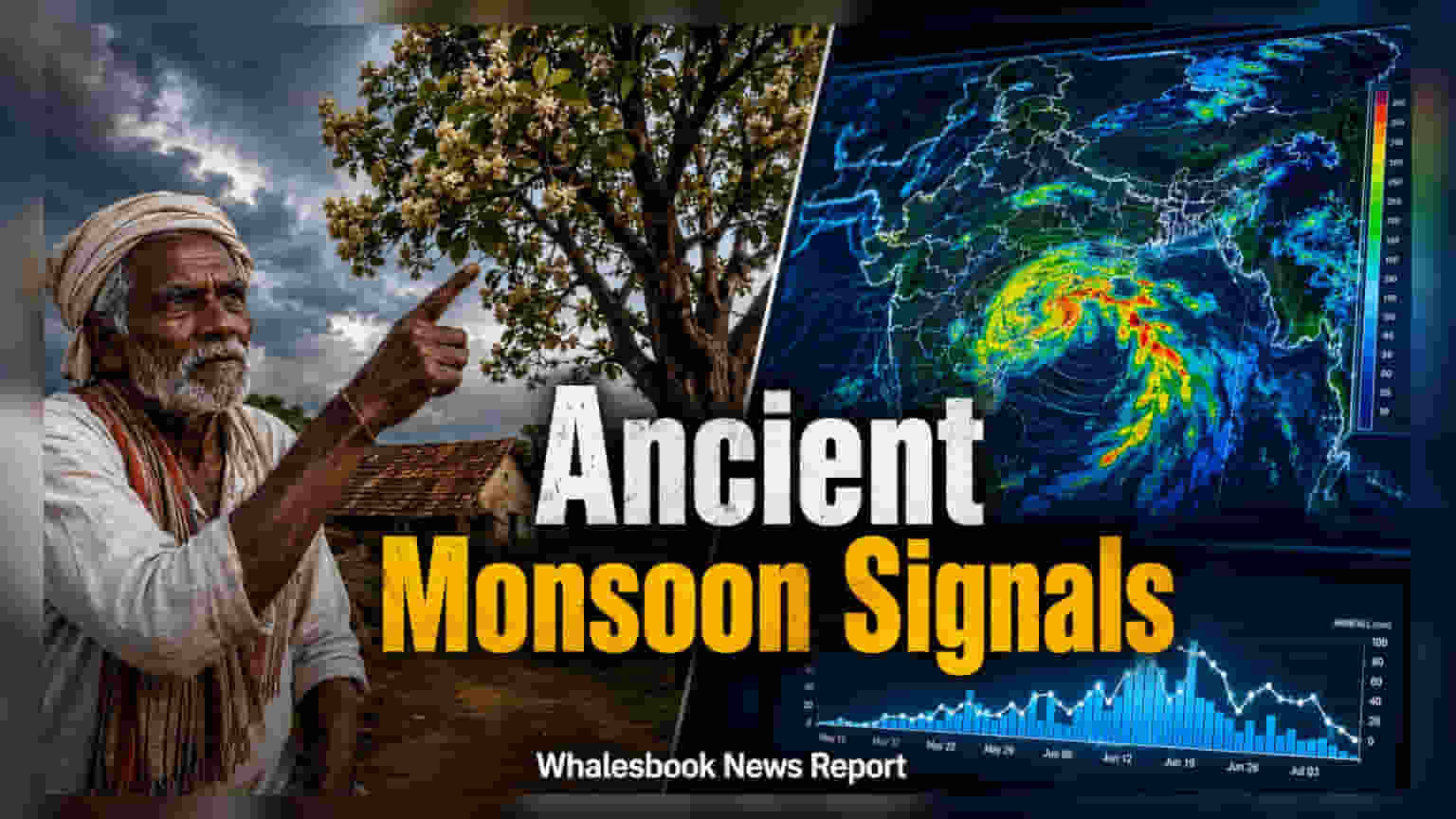
Indigenous communities in Jharkhand are using traditional ecological signals to predict monsoons as climate patterns become increasingly unpredictable. This ancient knowledge is now being studied by scientists to enhance local weather adaptation strategies, potentially aiding farmers in adjusting their crop sowing schedules amidst changing climate conditions.
For generations, the Munda community in Jharkhand’s Bhandra village has maintained a sophisticated system of weather prediction rooted in deep observation of their local environment. By monitoring the flowering and fruiting patterns of specific plants, such as the Mahua tree, villagers have traditionally anticipated the strength and timing of the monsoon. Recent observations, such as the failure of the Mahua to flower this year, correctly signaled the sparse rainfall that persisted through mid-July, highlighting the practical utility of these ancient methods for agricultural planning.
Integrating Traditional Knowledge with Science
These methods extend far beyond relying on a single tree. Observers like Renu Tuti note that traditional wisdom often correlates phenomena such as abundant mango harvests with specific weather events like thunderstorms and hail. As climate change disrupts established seasonal cycles, such as the rain patterns typically expected around Akshaya Tritiya, farmers are increasingly relying on these generational insights to adapt their sowing schedules.
Experts, including Kushagra Rajendra of Amity University, Haryana, emphasize that these indigenous systems are highly integrated. They combine observations of plant behavior with other environmental markers, such as groundwater levels, bird migration, insect activity, and wind patterns. This decentralized, multi-factor approach creates a complex monitoring network that allows for hyperlocal weather anticipation, which is often more specific than generalized regional forecasts.
Scientific Recognition and Future Research
The scientific community is increasingly recognizing the value of these observations. Devina Krishna, a linguist studying these patterns, explains that because plants act as sensitive responders to environmental stress, their biological changes serve as an early warning system for climatic shifts. Research from other regions, such as the Gujii community in Ethiopia, has shown that traditional drought predictions can align significantly with meteorological data, validating the accuracy of these methods.
Efforts are now focused on documenting these indigenous forecasting systems and comparing them against modern meteorological datasets. For farmers and local stakeholders, the primary monitorable in the coming seasons will be how effectively this validated traditional knowledge can be integrated into modern agricultural advisory services. As extreme weather events become more frequent, documenting these time-tested insights remains a key strategy for developing resilient local adaptation plans in India’s climate-vulnerable regions.