

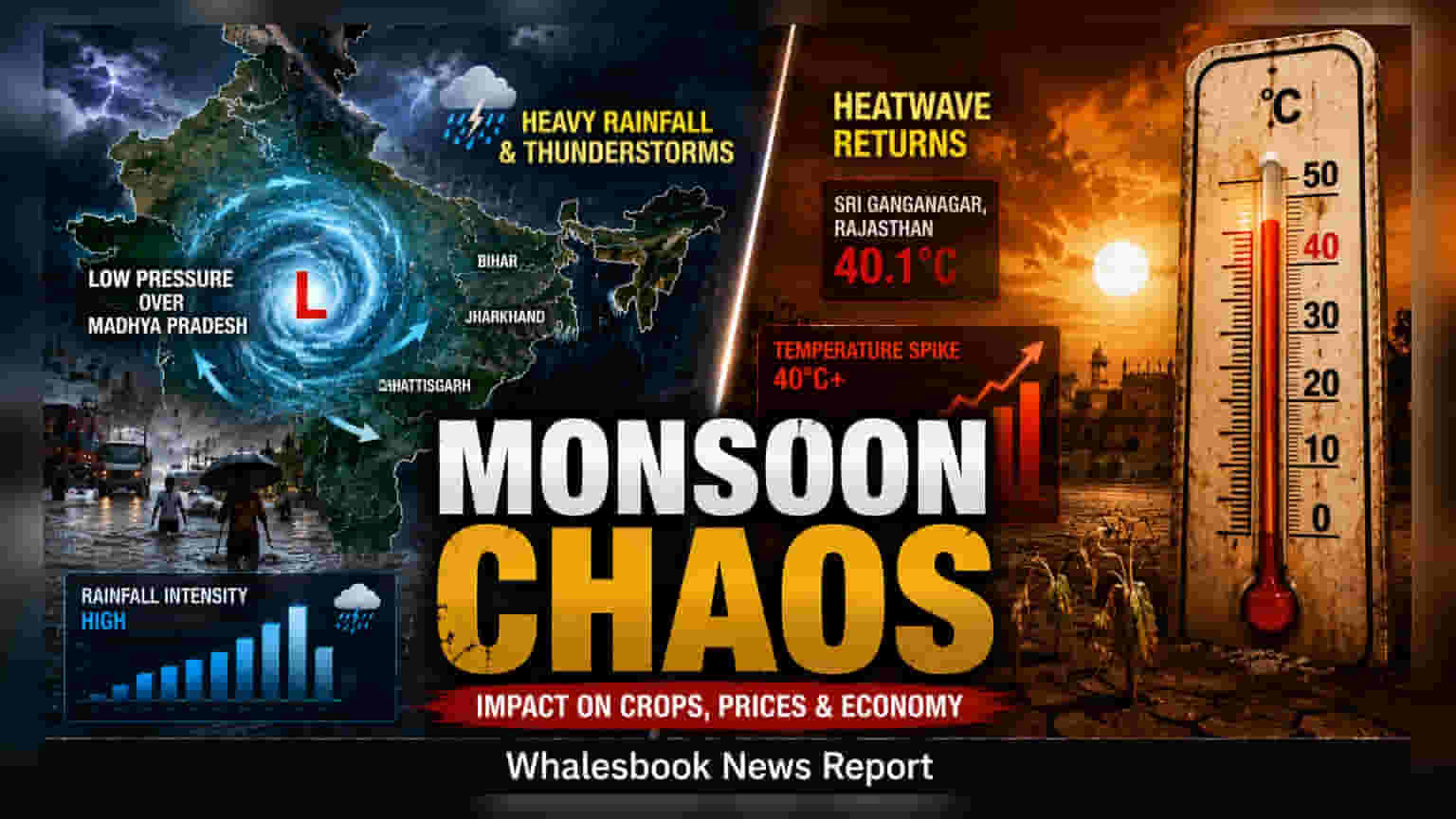
India faces a sharp weather divide on August 21, 2026, with heavy monsoon rains in central and eastern regions contrasting with extreme heat in the northwest. This uneven pattern poses risks to Kharif crop output and food inflation. For investors, the volatility in agricultural conditions remains a critical macro variable that could affect rural consumption and supply chain stability.
On August 21, 2026, India is witnessing a distinct weather divergence that holds significant implications for the broader economy. While heavy rainfall and thunderstorms are actively impacting central and eastern states, extreme heat has returned to parts of the northwest. The India Meteorological Department (IMD) has attributed this active phase to a low-pressure area currently situated over Madhya Pradesh, which is driving intense precipitation across the region. Conversely, areas like Sri Ganganagar in Rajasthan have reported maximum temperatures hitting 40.1 degrees Celsius, highlighting the volatile nature of the season.
For the Indian stock market, the monsoon is more than just a weather event; it is a primary macroeconomic indicator. Agricultural productivity and the rural economy are deeply linked to the timing and distribution of rainfall. The current heavy downpours in states like Madhya Pradesh and Chhattisgarh, while beneficial for soil moisture in the long run, raise immediate concerns regarding potential localized flooding and damage to standing Kharif crops. Excessive rain can lead to waterlogging in fields, delaying harvesting or reducing yields for certain crops, which often directly impacts food price inflation.
From a business perspective, these extreme weather patterns create operational and financial headwinds. In the agricultural input sector, companies producing fertilizers and pesticides often see demand fluctuations when weather is erratic. If excessive rains disrupt field work, the application of essential crop inputs is often postponed, potentially affecting the quarterly revenue realization for agrochemical firms. Similarly, the logistics and supply chain sectors face operational risks, as heavy rains and flood-like conditions in states like Bihar, Jharkhand, and Madhya Pradesh can disrupt transportation networks, causing delays in goods delivery and increasing costs.
Inflation remains a key monitorable for market participants. Persistent weather volatility has historically contributed to food price spikes, particularly in vegetables and pulses. If the current uneven monsoon continues to stress agricultural output, it may complicate the inflation outlook for the central bank, which influences monetary policy and interest rate expectations. Analysts frequently track these weather patterns to estimate rural demand, as a healthy monsoon season is usually a strong driver for FMCG and automobile sales in rural markets.
Investors monitoring the potential impact of these weather conditions should keep an eye on official agricultural sowing data, food price indices, and company commentary regarding rural demand. While the monsoon is a recurring seasonal factor, the severity of this year's weather patterns necessitates a cautious approach to assessing companies with high exposure to rural consumption and agricultural supply chains. The next important step will be to observe whether the low-pressure system dissipates, allowing for a more balanced distribution of rainfall across the remaining weeks of the season.