 Whalesbook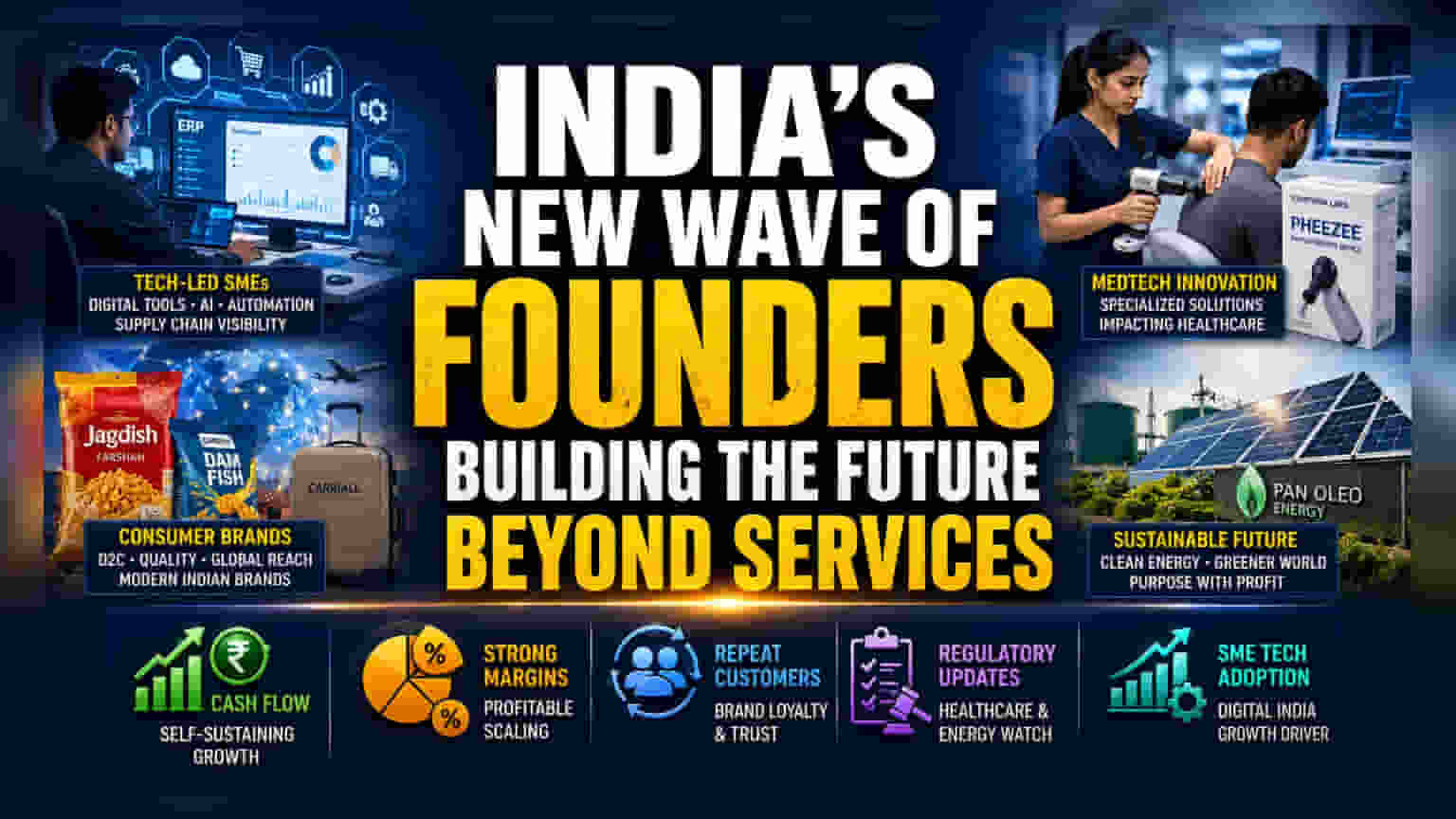


What Happened
India’s business environment is seeing a significant evolution as a new wave of founders moves beyond traditional service-based models. These entrepreneurs are integrating specialized technology, purpose-driven branding, and efficient supply chains to address specific gaps in sectors ranging from FMCG and logistics to healthcare and sustainable energy. This shift represents a move from broad-based services toward product-led growth and the formalization of small and medium enterprises (SMEs).
The Tech-Led SME Transformation
In the technology and software space, businesses are increasingly focusing on democratizing digital tools. Companies like Eazy ERP Technologies are evolving into comprehensive software ecosystems for SMEs, while others like Bizmetric are using enterprise AI and automation—often in partnership with global tech giants—to help traditional businesses modernize. This trend is crucial for the Indian economy, as it helps smaller businesses compete more effectively by digitizing their supply chains and internal operations. Platforms like Acuver Consulting and CargoClave are further refining this by providing data-driven visibility into logistics, which is essential for reducing waste and improving operational efficiency in a fragmented market.
Consumer Brands and the Global Shift
A notable trend is the modernization of regional consumer brands. Companies like Jagdish Farshan are scaling traditional regional offerings for a national and international audience by upgrading quality standards and distribution networks. Similarly, startups in the direct-to-consumer (D2C) space, such as Dam Good Fish, are attempting to solve supply chain inefficiencies in perishable goods by building unbroken cold chains. Carriall is focusing on lifestyle branding in travel accessories, utilizing licensing deals to build a recognizable market presence. These efforts suggest a growing confidence in taking Indian products to global markets by balancing local flavor with international quality benchmarks.
The Investor Perspective: Risks and Sustainability
While this growth is promising, it presents distinct challenges that investors often monitor. In the D2C and food segment, the primary risk remains the high cost of customer acquisition. As the market becomes crowded, the ability to retain customers without excessive marketing spend is vital for long-term viability. Investors typically examine whether these companies can achieve positive unit economics—making a profit on each unit sold—rather than relying solely on rapid revenue growth.
In the technology sector, the risk lies in competition and the speed of adoption. Software providers must constantly innovate to remain relevant, and their growth is heavily tied to the health of the SME sector, which can be sensitive to economic downturns and interest rate changes. For MedTech startups like Startoon Labs, which are developing specialized devices like the Pheezee physiotherapy tool, regulatory hurdles and the need for clinical validation are significant barriers to entry that can delay market expansion.
Furthermore, in the sustainable energy and healthcare sectors, capital intensity is a common theme. Businesses like Pan Oleo Energy or home-visit diagnostic services face the dual challenge of regulatory compliance and high initial spending on infrastructure. Investors often look for clear evidence that these businesses can balance their social or environmental purpose with a sustainable financial model that does not require endless external funding.
What Investors Should Monitor
The long-term success of these enterprises will depend on several key factors. Investors may track the following monitorables: the trend in cash flow from operations, which indicates if the core business is self-sustaining; the ability to maintain or improve profit margins as companies scale; and the level of repeat customer rates, which measures brand loyalty and market acceptance. Additionally, regulatory updates in the healthcare and energy sectors, as well as the adoption rates of digital tools among Indian SMEs, will remain critical indicators of the sector's overall health and the specific growth potential of these individual companies.