

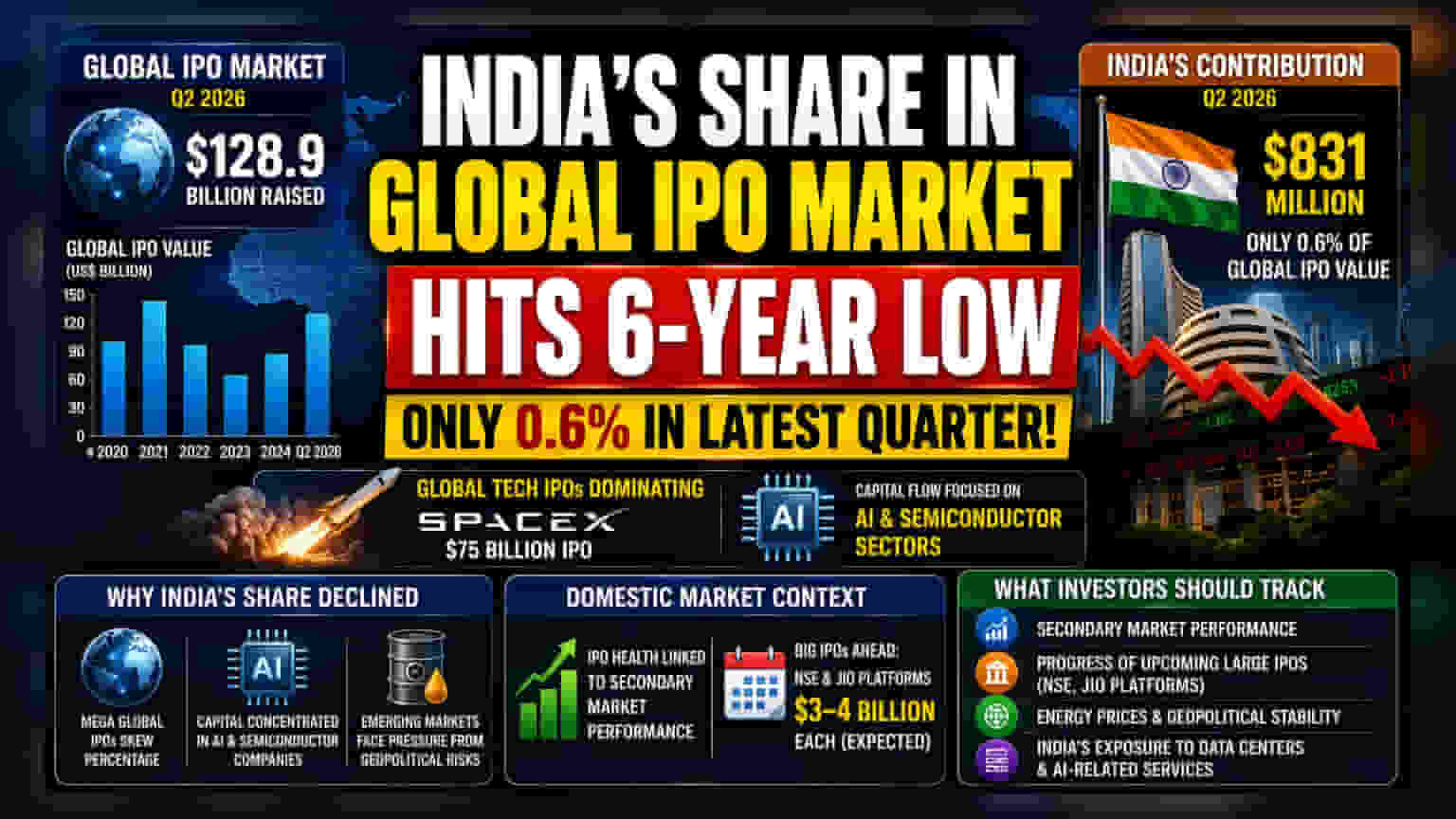
India accounted for less than 1% of the global IPO market in the latest quarter, falling to a six-year low. This decline is largely due to massive international tech listings, such as SpaceX, rather than a halt in domestic activity. Upcoming large-scale IPOs in India remain a significant monitorable for the market.
What Happened
India’s participation in the global initial public offering (IPO) market has fallen to its lowest level since June 2020. In the most recent quarter, companies globally raised $128.9 billion through IPOs. India’s contribution to this total was $831 million, which accounts for just 0.6% of the worldwide IPO value. This is a sharp drop compared to historical averages, placing India's share of the global market at a six-year nadir.
The Global Tech Factor
A primary reason for this decline is not necessarily a sudden stop in Indian company listings, but the sheer size of global tech IPOs. Large international offerings, such as SpaceX’s $75 billion listing, have dominated the total global fundraising numbers. This has skewed the overall percentage share, making emerging markets like India appear to have a smaller slice of the pie. Furthermore, the global capital flow is heavily concentrated toward companies linked to artificial intelligence and semiconductor manufacturing—sectors where India currently has limited direct representation.
Domestic Context and Market Health
While India's global percentage share has dipped, market experts note that the health of the primary market is closely linked to the performance of the secondary stock market. Yatin Singh, CEO of Investment Banking at Emkay Global Financial Services, highlighted that domestic factors are a stronger driver of IPO activity than global trends.
Looking ahead, the market is awaiting potentially large offerings from major entities like the National Stock Exchange (NSE) and Jio Platforms, each aiming to raise between $3 billion and $4 billion. These events could change the current participation trend. However, investors should note that the massive capital requirements for global AI infrastructure, estimated to reach $1 trillion annually by 2027 by Morgan Stanley, continue to capture the bulk of international investor attention.
Risks and Market Pressures
The drop in share also reflects wider pressure on emerging markets. India’s status as a major energy importer makes the local market sensitive to geopolitical events, such as conflicts in West Asia, which can impact investor sentiment and liquidity. When global investors turn cautious, they often prioritize established markets or high-growth technology sectors in the US and East Asia, potentially leaving less capital for IPOs in emerging economies.
What Investors Should Track
For investors assessing the Indian market, the focus should remain on domestic indicators rather than global IPO market share. Key monitorables include:
- Secondary Market Performance: As noted by experts, a healthy secondary market is usually a prerequisite for a strong IPO pipeline.
- Upcoming Large IPOs: The progress and valuation of anticipated listings like NSE and Jio Platforms will be critical indicators of domestic investor appetite.
- Energy and Geopolitical Stability: Since India is a significant energy importer, stability in energy prices and geopolitical conditions will continue to influence foreign investor sentiment.
- Sectoral Exposure: Monitoring how quickly India expands its role in data centers and AI-related services, as these areas become more central to global investment themes.