 Whalesbook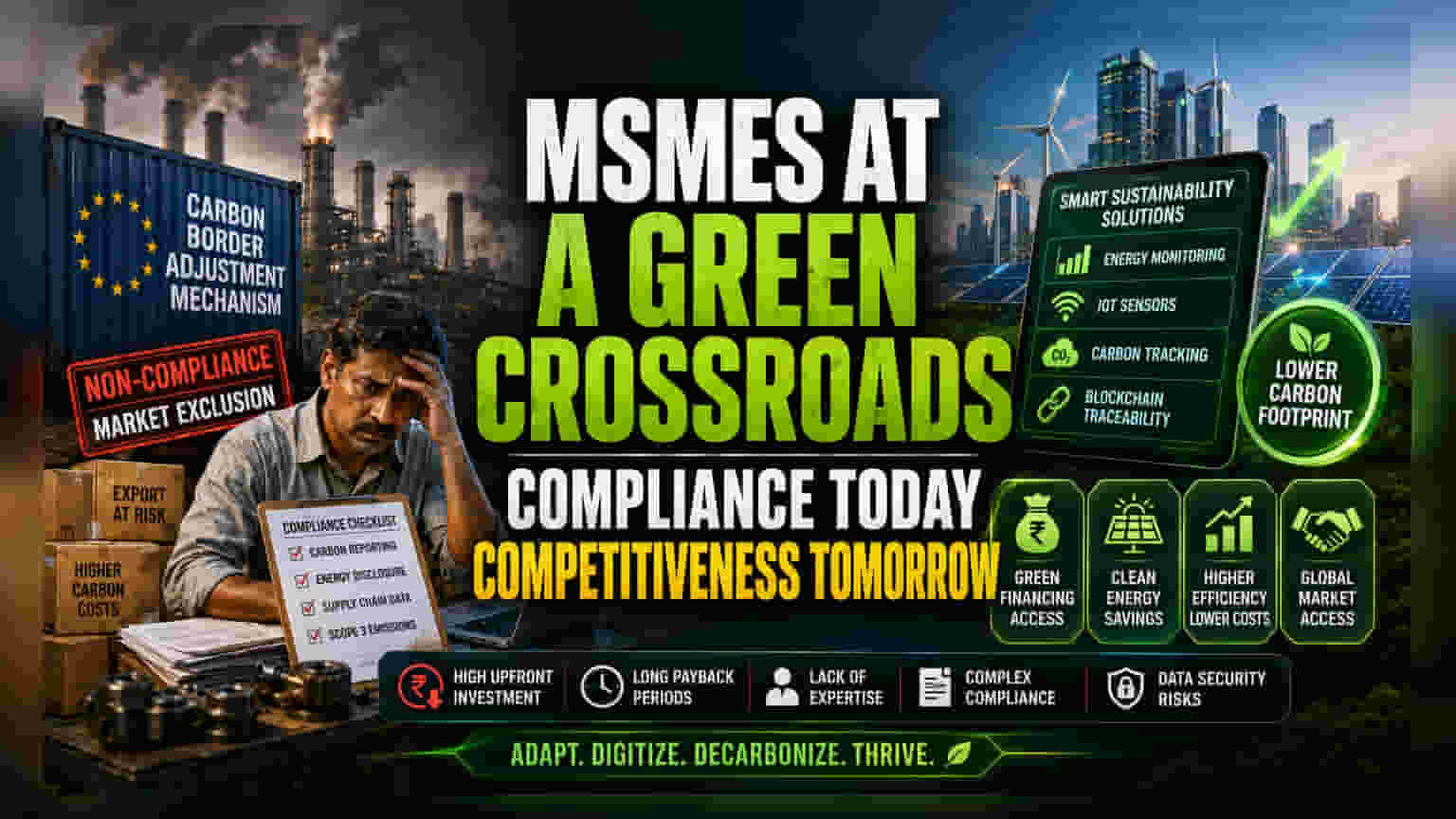


The Compliance Squeeze
Global supply chain requirements are no longer theoretical. The enforcement of the European Union’s Carbon Border Adjustment Mechanism (CBAM) has effectively exported high-level environmental reporting standards onto the doorstep of India's Micro, Small, and Medium Enterprises. These firms, which often lack the balance sheet flexibility of large-cap exporters, now face a binary outcome: modernize or face exclusion from premium international markets. While local Business Responsibility and Sustainability Reporting (BRSR) norms initially targeted only the top 1,000 listed entities, the downstream impact on MSMEs—who serve as critical vendors—is creating a ripple effect of forced transparency.
The Digital Cost Paradox
The primary friction point lies in the mismatch between high-tech sustainability tools and low-tech capital constraints. Smart energy management systems, IoT-enabled sensors, and blockchain-based provenance tracking promise to optimize energy efficiency and validate carbon footprints. However, the adoption of these tools often requires an upfront capital outlay that exceeds the liquidity profile of the average MSME. While fintech players are attempting to bridge this gap through green credit lines and specialized solar financing, the debt-service coverage ratios for these smaller entities remain under significant pressure. High interest rates, coupled with the long payback periods inherent in energy-efficiency upgrades, create a structural barrier to rapid adoption.
The Operational Risk Matrix
Beyond the hardware requirements, a profound structural vulnerability exists within the management of human capital and technical expertise. Small-scale operators typically manage business through informal systems; transitioning to quantified Scope 3 emission reporting requires a level of auditability that many are ill-equipped to handle. The reliance on third-party consultants or complex SaaS platforms introduces new operational risks, specifically data security and dependency on proprietary systems. Furthermore, the existing support ecosystem, while numerically significant in terms of government schemes, remains bottlenecked by administrative complexity. Businesses are finding that the time-cost of navigating these programs often cancels out the fiscal benefits.
Competitive Disadvantages
The survival risk for many MSMEs is amplified by their inability to achieve the economies of scale seen in larger domestic and international competitors. As the green premium becomes a standard price of doing business, firms unable to digitize their carbon footprint effectively will likely see their margins erode further. The current shift is not merely a move toward cleaner energy; it is an industry-wide consolidation mechanism where only the most tech-integrated and capital-efficient players will retain their positions in the global value chain. Future performance will be dictated by how quickly these firms can integrate plug-and-play monitoring solutions without destabilizing their core operating cash flows.