 Whalesbook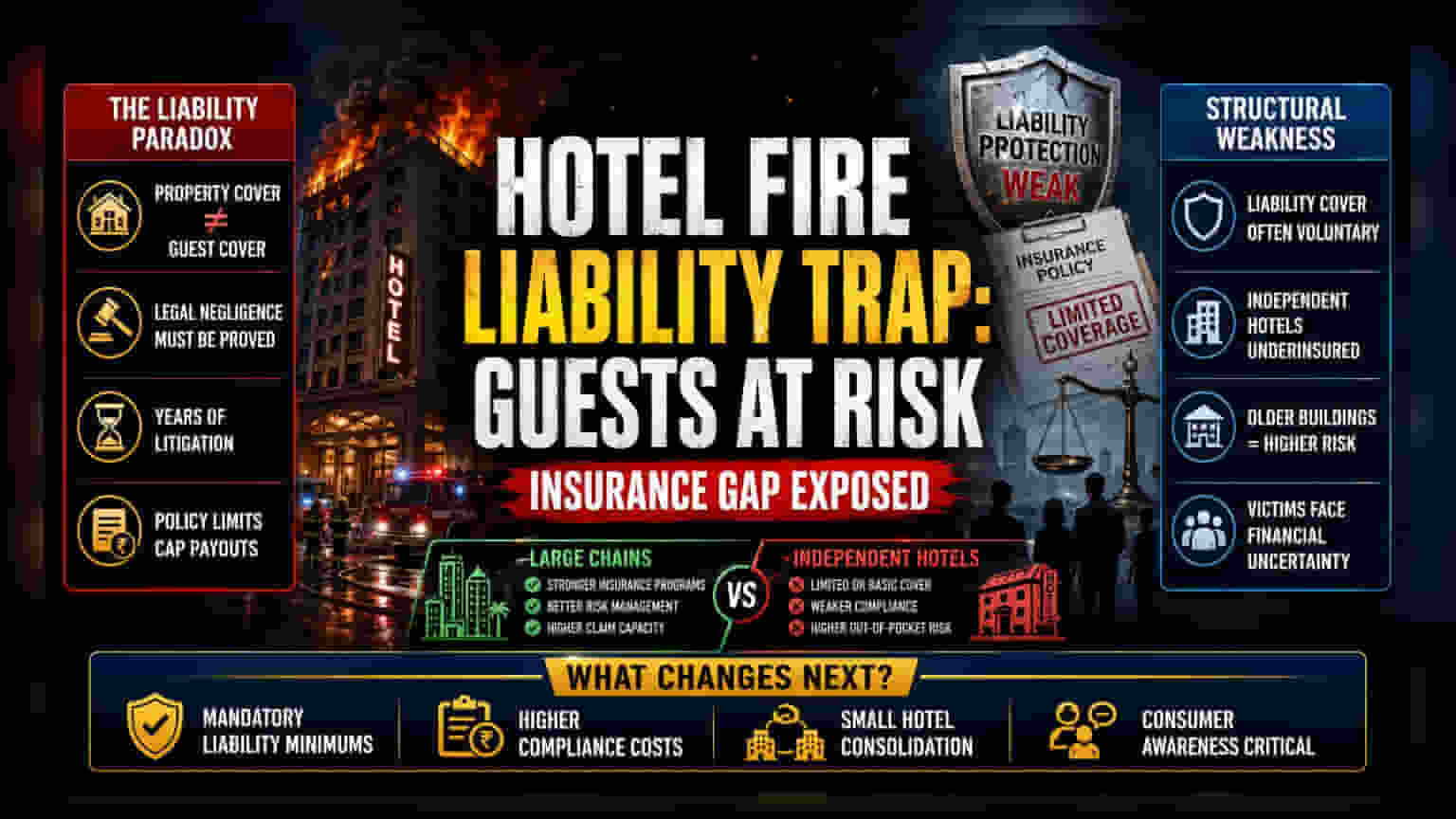


The Liability Paradox
The recurrence of fatal hotel fires in major Indian urban centers has moved beyond a failure of infrastructure, exposing a volatile intersection of regulatory inadequacy and financial negligence. While public discourse focuses on the immediate devastation, the structural reality remains that guests are rarely shielded by the comprehensive insurance policies they assume exist. Property owners frequently prioritize fire and asset coverage, which protects the physical building but leaves the occupant entirely exposed in the event of injury or death. Recovering damages requires establishing legal negligence, a process often mired in years of litigation where the hotel's limited policy limits become the ceiling for any potential victim settlement.
The Institutional Versus Independent Divide
Financial protection within the sector is bifurcated. Large-scale hospitality chains often utilize Commercial General Liability programs that provide a wider safety net, bolstered by institutional oversight and standardized risk audits. Conversely, the unorganized hospitality segment operates in a regulatory vacuum. Many independent operators treat liability insurance as a discretionary cost rather than a fundamental operational necessity. This results in widespread underinsurance, where the indemnity limits assigned to a property fail to account for the actual density of human occupancy or the potential legal damages resulting from a mass casualty incident.
The Structural Weakness of Voluntary Adoption
Unlike mandatory fire safety certificates that govern physical structure, public liability insurance remains largely voluntary for most Indian hotels. This creates a moral hazard where operators with higher risk profiles—those in older buildings or non-compliant zones—are the least likely to carry adequate indemnity coverage. When a catastrophic event occurs, these establishments often lack the capital or the policy coverage to sustain legal claims, forcing victims to navigate a depleted financial landscape where the hotel's assets may be insufficient to cover medical expenses or wrongful death liabilities.
The Forensic Risk Perspective
From a risk-management standpoint, the hospitality sector’s reliance on outdated insurance structures is a ticking time bomb for potential stakeholders. Investors and industry analysts should view the lack of mandatory liability minimums as a significant structural risk. As regulatory bodies inevitably face pressure to reform fire safety norms, the cost of compliance for smaller hotels will likely spike, potentially leading to mass closures or the consolidation of the market under larger, better-capitalized entities. The absence of a standardized, government-mandated guest liability framework means that until enforcement catches up with operational risk, the burden of protection rests almost exclusively on the consumer, who remains largely unaware of the limited scope of their financial safety net.