 Whalesbook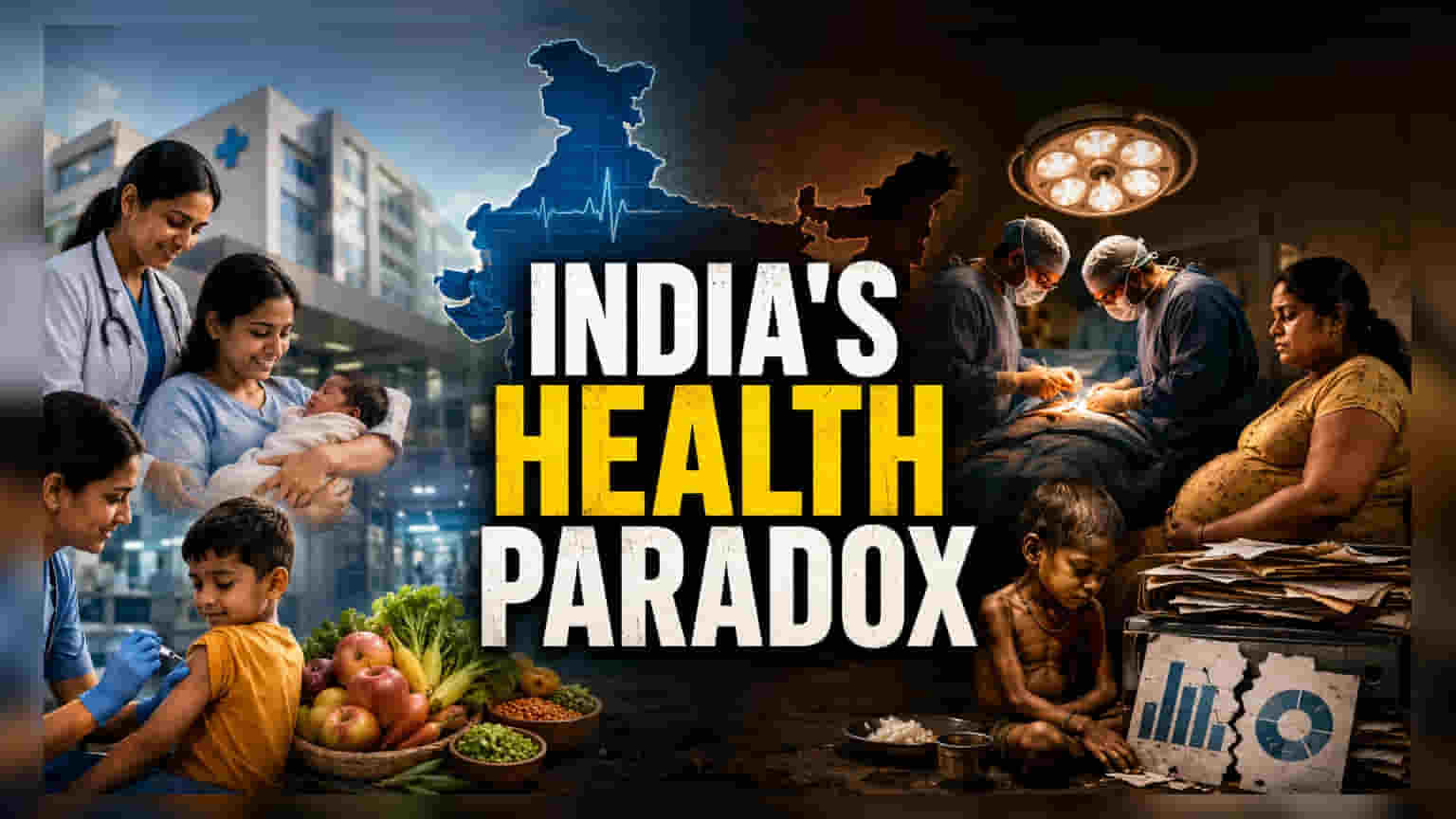


The Shift in Health Outcomes
Recent findings from the NFHS-6 survey, covering nearly 680,000 households, illustrate a nation in transition. The rise in institutional deliveries to 90.6% suggests that public infrastructure and financial incentives for maternal health are successfully converting home births into clinical settings. This structural shift is mirrored by measurable improvements in childhood immunization coverage and a reduction in stunting, trends that reflect the cumulative impact of aggressive national nutrition programs launched over the past decade.
The Nutritional and Clinical Paradox
Beneath the surface of broad improvement lies a growing clinical tension. The increase in Cesarean section rates to 27.2% signals a potentially over-medicalized approach to childbirth, often driven by private sector incentives rather than necessity. Concurrently, India faces a double burden of malnutrition. The simultaneous rise in both overweight and underweight populations underscores a failure in dietary education and access, suggesting that economic development is outstripping the country’s ability to manage lifestyle-related metabolic health. These metrics are increasingly relevant to the domestic healthcare and diagnostics sectors, which are now tasked with managing the long-term consequences of diabetes and hypertension on a massive scale.
The Data Transparency Gap
Methodological adjustments have ignited significant discourse among policy analysts and independent researchers. The removal of specific health indicators—most notably anemia and disability data—creates a disconnect when attempting to map progress against historical NFHS-5 benchmarks. By migrating data collection to specialized vehicles like the Indian Council of Medical Research (ICMR) and the Sample Registration System, the government has achieved greater technical precision in certain domains, such as venous blood sampling for anemia. However, this fragmented reporting creates a visibility vacuum, making it difficult for private hospital chains and health-tech firms to assess the true addressable market for anemia treatments and specialized chronic care services.
Future Outlook and Risk Exposure
The delayed publication of comprehensive reports on family planning and HIV indicators presents a forward-looking risk for public health forecasting. While the government maintains that administrative platforms provide a superior audit trail compared to previous survey methods, the lack of immediate access to unit-level raw data remains a primary frustration for the independent research community. For investors and policymakers, this period of data transition necessitates a cautious interpretation of current health trends. Future assessments must account for the likelihood that as data collection becomes more rigorous, previously 'hidden' health deficits may become more pronounced, potentially forcing a policy pivot toward higher expenditure in preventative diagnostics and non-communicable disease management.