

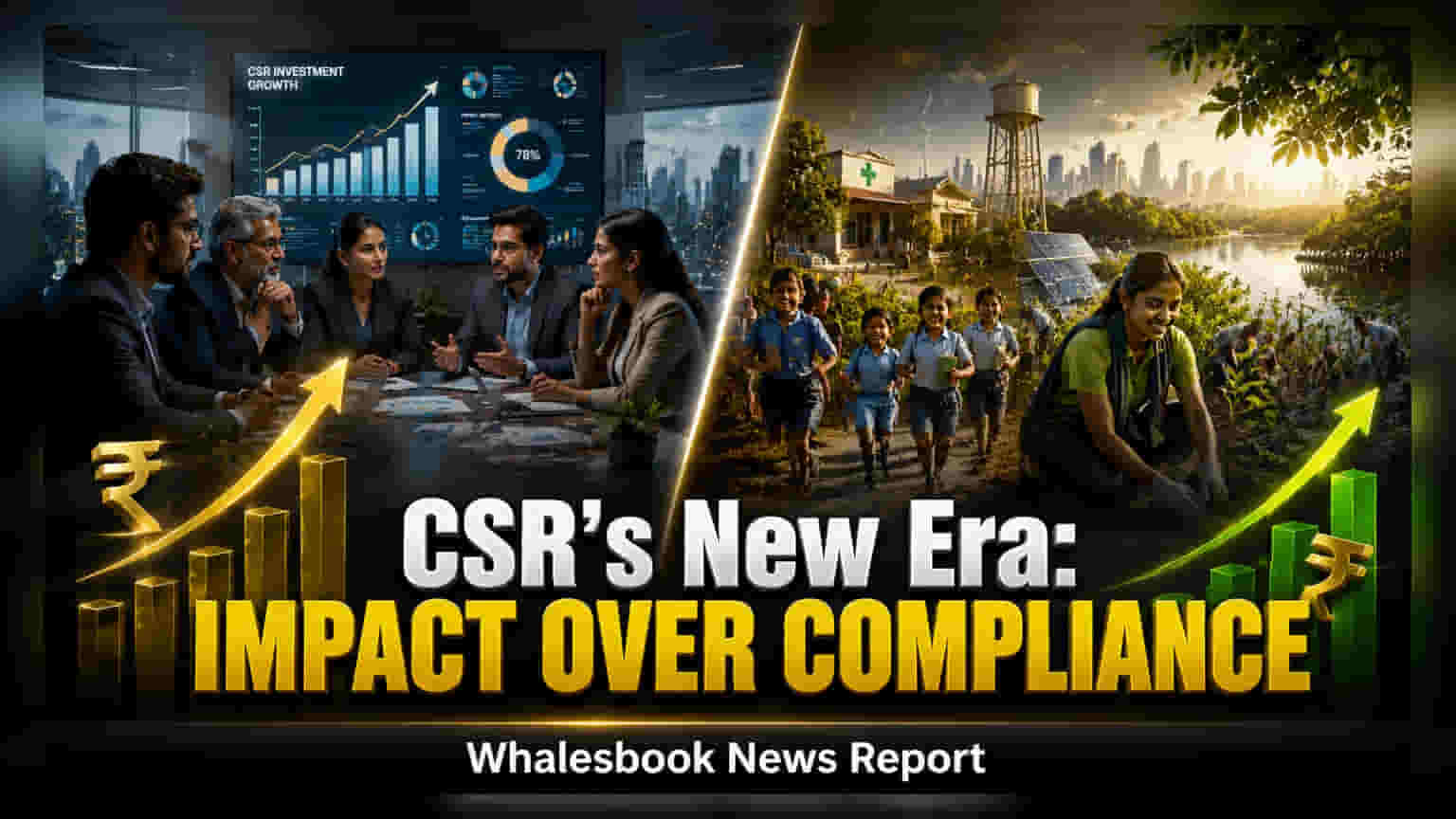
India’s yearly corporate social responsibility (CSR) expenditure has now crossed ₹30,000 crore. As the scale grows, a two-day conclave in Bengaluru starting July 16, 2026, will explore shifting focus from basic regulatory compliance toward measurable social impact and improved fund governance.
Corporate social responsibility (CSR) in India is undergoing a significant strategic shift. As annual corporate spending in this sector has surpassed the ₹30,000 crore mark, the focus is transitioning from simple regulatory compliance toward projects that offer clear, measurable social outcomes. This change is the primary subject of the upcoming second edition of the CSR Conclave 2026, scheduled for July 16-17 at Sathya Sai Grama near Bengaluru.
Organized by the One World One Family Mission, the event aims to align corporate contributions more closely with national development goals, often referred to as 'Viksit Bharat.' The shift is important for investors and corporate stakeholders because it suggests that companies will increasingly evaluate their CSR spending with the same rigor applied to other operational investments. This includes a stronger emphasis on governance, transparency, and the economic effectiveness of social initiatives.
Evolving Standards and Fund Deployment
The conclave is expected to influence how firms manage their mandated CSR budgets. Key discussions will revolve around the practical application of the Social Stock Exchange for deploying funds, which is a relatively new mechanism for connecting companies with social enterprises. By utilizing such platforms, firms may seek better accountability for their contributions. Additionally, panels will address the importance of standardized impact measurement, which could eventually lead to more uniform reporting practices across listed companies.
Expert Insights and Future Frameworks
The event will feature perspectives from prominent industry figures, including former TCS CEO S. Ramadorai and CSR Conclave Chairman Vineet Nayar. A critical takeaway for the industry will be a newly released white paper, which is expected to provide actionable recommendations for strengthening the CSR ecosystem. These recommendations may eventually inform future regulatory discussions or voluntary best practices, impacting how firms allocate and report their annual social spending.
For investors, the key monitorable following this event will be whether firms adopt more data-driven approaches to their CSR programs. Companies that demonstrate high efficiency and measurable results in their social initiatives are likely to see improved ESG (Environmental, Social, and Governance) scores, which are increasingly scrutinized by institutional investors and global rating agencies. Tracking the transition from spending money to demonstrating concrete developmental outcomes will be essential to understanding the long-term impact on corporate reputation and sustainable business practices.