 Whalesbook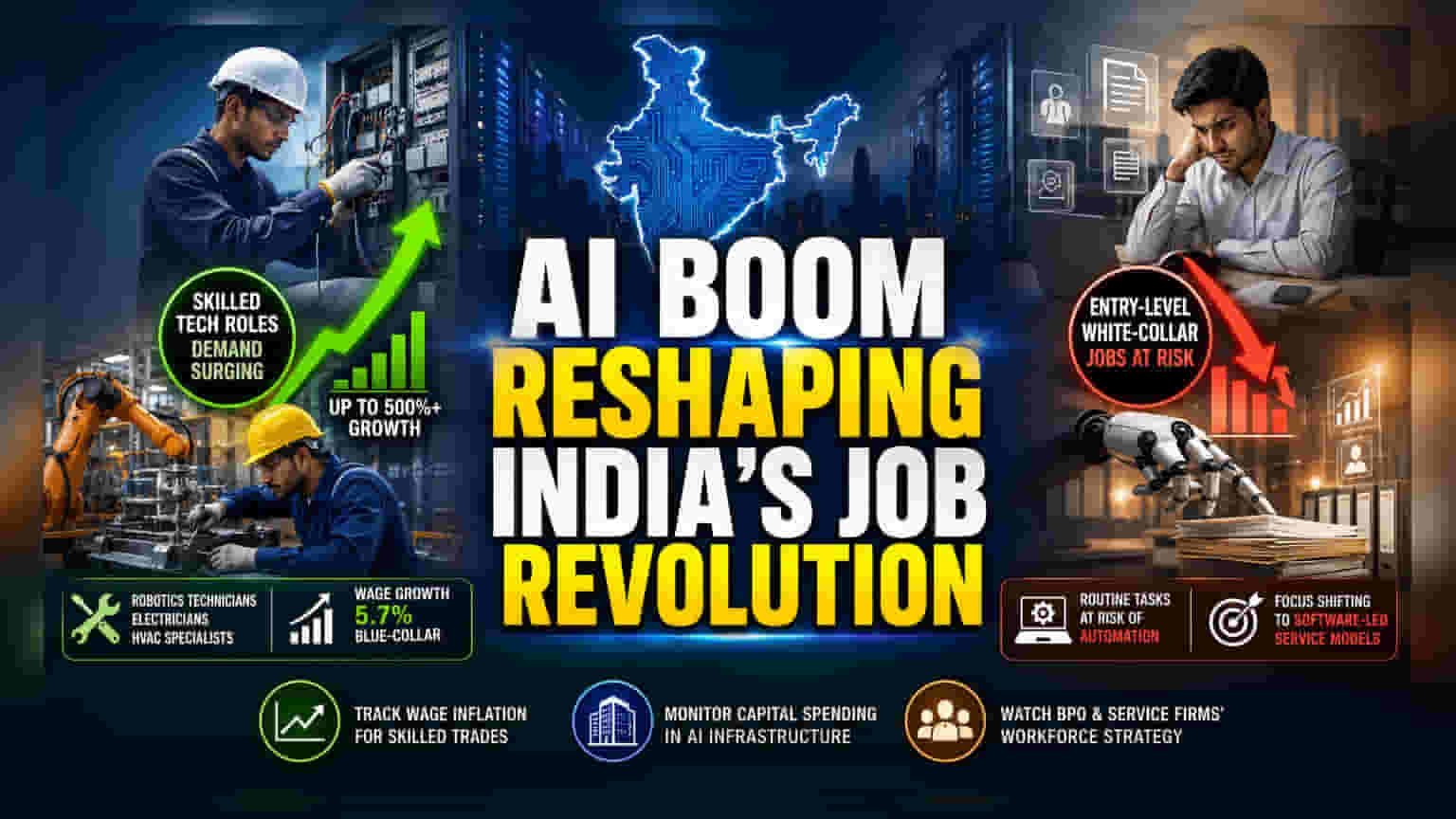


AI’s growth in India is creating a 'labor flip,' where demand for skilled technicians in areas like HVAC and robotics is soaring. This trend is narrowing the salary gap between blue-collar trades and entry-level white-collar roles. For investors, this shift highlights potential opportunities in staffing, industrial infrastructure, and cooling solutions, while signaling automation risks for low-end administrative jobs.
What Happened
Artificial Intelligence is reshaping the Indian labor market by creating an unexpected surge in demand for highly skilled technical workers. While much of the AI conversation focuses on software and coding, the technology requires a substantial physical backbone—including advanced data centers, improved power grids, and automated factory systems. To build and maintain this infrastructure, companies are hiring specialized technicians at a rapid pace. Hiring data indicates that demand for professionals such as robotics technicians, electricians, and HVAC (heating, ventilation, and air conditioning) specialists has grown significantly over the last four years, in some cases exceeding 500%.
The Labor Market Pivot
This trend is leading to what experts call a 'labor flip,' where the salary gap between skilled blue-collar technical roles and entry-level white-collar jobs is narrowing. In the past, professional white-collar roles were typically seen as higher-paying and more secure. However, as the need for specialized human expertise on the ground increases, wages for skilled trades are rising faster than those for junior-level office roles. While average blue-collar wages are growing at approximately 5.7% annually, entry-level white-collar salaries are seeing slower growth at 4%. This shift reflects the premium placed on skills that cannot be easily automated, such as physical repair, installation, and on-site technical troubleshooting.
Impact on Indian Industries
This shift creates a clear divide in potential investment themes. On the positive side, companies involved in industrial infrastructure, facility management, and technical staffing are likely to see increased relevance. Staffing firms that specialize in placing technical and skilled blue-collar workers may benefit as companies scramble to fill roles essential for data center construction, manufacturing automation, and energy infrastructure upgrades. Similarly, manufacturers of cooling systems and industrial power equipment are seeing sustained demand as AI infrastructure requires massive, reliable power and climate control systems.
The Automation Risk for White-Collar Roles
Conversely, investors should consider the changing landscape for companies that rely heavily on low-end, entry-level white-collar work. Roles such as basic data entry, routine junior accounting, and standard payroll processing are becoming increasingly susceptible to automation. Companies with business models built on a high volume of these roles may face pressure to modernize. If they do not automate, their costs may remain high relative to competitors; if they do automate, their headcount requirements may shrink, shifting the focus to software-led service models rather than human-led ones.
What Investors Should Track
Investors may want to monitor several key factors as this labor market transformation unfolds. First, watch the wage inflation trend for skilled trades; sustained growth in these salaries could squeeze margins for companies that rely on high-volume, low-cost labor. Second, observe the capital spending plans of large Indian infrastructure and tech firms. Are they spending heavily on the physical layer of the AI ecosystem? This is a strong indicator of demand for the technicians mentioned above. Finally, keep an eye on how traditional BPO (Business Process Outsourcing) and service firms manage their workforce. A pivot toward higher-value services or a significant move toward internal automation could signal how these companies plan to handle the increasing displacement risk for entry-level administrative staff. The ability of companies to attract and retain skilled technical talent will likely become a competitive advantage in the coming years.