

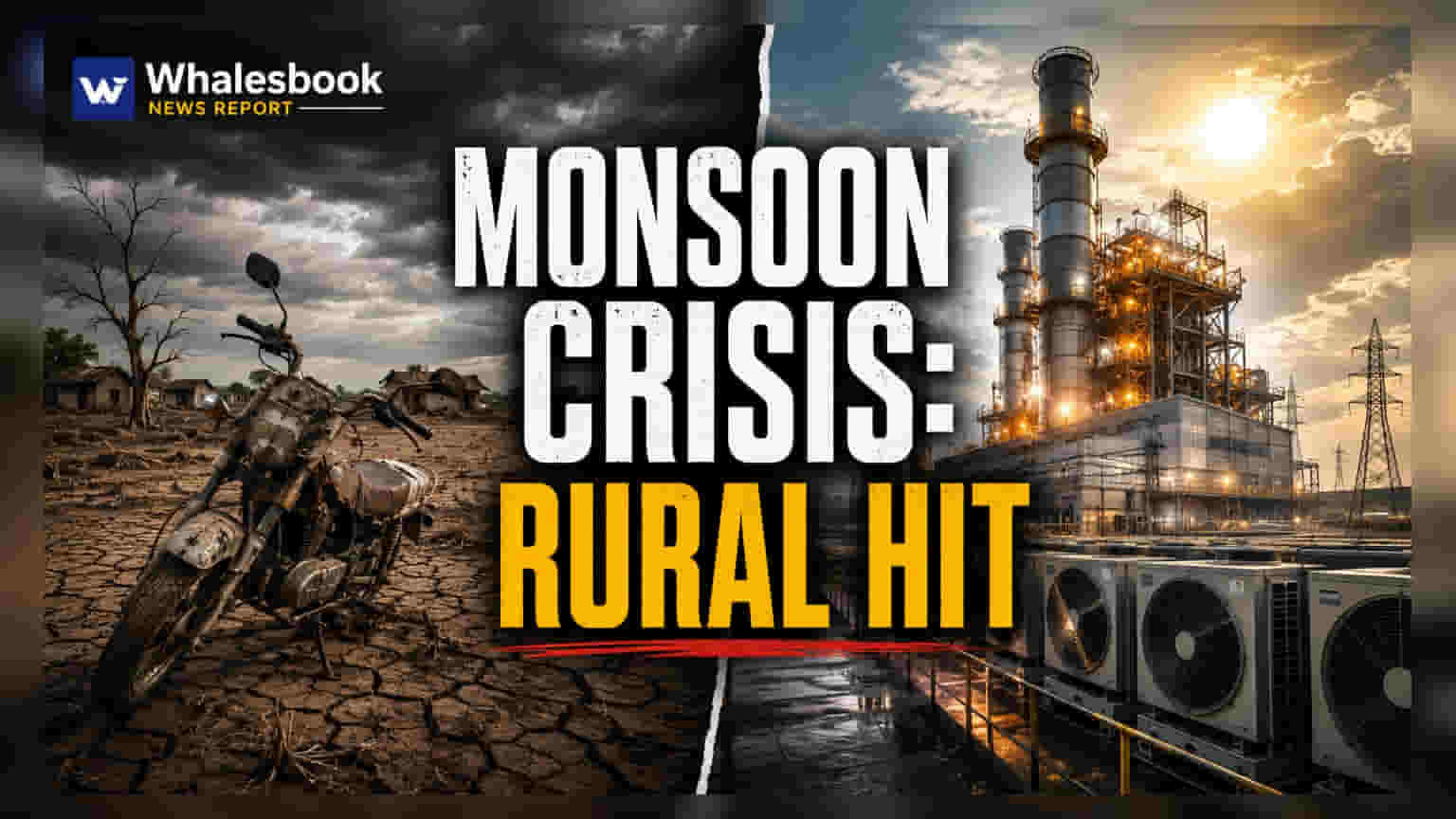
India faced its fifth-driest June in over a century with a 40% rainfall deficit, raising concerns for rural-linked sectors while boosting power and AC demand. Investors are watching how companies navigate potential rural slowdowns and benefit from heightened energy consumption amid ongoing heatwave conditions.
What Happened
India’s monsoon season has had a difficult start. Rainfall data for June 2026 shows a nationwide deficit of roughly 40%, marking the driest June start in over a century by some accounts and the fifth-lowest rainfall for the month since 1901. This weak onset, largely attributed to El Niño conditions, has prompted concerns about the upcoming kharif sowing season. The India Meteorological Department (IMD) has also forecasted below-normal rainfall for July, signaling that dry conditions may persist. Brokerage firm Jefferies has noted that this weak monsoon pattern could significantly alter sectoral performance, creating a clear split between industries reliant on rural spending and those driven by electricity and cooling demand.
The Rural Demand Risk
For the rural economy, the delay and deficit in rainfall pose a direct challenge. Agricultural activities and kharif sowing—which includes crops like rice, cotton, and soybeans—are sensitive to the timing and volume of early monsoon rains. Data indicates that planting is trailing behind last year's figures, creating uncertainty about farm income. When farm output faces pressure, rural cash flows typically tighten, which affects consumption.
Companies with significant exposure to rural customers are under the scanner. This includes two-wheeler manufacturers, lenders focused on rural credit (NBFCs), and consumer staples firms that rely on steady rural demand for soaps, snacks, and home-care products. If rural households see lower income, they may cut back on non-essential spending until there is better clarity on the crop season. Investors are watching for any signs of government intervention, such as increased spending on rural employment or farm subsidies, which could offset some of this pressure.
Power and Cooling Sector Boost
While rural demand faces pressure, the power and cooling sectors are seeing a different trend. Sustained heatwaves and high humidity levels across India throughout June have driven power consumption to record highs. Peak electricity demand has already exceeded 260 gigawatts in recent weeks as residents and industries rely heavily on air conditioning and other cooling appliances to manage the temperature.
This trend is providing a boost to electricity generation and transmission companies, as well as manufacturers of air conditioners and related electronics. Because cooling is becoming a necessity rather than a luxury in many urban and semi-urban areas, this segment is seeing consistent demand. The extended heat has also increased the need for irrigation, further supporting overall power grid demand.
What Investors Should Track
For investors, the key monitorables are shifts in weather patterns and corporate commentary on rural sales. While the power sector is currently benefiting from heat-driven demand, its long-term performance will still depend on grid efficiency and fuel availability. On the rural side, the impact will be clearer in the upcoming quarterly results as companies report their exposure to volume growth in affected regions.
Investors may also track:
- Rainfall distribution: Whether rains recover in July and August to support crop yields.
- Food inflation: Higher food prices often follow poor harvests, which can influence interest rate decisions.
- Government action: Any policy announcements regarding agricultural support or drought relief.
- Reservoir levels: Current water storage remains a buffer, but prolonged dry conditions will test this safety net.