

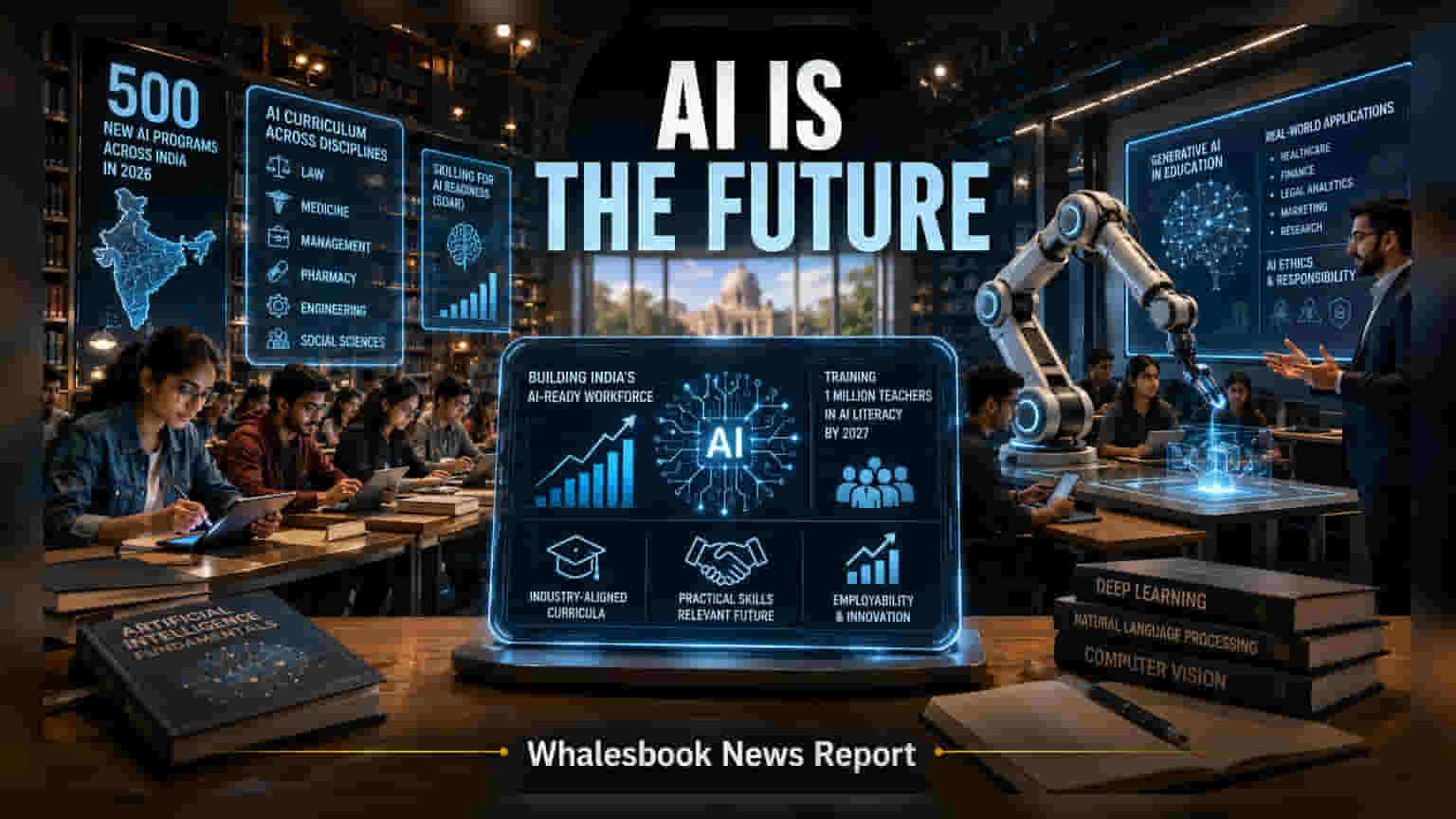
Indian universities are rolling out 500 new AI-focused courses to meet rising industry demand for skilled talent. This shift aims to reduce the employability gap but faces risks regarding academic quality and curriculum obsolescence. Investors should monitor how this impacts the future talent pipeline for the IT and services sectors.
Indian higher education is seeing a significant shift as universities race to modernize curricula in response to the growing demand for Artificial Intelligence (AI) skills. In 2026, the government initiated the launch of 500 new AI-focused programs across institutions nationwide. This move aims to align academic output with the rapidly evolving needs of the labor market, where employers are increasingly prioritizing practical AI competency over traditional degrees.
The strategy is moving beyond just computer science departments. Educational institutions are now integrating AI literacy into non-technical streams like law, medicine, management, and pharmacy. This cross-disciplinary approach is supported by government initiatives, such as the 'Skilling for AI Readiness' (SOAR) program launched by the Ministry of Skill Development and Entrepreneurship. The goal is to embed foundational AI skills early to ensure graduates are ready for an economy where generative tools are becoming standard in many professional roles.
For the broader economy, this pivot is a critical structural change. Large IT and services companies in India often spend significant capital on training fresh graduates. If universities can deliver a workforce that already possesses industry-relevant AI skills, it could potentially reduce hiring and onboarding costs for these firms. This shift also presents new business opportunities for EdTech platforms and private universities that can effectively partner with technology companies to build these modernized, high-demand curricula.
However, the rapid expansion of AI programs introduces notable risks that investors and industry observers should track. A primary concern is the potential for 'superficial branding,' where institutions may simply add 'AI' to existing course titles without actually upgrading infrastructure or teaching quality. This creates a risk where degrees may lose value if graduates lack deep, practical knowledge.
Additionally, there is a bottleneck in faculty expertise. Technology is evolving faster than traditional academic cycles, making it difficult for educators to keep up with the latest tools and applications. To address this, a national mission is underway to train 1 million teachers in AI literacy by 2027. The success of this initiative is crucial; if faculty training lags, the quality of the new programs may suffer.
Finally, there is the risk of skill obsolescence. Because AI technology changes at a rapid pace, short-term certifications or modular learning paths run the risk of becoming outdated quickly. Future monitoring should focus on whether these universities can maintain active, high-frequency relationships with the technology industry to ensure that the material taught on campus remains aligned with real-world applications. The long-term impact on workforce productivity and the graduation outcomes of these new programs will be the key indicators of success.