

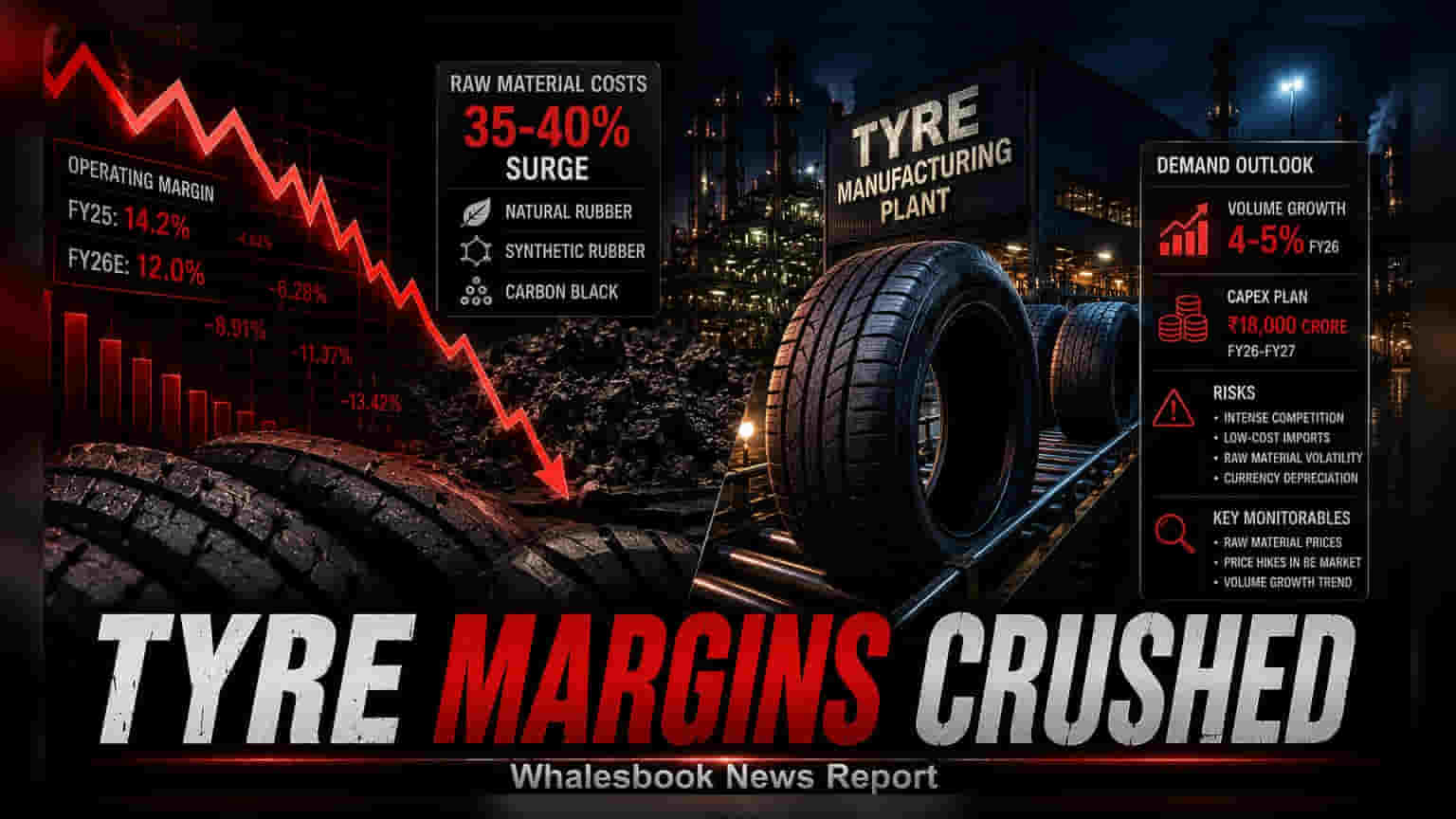
Indian tyre manufacturers are seeing operating margins moderate to approximately 12% this fiscal year, down from 14.2% previously, as raw material costs jump by 35-40%. Despite a projected 4-5% volume growth, companies are struggling to pass on these higher costs immediately, putting pressure on short-term profitability. Investors are tracking how quickly manufacturers can manage this cost-pass-through lag.
Indian tyre manufacturers are currently navigating a challenging period of margin compression as a sharp rise in raw material prices outpaces their ability to increase product prices. According to a report by Crisil Ratings released on August 24, 2026, operating margins for the sector are projected to dip to approximately 12% for the current fiscal year, down from 14.2% in the previous year.
The primary culprit behind this pressure is a significant 35-40% surge in the costs of critical raw materials. Natural rubber, a key input, has faced supply constraints due to unseasonal rainfall in major production hubs like Kerala and Southeast Asia. Simultaneously, costs for crude-linked materials such as synthetic rubber and carbon black have risen due to geopolitical tensions in West Asia and broader supply chain disruptions. This steep increase has created a temporary gap, as manufacturers typically face a lag before they can successfully pass these higher costs on to customers in the replacement and original equipment manufacturer (OEM) markets.
Demand Resilience Amidst Margin Pressure
While profitability is under pressure, demand remains a stable factor for the industry. Tyre volumes are expected to grow by 4-5% this fiscal year, although this is a moderation from the 7-8% growth seen in the previous year. This steady demand is encouraging companies to continue their expansion plans. The industry is currently executing significant capital spending, with plans to invest approximately ₹18,000 crore over the current and next fiscal years. This capital spending is largely focused on increasing capacity for high-value radial tyres, which companies hope will improve product mix and support long-term margins.
Competitive Risks and Industry Challenges
Investors should be aware that the ability of tyre makers to pass on cost increases is limited by intense competition within the domestic market. Companies like JK Tyre and CEAT, among others, have already reported earnings impacts due to these rising costs. The sector also faces risks from low-cost imports and potential dumping of tyres from other countries, which can cap the price points manufacturers can charge. Additionally, any further currency depreciation could increase the cost of imported raw materials, adding further strain to balance sheets.
Financial health across the sector remains relatively stable, with major players relying on a mix of internal cash generation and debt to fund their expansion projects. The key monitorable for investors going forward will be the trajectory of global commodity prices, the success of price hikes in the replacement market, and whether the volume growth of 4-5% holds steady in the coming quarters. Manufacturers who can effectively manage their supply chains and successfully pass on costs without losing market share will be the ones to watch as the industry navigates this high-cost environment.