

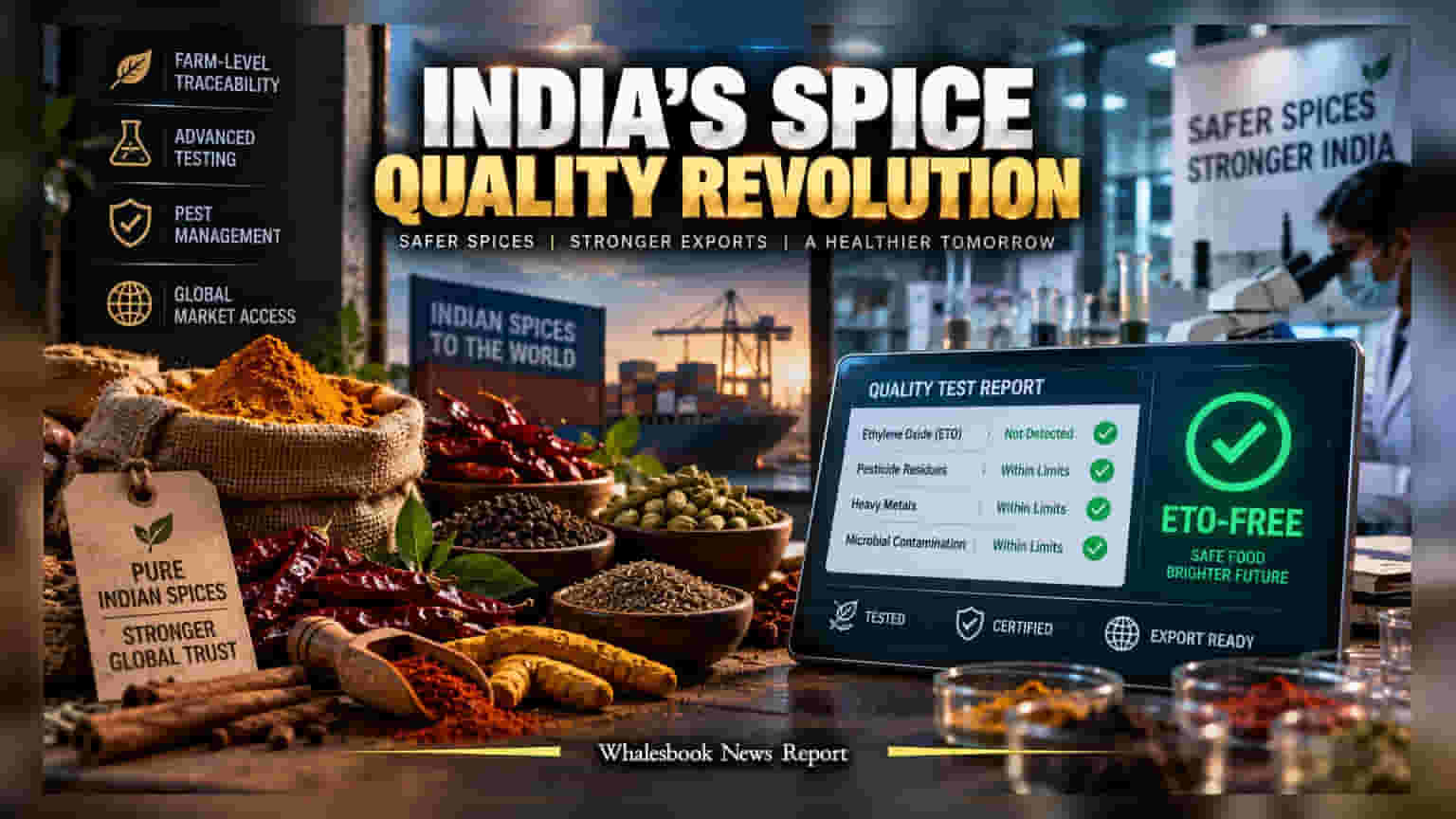
Indian spice manufacturers are implementing strict quality controls and traceability to address the 2024 export crisis. While this move helps companies target premium markets, investors should monitor the impact of higher compliance costs on profit margins and operational efficiency.
The Indian spice industry is undergoing a systemic reset in 2026. Following the export recalls that rocked the sector in 2024 due to contamination concerns, major domestic players are moving toward a more transparent and safer supply chain model. The era of loose, unverified supply is being replaced by a focus on traceability, rigorous pest management, and advanced chemical testing to meet international safety benchmarks.
For companies, this shift is not just about product quality; it is a fundamental change in how they operate. Businesses are investing heavily in Integrated Pest Management and farm-level oversight to prevent issues before raw materials enter the processing stage. This is a critical move to regain trust in key export destinations like the United States, which has emerged as a top buyer of Indian spices, replacing older trade patterns. However, this transition comes with a financial trade-off. Building these testing capabilities and strengthening the supply chain requires significant capital. As a result, many firms are reporting increased operating expenses, which can place pressure on profit margins in the short term.
Publicly listed companies are highlighting these changes as a way to differentiate themselves from the unorganized sector, which still accounts for a large portion of the market. For instance, entities like Shyam Dhani Industries and Spice Lounge Food Works have been pivoting their strategies to emphasize compliant production, leveraging public capital to scale these quality-focused operations. While revenue growth remains a key metric—such as the strong year-on-year increases seen by some players like Leo Dryfruits—investors are paying closer attention to the quality of these earnings. For example, some firms have seen EBITDA margins contract as they absorb the higher costs of compliance and certification.
The regulatory landscape remains another key area for investors to track. As of mid-2026, researchers have pointed out that while standards are evolving, there is still a need for a unified approach to safety, particularly given the lack of specific FSSAI safety norms for every spice variety. Additionally, the risk of stricter oversight from regulators in the European Union and the US, such as detention of shipments without physical examination, remains a real threat to export-oriented revenue. Supply chain fragility also persists, as weather-related disruptions like uneven monsoons continue to challenge the availability of raw materials.
Going forward, the success of these companies will depend on their ability to balance these high quality-control costs with their pricing power. Investors may want to look beyond headline revenue growth and focus on whether these firms can maintain stable operating margins despite the ongoing investments in compliance and testing infrastructure. The ability to navigate these regulatory hurdles will likely distinguish the long-term market leaders from those struggling with the rising costs of doing business.