 Whalesbook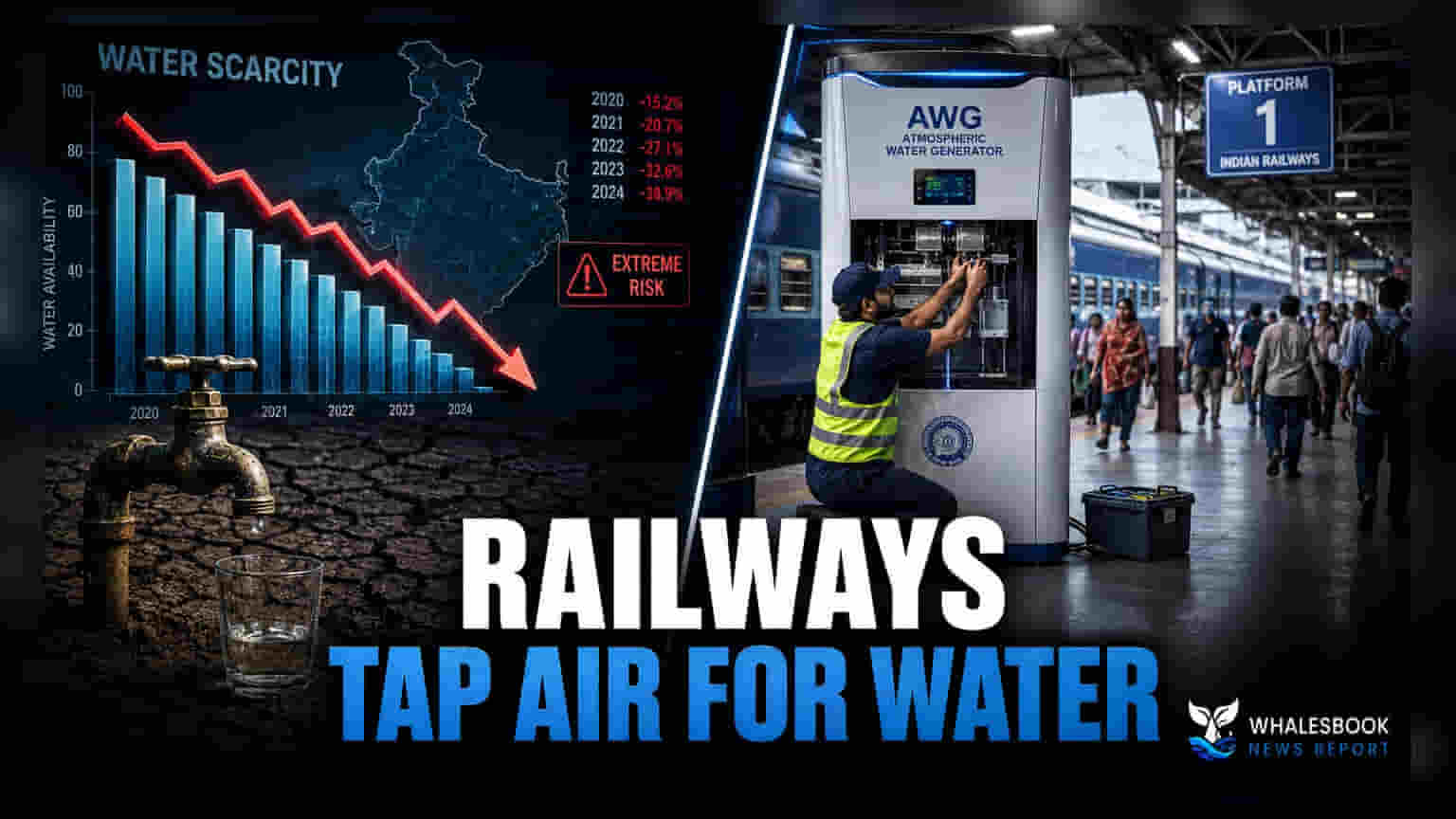


The Shift to Ambient Water Extraction
The directive from the Railway Board to integrate Atmospheric Water Generators (AWGs) across various zones and production units signals a departure from conventional water sourcing. By extracting hydration directly from humidity, the infrastructure shifts the burden of water security from centralized grids to decentralized, unit-level hardware. This policy move is effectively a strategic pivot to mitigate the recurring operational disruptions caused by localized water scarcity during peak summer months.
The Economic Reality of Water Harvesting
While the push aligns with the mandate requiring 1% of infrastructure budgets to be directed toward environmental initiatives, the financial feasibility of AWGs remains subject to scrutiny. Historically, these units operate with high power consumption rates, often negating the environmental benefits if the electrical load is sourced from non-renewable grids. Unlike traditional borehole or municipal supply methods, which benefit from economies of scale, AWGs function as individual capital expenditures with substantial ongoing maintenance requirements for filtration membranes and cooling compressors. Competitive benchmarking against peer logistics infrastructure suggests that while AWGs are useful for remote, low-density locations, they struggle to provide cost-effective volumes at high-traffic hubs compared to large-scale water treatment plants.
The Forensic Bear Case
From a fiscal perspective, the deployment raises several concerns regarding asset lifecycle management. Critics of the technology frequently point to the high cost-per-liter of water produced, which often dwarfs that of piped or RO-treated alternatives when electricity and recurring maintenance are factored into the total cost of ownership. Furthermore, the reliance on atmospheric moisture is intrinsically tied to local climate conditions; in arid regions where the water need is most acute, the efficiency of condensation-based generators drops precipitously. The lack of standardized procurement for these generators could also lead to a fragmented maintenance network, where different zones manage disparate hardware from various domestic vendors, potentially leading to widespread equipment failure in the medium term.
Strategic Outlook and Implementation
The project is slated to draw funds from the environment-related works budget, effectively insulating the project from immediate operational scrutiny. Success will likely depend on the ability of the railways to scale the technology through partnerships with domestic firms capable of reducing the per-unit cost through indigenization. Future updates from the Railway Board are expected to clarify whether the rollout will favor centralized, high-capacity AWG systems or if the organization will continue to rely on smaller, station-specific units that offer greater redundancy but lower operational efficiency.